Tag: curiosity

  • The Curious Groundhog

    Where I live, there are lots of groundhogs. I see them all the time, but not during winter. Last spring, as the world was finally coming back to life, I saw one who also saw me. This poem came to me then. Happy Groundhog’s Day!

    Most of the trees and shrubs
    Have begun to bud.
    As I walked past a field
    Of last year's grass and frozen mud

    I saw a groundhog waddle toward
    The bank beside me.
    He ducked behind a culvert pipe
    But didn't crawl beneath.

    He waited 'til I passed beside him —
    Peaking like he wondered what
    This thing that moves so high above,
    And with so strange a strut,

    Might be or do or be and do,
    Or how he smells or how he sounds —
    And then, when I could see his face,
    He swiftly climbed beneath the ground

    Into a hole where, I assume,
    He has a blanket and a book,
    And having gathered vegetables,
    He hums as he begins to cook.
  • Against Confident Nonsense

    Against Confident Nonsense

    I recently heard a podcast with a thirty-year-old woman who had written a book about dating. Aside from writing the book and being married, she had no other credentials in the field. Yet she spoke like she’d discovered the universal rules of modern romance: how to approach online dating, how to ask someone out, and what a good first date should be.

    But I’ve asked many women similar questions (what a date should be, what a man should or shouldn’t say, what they’re looking for in a partner) and the answers are all over the place. One woman said a man should never bring up his job on a first date because it’s boring and impersonal. Another said, if a guy doesn’t ask about her work or mention his own, it feels like a red flag. Both of them spoke with the same certainty.

    This confident nonsense is not just a problem in the dating sphere, either. Everywhere you turn, there’s someone claiming to know the best way to eat, how to raise children, and who to vote for. Each answer seems to contradict the last.

    This is, partly, a problem of our mass media headline-driven culture. If a scientific study finds that 90% of people see health improvements from eating a bowl of oatmeal for breakfast every day, the headline becomes: “Oatmeal Improves Health.” But what about the 10% of study participants who didn’t improve? Or the small slice of that group who actually got worse? The confident “truth” ignores their reality.

    The Information Age has given us endless access to data and information. But we lack the habits that turn data into wisdom. Instead of knowledge, we get noise. Instead of answers, we get overconfidence dressed as truth.

    So how do we find what’s real? I lean on four practices that help me cut through the clamor: old stories, genuine inquiry, disciplined attention to intuition, and writing.

    The truth is more potent in certain forms. Stories, especially old ones, are one of the most potent sources of truth. They don’t last unless they’re built on something solid, like a deep truth about the human condition.

    Our inner worlds contain the tools for unpacking those truths. If we don’t mine for truth in our hearts and minds, then we’re apt to accept and repeat lies that others pass off as truth. We see this all the time. One media personality says something, and they all start parroting it. Do they stop to wonder if what they’re repeating is actually true?

    Honest reflection, the kind that asks uncomfortable questions and is willing to challenge its own assumptions, is key. Truth-seeking is the lifeblood of many ways of life (stoicism, Christianity, Buddhism, etc) and the basis of many psychotherapies (CBT, DBT, IFS, ACT, etc). Algorithms reward confident opinions, but life rewards honest seeking.

    Yet we are more than minds. We’re bodies and souls. We have knowledge that is deeper than our thoughts. We have intuition. And by that I don’t just mean fleeting feelings or instincts. I’m talking about the quieter, deeper knowing that lives in our bodies. We must pay attention to what feels tense or open, alive or heavy. Our bodies often know the truth before our minds can articulate it.

    Still, our intuitions must be balanced by our thoughts. The two must be synthesized and integrated. For that, the best tool is pen and paper. Writing helps us notice and articulate what we believe, what we feel, and what we already know underneath all the noise.

    If we practiced those four things more often—read the old stories, ask better questions, learn to feel more carefully, and write what we learn—we’d be wiser than our headlines.

    But if you only take my word for it, you’re perpetuating the cycle of nonsense. Break the cycle now by giving yourself a few minutes of silence. Write what you believe and why. Then see whether it’s yours.

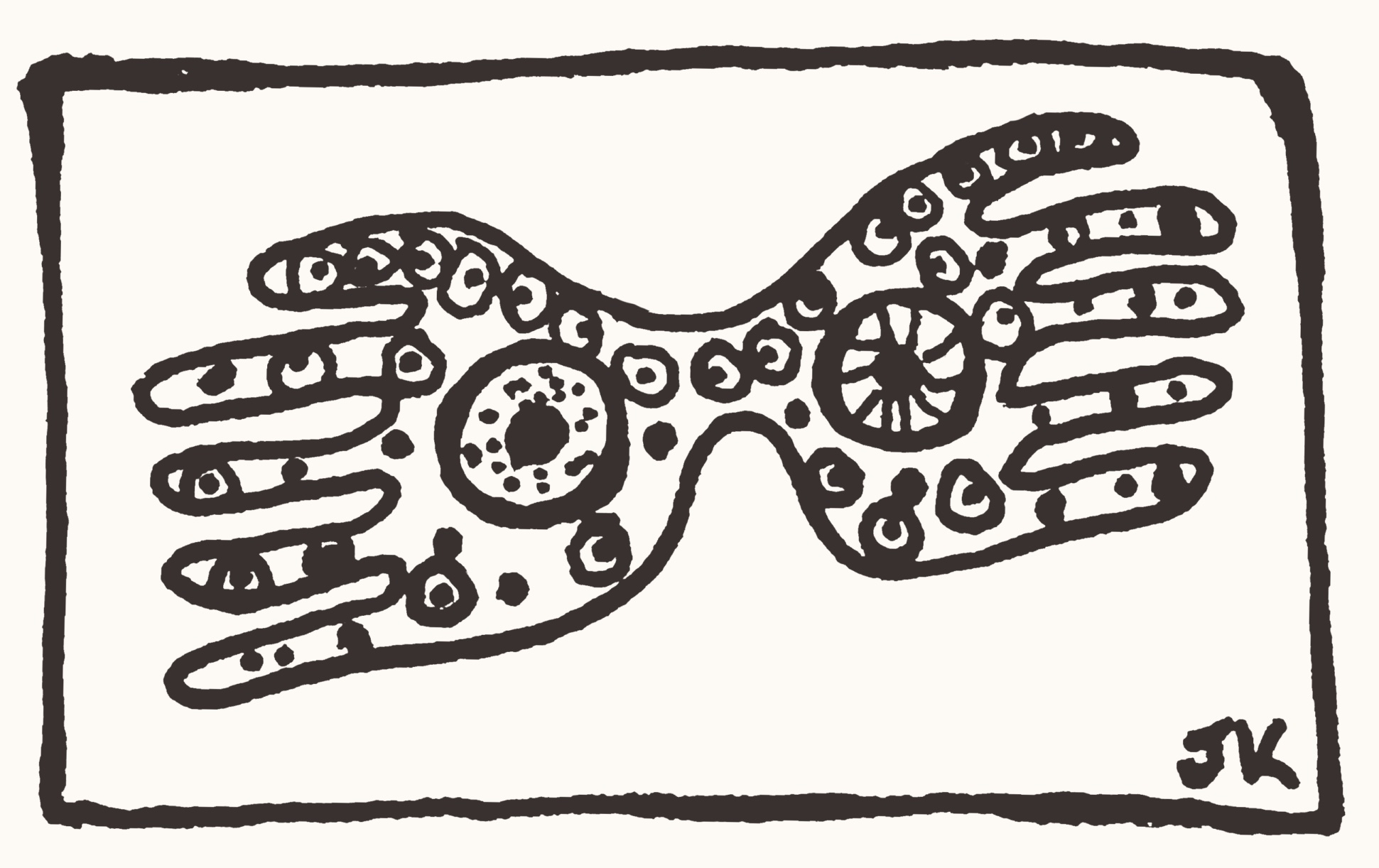
  • Luna Lovegood’s Secret to Happiness (That Darth Vader Learned Too Late)

    Luna Lovegood’s Secret to Happiness (That Darth Vader Learned Too Late)

    More Like Luna, Less Like Vader

    I recently embarked on a thought journey: how can I be more like Luna Lovegood and less like Darth Vader. I asked many questions.

    How is Luna Lovegood so carefree, especially in the films, despite the suffering she has experienced? She saw her mother die in an accident when she was nine years old.

    How does she stay so authentic and kind in the face of relentless bullying? They steal her shoes and snicker at her handmade jewelry.

    How does she remain confident in her beliefs despite the constant doubts of others? They call her “Loony Lovegood” and truly believe she’s crazy.

    Luna and Anakin Skywalker both experienced loss and suffering. But Luna became a force for good while Anakin succumbed to resentment, thirst for control, and violence.

    How did Vader become so paranoid and cruel? In the same film, he massacred Jedi younglings and then claimed that he’d brought freedom, justice, and security to the new empire.

    If I could understand where their paths diverged, maybe I could follow Luna’s instead of Vader’s.

    Forgiveness

    At first, I thought the answer was forgiveness. Vader was consumed by resentment, while Luna was clearly forgiving. But why should anyone forgive? And how does one do it? Resentment is an emotion, not something we can simply command away.

    Perhaps Luna didn’t forgive everything all at once, but instead practiced small acts of forgiveness every day—letting go of frustration when she made mistakes. When she commentated the Quidditch match in Harry Potter and the Half-Blood Prince, she received some laughs from the crowd. Instead of feeling embarrassed, she let it go. Maybe small moments of forgiveness like that strengthened her ability to forgive greater injustices.

    It seems like starting with small acts of self-forgiveness would be a good place to start, but could Darth Vader, obsessed with control, have been convinced to even begin to let anything slide?

    Humility

    I suspect it would come down to humility. Vader would need to understand that there is more to reality than his own perspective. If he’d realized this, he might have questioned his perceptions. Instead of assuming Padmé had betrayed him, he might have wondered why she opposed the Empire. He might have considered that he was missing something.

    Luna embodied humility. She accepted that there was more to reality than she could understand. She believed in Nargles. She understood reality held more than what she could personally verify—and that was a source of strength.

    When her classmates stole her shoes, she didn’t assume cruelty. Maybe she wondered if they needed them or intended to return them but were afraid. With reality being too complicated for a human mind to fully understand, maybe she figured it was best to simply forgive.

    If Vader had been able to entertain such possibilities, might he have chosen a different path?

    Open Curiosity

    Humility leads to curiosity—genuine wondering rather than demanding answers. The humble person not only understands he can’t know everything, he also understands he doesn’t know everything. Out of this realization, questions arise.

    Before turning to the dark side, Anakin did ask questions. He tried to find a way to prevent death and he wanted to learn everything he could about the Force. But his curiosity was driven by fear. He didn’t just ask questions. He demanded answers.

    Luna, by contrast, seemed to ask questions without attachment to an answer. She was always searching for hidden wonders, like the Crumple-Horned Snorkack, even though there was little hope of finding one. Her curiosity wasn’t rooted in fear but in faith—faith that reality had goodness waiting to be discovered.

    How could Vader have learned to approach life with faith instead of fear?

    Faith

    If he had faith—if he believed that goodness was real and not just a human construct—he might have asked questions out of hope rather than demanding answers out of fear. He might have been able to see the goodness in Padmé’s actions which would have strengthened his faith even more.

    Faith is tricky though. To have faith means to believe something beyond proof. How could Darth Vader have been convinced that goodness was real if it couldn’t be proven?

    He never receives absolute proof. None of us do. But in the end, he does find faith through his orphaned son. Seeing Luke consistently choose love over power, refusing to kill him even in desperate circumstances, Vader is finally confronted with enough goodness to take the leap of faith. It is Luke’s willingness to love him unconditionally—something that makes no sense if goodness isn’t real—that changes Vader’s mind.

    Good Like Luna

    As I explored these ideas, questions led to more questions. Maybe Luna is carefree and kind because she forgives, but how does she forgive? Maybe humility enables her to forgive, but how does she embrace uncertainty? Maybe faith allows her to approach the unknown without fear—but where does faith come from?

    I went in circles. If I couldn’t prove goodness was real, how could I blame Vader for not believing in it? And in that moment, I felt solidarity with him. My heart overflowed with empathy. And in that paradox—compassion for someone who had rejected compassion—I found myself feeling a little more like Luna. In that moment of compassion, I think I unknowingly accomplished what I’d set out to do. I became a little more carefree and compassionate.

  • Unlock the Magic: 8 Simple Ways to Rediscover Wonder

    Unlock the Magic: 8 Simple Ways to Rediscover Wonder

    Life can feel dull and even depressing. Routines are great, but they go stale from time to time. Your mental health can be on par, but still, life can knock you down. But if you’re feeling stuck in a rut, there’s always wonder.

    Wonder is that feeling of seeing a magic trick and being so impressed that you don’t care how the heck it works. No, wonder is even more than that. It’s seeing the magic in everyday life. You don’t need a ticket to a magic show or an exotic destination to experience it. It’s all around you, hidden in ordinary life, waiting to be noticed.

    Here are eight ways to invite more wonder into your life.

    1. Meditate.

    In much the same way that jogging is exercise for the body, mindfulness is exercise for the mind. It helps you learn to focus your attention, and that is crucial for wonder. To wonder about something, you have to give it your attention.

    Start simple: try a body scan meditation. Pay attention to how your toes feel, then move your focus up to your legs, then your arms… Don’t worry if your mind wanders at first. When you notice it, bring it back gently. Over time, as you practice, your focus will increase, and you’ll be able to stay alert and curious for longer spans of time.

    The more you’re focused and curious, the more you’ll notice things that fill you with a sense of wonder.

    2. Collect ideas.

    Ideas often inspire wonder. Use a notebook, the camera on your phone, a voice recorder, whatever, to capture interesting ideas, thoughts, and observations. Over time, you’ll have a treasure chest of wonders to revisit when you need some inspiration.

    3. Learn about nature.

    Nature is basically a wonder factory. Did you know that some eagles are strong enough to carry off wild pigs? I learned that in How to Know the Birds. Or did you know that deer taste bad to trees? I learned that in The Secret Network of Nature. Or have you ever seen a bonsai kumquat tree full of kumquats? I saw one at the conservatory in my city.

    Books, research papers, museums, and documentaries are all great ways to learn about nature. But the best way is to just spend some time outside-maybe bring a magnifying glass and look at bugs.

    4. Visit a beautiful place.

    Sometimes a change of scenery can help you feel a sense of awe. It doesn’t have to be the Eiffel Tower. You can find something closer to home. Maybe it’s a beautiful church, a breathtaking bridge, or even a funky modern building downtown. Take a moment to soak it in. Notice the little details. Wonder about it. Let yourself be amazed.

    5. Read proverbs.

    Proverbs are tiny packages of wisdom. They’re almost as good as fortune cookies. Sometimes you can get a fortune cookie and a proverb all in one. But sometimes all you need is the proverb. They make you pause and think.

    Pick up the Bible or scroll through Pinterest, find a collection of proverbs, and see which ones stick with you. Bonus points if you write them down in your treasure notebook.

    6. Ask people questions.

    Wonder doesn’t have to be complicated. It can start with a simple question: “How’s your day going?” or “What do you think about this weather?” You’ll be amazed at the stories some people share-and how they can open your eyes to new perspectives. Plus, asking good questions is a skill that grows with practice.

    7. Stop googling everything.

    Next time you have a question—like, “Why do rhinos have horns?”—don’t immediately google it. Let yourself wonder for a bit. Go ahead, pretend you’re an armchair scientist or a time-traveling explorer. Make up theories. Play around with the possibilities. Feel free to google it later. But only after you’ve had some fun first.

    8. Draw with the right side of your brain.

    Grab a pencil and paper and try drawing something you see. Don’t worry about being good at it; just focus on seeing. The act of drawing from sight turns on the right side of your brain, the side that sees things without thinking about them, and entices you to notice details you’d otherwise overlook. Before you know it, you’ll be seeing the world in a whole new way.

    If you want some guidance on drawing with the right side of your brain, I highly recommend the classic drawing book, Drawing on the Right Side of the Brain. I can’t promise it made me good at drawing, but it certainly taught me a few things.

    The magic of wonder

    That’s it! Wonder isn’t about having all the answers. It’s about asking questions and letting yourself be amazed even when-especially when-you don’t get the answer you were expecting.

    Why not try one or two of these ideas this week and see what happens? Who knows, you might just see some real magic.

  • The Art of Wonder: Curiosity, Awe, and the Story of Job

    The Art of Wonder: Curiosity, Awe, and the Story of Job

    I’ve been wondering about wonder. It seems there are two parts to wonder. There’s the curiosity part: “I wonder how?” And then there’s the awe part: “How wonderful!”

    It’s possible that curiosity and awe are two distinct definitions of the word wonder, but I suspect they go hand in hand. If we aren’t curious, we’ll never look to see what’s around the corner. And we’ll never be awestruck by something we can’t see.

    You might suggest that, at times, we can experience wonder without looking for it, without curiosity. Sometimes it surprises us. That may be true. But I wonder if, by being curious, we might find it far more often. We might even find it in the most ordinary things, like steam rising from a mug or the pair of eyes we see every day in the mirror.

    The Old Testament story of Job gets into this matter. At the beginning of the story, his life is great. But then all sorts of terrible things happen to him. His children die, his wife curses him, his health plummets. It is then that he becomes curious. “Why is this happening to me?”

    However, Job takes his questioning too far. Instead of remaining curious about things, he demands answers.

    In contrast to his demand for answers, Job’s friends don’t ask questions at all. Instead, they tell him why these terrible things must have happened to him. They don’t wonder, they assume. They cling to simplistic explanations, ignoring the mystery and complexity of life.

    Between Job and his friends, we see two forces that destroy curiosity, and therefore wonder. Job’s experience of wonder is inhibited by his demand for answers. His friends’ experiences of wonder are inhibited by their assumptions.

    Curiosity, by contrast, is neither a demand for answers nor an assumption of the answers. It’s asking questions while remaining open to mystery. And it’s the mysterious things that leave us in awe. It’s the unknown that makes us wonder and leaves us with a feeling of wonder. Neither Job nor his friends seem to understand this.

    No matter. God replies to Job’s demands. But He doesn’t give him answers. He doesn’t tell him why terrible things have happened to him. Instead, He asks Job questions that Job cannot answer, questions he can only wonder at. Through some of the most beautiful poetry, God opens Job’s heart to the awesomeness of wonder.

    He asks, “Where were you when I founded the earth?”

    If Job wasn’t struck with wonder in that very moment, no problem. God had plenty more questions for Job to ponder. These are some of my favorites:

    “Or who shut in the sea with doors, when it burst forth from the womb; when I made clouds its garment, and thick darkness its swaddling band, and prescribed bounds for it, and set bars and doors, and said, ‘Thus far shall you come, and no farther, and here shall your proud waves be stayed’?”

    Chapter 38, Verses 8-11

    “Have you commanded the morning since your days began, and caused the dawn to know its place?”

    Chapter 38, Verse 12

    “Who has cleft a channel for the torrents of rain, and a way for the thunderbolt?”

    Chapter 38, Verse 25

    God’s answer is one big, beautiful poem that essentially says, “Wonder.” It says, you were not the one who gave everything in the universe its form, its boundaries, its place, its beauty. You are the one who has been given it as a gift. You cannot know all the answers. You can demand to know, you can pretend to know, or you can wonder. The path that opens your heart to the experience of beauty, reality, and goodness is wonder.

    So perhaps, by cultivating curiosity, we can open ourselves to awe. By asking questions without demanding answers, by being present to mystery, we might find wonder, even in the ordinary. We might find it in the similarity between the words pain and rain, or we might find it in a sprinkled donut. We might, like Job, be invited into a deeper understanding of life’s mysteries, not through explanations, but through the gift of wonder itself.