Tag: fiction

  • Amnemos (A Vignette)

    “I’m eighty-nine,” said the old man.

    “Wow, you look very good,” said the stranger.

    “Thank you. I don’t feel eighty-nine. The age just sort of caught up to me.”

    “Do you have any regrets?”

    “Well, sure,” the old man hesitated. “There was a girl. I didn’t marry her. I was too slow. I would’ve had grandchildren and cousins and children running around. I don’t have any descendants.”

    “I’m sorry to hear that. Anyway, you seem to have kept your wits about you,” said the stranger.

    “Well, I try to stay sharp,” the old man said. “I do crosswords, and talk to friends, write the occasional letter.”

    “Grandpa, there you are.” A child reached for the old man’s hand. “We’ve been looking all over for you.”

  • To Now From Then

    To whomever finds this time capsule,

    The year is 1914. My name is Alfred Burdock, and I am a dairy farmer. My wife, Eloise, and I have been married ten years. We have four children: Suzanna, Maria, Theodore, and Vincent.

    This letter is being sealed inside the wall of our new barn as a kind of commemoration. Whoever you are, I pray that your livestock are thriving the way ours have in recent years. The Good Lord has blessed us with abundance.

    But I must tell you something stranger than I ever imagined I’d live to witness. Something I believe belongs to the future, maybe your time, or maybe long before your time, or perhaps far beyond it.

    It began one night after I blew out my candle. As I reached to draw the curtain beside our bed, I glanced out the window and saw a faint glow. At first I thought it was a trick of the eye, but no matter how many times I blinked or rubbed them, the soft, unmoving light remained.

    Concerned for my family’s safety, I took my rifle and stepped out the back door. The glow hovered still, near the old chestnut tree. I crept forward, heart pounding. When I reached the tree, I realized the light was coming from within the trunk itself. A small, unflickering glow, barely the size of a coin.

    I raised my gun and inched closer.

    It just sat there glowing, still as could be for a minute. I sat there wondering what it was, what I should do.

    Then it began to grow. It expanded until it lit the entire yard as though the sun had risen. I turned to run back, but the house was gone. My wife and children were gone. The sky was bright, but it wasn’t morning. It was like I’d awakened from a dream into some terrible imitation of life.

    I sprinted to the police station, but it was no longer there. In its place stood a tall, square building of glass and steel—no cornices, no stonework, no signs of craftsmanship. Just a sheer wall of windows, towering and blank. It looked… soulless. I couldn’t imagine what it must be like inside a place with so few windows.

    Then I saw a vehicle fly past. It had wheels, yes, but was larger, smoother, and far quieter than any automobile I’d ever seen. It looked sturdier too, and fast, like a beast built for speed.

    I looked around for help.

    That’s when I saw a man emerging from the glass building. He wore a shirt dyed a blue more brilliant than any cloth I’d ever seen, and his shoes were orange as pumpkins. He looked like a piece of candy. I could almost taste him.

    “Sir,” I said, “I’m not sure what’s happening, but my wife and children are missing. I believe they’ve been taken. Do you know where I might find a policeman?”

    “F*** the police,” he muttered.

    Then he pulled a little flat rectangular thing out of his pocket. It lit up in his hand, and he began tapping it with his fingers. I didn’t know what was happening, so I waited. I thought maybe he was going to offer some sort of help, but he just stared at the light, entranced. Completely still. Not even a glance in my direction.

    “Sir, please,” I said again. “I need help.”

    “I said, f*** the police, man.” Still, he did not look up.

    At that moment, a bus hissed to a stop in front of the lot. I’d never seen one in person, only pictures of something similar in the Sunday papers. It was enormous and impressive, but I was in no mood for marveling. I ran to it.

    Inside, I found dozens of people, every one of them staring into those same glowing rectangles. Some had odd plugs in their ears; others wore bulky contraptions covering their heads. Not one person looked up when I shouted.

    “My wife and children are missing!” I cried. “They’ve been abducted!”

    No reaction. Not a flinch. Nothing.

    “Pay the fare or get off the bus,” the driver barked.

    “I’ve no money,” I said, embarrassed to realize I was still in my nightgown. “Please, I just need help.”

    “Fare or off.”

    The chill hit me then. The bus was cold—unnaturally cold. I wondered if I’d taken ill. But once I stepped off, the warmth of the day returned. It wasn’t me. It was the bus.

    I spotted a sidewalk and followed it. The people I passed were just as absorbed by their glowing boxes. Some mumbled aloud, to themselves it seemed. Back home, we’d call them mad.

    After some time, I reached a small grocery store. I heard music playing inside, but I saw no band. It seemed to pour down from the very ceiling.

    People moved through the aisles, and when they reached the cashier, they merely waved their glowing rectangles. No coins. No cash. Perhaps these devices were a kind of currency. They worship them. They must hold some significance.

    Desperate, I pushed through a door at the back, hoping to find a manager. It led to a restroom… indoors, not an outhouse. There were standing toilets that offered no seat. And even here, a man stood before one, eyes fixed on his glowing screen.

    I tried another door. That one lead to an office.

    “My wife and children are missing,” I told the manager.

    He asked for their names, then spoke into a strange device. His voice echoed through the store.

    “Will that reach them outside?” I asked.

    “No, just the store.”

    “They’re not here. They vanished from our home. Can you send that voice through the whole town?”

    “Sorry, pal, it doesn’t work like that. If your family’s missing, you should call the police.”

    “I’ve been trying. The station’s moved.”

    He gave me directions. I ran there and cautiously opened the glass door. Inside, I explained everything.

    “Have you tried calling them?” the officer asked.

    I hadn’t. Not in the way he meant. I tried yelling, but my voice isn’t loud. I said as much. He stared at me, either puzzled or suspicious.

    “Doesn’t your wife have a phone, buddy?”

    “A what?”

    He led me to a sleek vehicle with cushioned seats and blinking lights. He had me sit in the back behind a partition. It felt like a cage.

    As we drove through the city, the sun began to set. The sky burned gold and lavender, fading into a pearly white. I remember thinking, this is the most beautiful sunset I’ve ever seen. Strange, isn’t it? How in the midst of chaos and loss, you can still witness a sunset so beautiful it stops your breath.

    Soon, we were outside of the town. There were wide fields all around us, and one big, boxy building a little ways off. Along one of the hillsides, two people sat on a bench. They were holding those little glowing boxes up in front of their faces, even when they could be watching such a beautiful sunset. I wanted to yell out to them, “you’re missing the whole thing!”

    We arrived at another building. The officer led me inside.

    I sat in a waiting room while he talked to a woman behind a glass window. I noticed a little black spot on the other side of the room. It was the blackest black I had ever seen. I blinked my eyes a few times, but it remained.

    I stood up for a closer look. As I leaned in, the whole world seemed to tilt. I lost my balance and began falling. Then, before I realized what had happened, I was outside again. I was in my own backyard. It was dark. The little glowing spot was gone.

    I ran to the children’s rooms. They were all there, asleep. I held Eloise’s hand. She stirred and smiled and asked if I was alright.

    I said I was. I didn’t tell her what I’d seen. Not that night. I wondered if I’d even seen it at all. Maybe I’d dreamt the whole thing. But it was more real than a dream. And yet, it was stranger than reality.

    With sincerity and wonder,
    Alfred Burdock
    July 7, 1914

  • The Diamond Photograph

    The Diamond Photograph

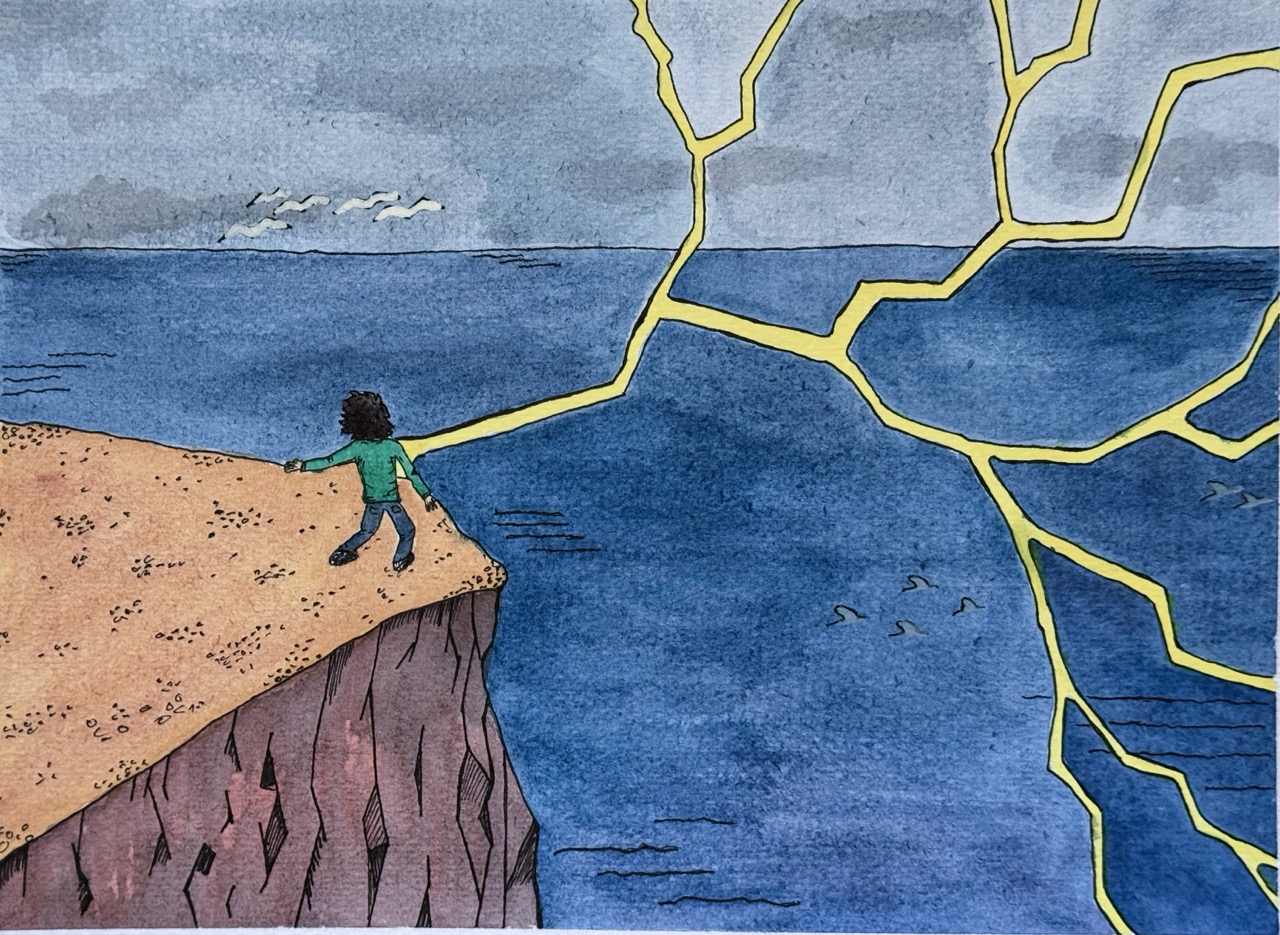
    Magic is real. Most people don’t believe it because they can’t analyze it under a microscope or measure it by volume. Most don’t see it at all. Take, for example, the story of Oyo Didirod. Oyo was so lonely that a bolt of lightning sprung from his heart and turned a piece of coal into a diamond photograph. Most people never saw it or even noticed any difference created by the magic.

    Oyo was lonely because his soulmate was born at the wrong time. I would tell you why she was born at the wrong time, a thousand years too late, but many people would want me dead and this more important story would go untold. Either way, she was born at the wrong time. As a result, Oyo was lonely. He was so lonely that he created lightning.

    He became lonely when he met the soul sister of his soulmate. His soulmate’s sister – rather, the woman who would have been his soulmate’s sister – was born at the right time. So even though Oyo never met his soulmate, he did meet her sister. It was then that his heart swelled so full of loneliness that he could hardly breathe. He could barely even think. Every part of him ached.

    He went for a long walk to try and think. With every woman he passed, his heart wondered, “is she the one?” In such desperate loneliness, he could only find one solution: sail out to sea.

    The next morning, before the sun came up, he set sail. After two weeks on the Atlantic Ocean, heading in no particular direction, Oyo came to an island. Tired and hungry, but mostly lonely, he pulled his boat onto the shore.

    In the middle of the island, there was a mountain. In his loneliness, he could think of nothing else but to climb the mountain. So he climbed.

    He climbed, first, through a forest of palm and coconut and banana trees. A warm breeze shuffled through the leaves and branches, and stirred an air that smelled as fresh as a fruit smoothie. He ate his fill of the soft bananas and the snow white coconut flesh, and he didn’t let a single drop of the sweet coconut water go to waste.

    After he climbed through the forest of palm and coconut and banana trees, he came into a forest of beech trees. Their tall trunks and wide canopies reminded him of a book about trees that he’d read some years prior.

    Many people believe oaks are the mightiest trees, he remembered, but beeches can dominate oaks in a forest because beeches feed their young. The tallest beeches feed the smallest beeches through their roots. The young oaks, on the other hand, receive little nourishment from the roots of their ancestors, and they receive no sunlight because the taller trees crowd them out, and so the small young oaks starve while the small young beeches become big old beeches.

    When he had climbed the whole way through the beech forest, the land cleared away and the sky became wide. He kept climbing. Now he climbed not through forests but over boulders of many shapes. Most of them were the size of polar bear skulls, but some were as big as humpback whales, and some were as small as chubby woodchucks.

    During the rocky part of his climb, he was distracted by the sight of an eagle picking at a dead pelican. It caused him to miss his step and he lodged his left foot between two of the boulders. His foot swelled and he was stuck in that spot for six days. Finally, a powerful gale blew in and brought with it a sleet storm. The sleet stung when it hit Oyo’s head and back, but the cold brought down the swelling in his foot, and the wet made the rocks slippery enough that he could finally writhe himself free.

    From there, he limped to the edge of a cliff at the top of the mountain. He looked out over the ocean and beheld the scene: the flowing, waving sea; seagulls hovering over, and occasionally diving into, a school of fish that glistened like foil; the untinged sky; and a pod of dolphins weaving above and below the water’s surface.

    For a moment, he was lost in the beauty of it all. Then his heart burst. Or so he thought. What really happened was, he felt the weight of true beauty and he felt it all by himself. And the weight of true beauty is far too heavy for any one person to carry alone. With all its force, the beauty struck his heart like lighting. Without anyone there holding his hand, that same bolt boiled up inside him and then struck from his heart.

    It generated so much energy, so much electricity, so much light, that it caused a chemical reaction which embedded a photographic image on a nearby piece of coal and turned it into diamond.

    An old woman, a witch doctor who lived on the island, was the only one who saw the bolt of lightning and its product. She wondered, at first, if she was seeing things, if she had mistaken the direction of the lightning.

    “Maybe,” she thought, “it came from the sky and struck the man.”

    But when she walked out to get a closer look, the man was standing there unharmed, untouched, without a single singed hair on his head.

    The old woman, the witch doctor, found the diamond photograph on the ground. She picked it up and showed it to Oyo. Then she listened to his story, the reason he sailed the Atlantic and climbed the island mountain. She understood his loneliness and assured him that his soulmate was out there somewhere; maybe in another place, maybe in another time, but she was out there. And, now, a small piece of his beautiful moment atop the mountain was captured in the diamond photograph. She promised him that one day, by way of the photograph, his soulmate would be with him in that moment. From that day forward, Oyo wasn’t lonely.

    The witch doctor lived until she was one hundred years old. Before she died, she passed the diamond photograph onto her granddaughter. In turn, her granddaughter lived to one hundred years old and she passed the photograph onto her granddaughter. The photograph was passed through the generations of witch doctors for a thousand years.

    On the thousandth year, the witch doctor’s very great, great granddaughter met Dori Didoyo, the loneliest woman she’d ever known. Dori was born lonely. Her mother and father had abandoned her right after she was born. Passed from foster home to orphanage to foster home to orphanage, she grew. Nobody seemed to want her. She didn’t fit in. They said she was born for a different time.

    She suffered much. She had tremendous wounds on her heart. But she was also wise, and over time, she turned every wound into a strength. That was good because she needed strength. She needed it for her journey to her new home, the island in the middle of the Atlantic.

    She didn’t aim for the island. She set sail upon the sea in no particular direction. Just like Oyo, Dori was so lonely that it just felt right. Setting out to sea was the only thing she could do.

    She was starving by the time she arrived at the island, but since the only other living person on the island was the very great, great granddaughter witch doctor, there was an abundance of coconuts, mangos, pineapples, bananas, and fish from the ocean. Dori didn’t care so much for the fish because they were full of bones, but sometimes she needed a break from fruit.

    When she needed a spoon, she used a little seashell. When she needed a cup or a bowl, she used a big seashell. When it rained, she built herself a delightful little house just above the high-water mark.

    The island wasn’t huge, but it also wasn’t tiny. Dori had lived there for three happy, albeit lonely, years before she came across the very great, great granddaughter witch doctor. They soon became friends. This surprised and delighted Dori. She wasn’t used to people wanting her around.

    One day, not long after they’d first met, the witch doctor invited Dori over for supper. After she and the witch doctor ate and had some tea from the witch doctor’s own chamomile flowers, Dori went back to her own hut to sleep.

    It was then that the witch doctor realized that the diamond photograph, which now sat on top of a bookshelf in the witch doctor’s bedroom, was glowing like the moon.

    Right then, the witch doctor knew that Dori was the loneliest woman on the planet. She was happy about this because she knew that her purpose, and her mother’s purpose, and her grandmother’s purpose, and her great grandmother’s purpose, and so on, would soon be fulfilled. Her mission would soon be complete.

    But she was also afraid. She knew her home, along with her island, would disappear. It would be devoured by a flood and sink back into the Atlantic. But she also knew this was her destiny. So, yes, it scared her, but at the same time it made each moment of the rest of her life more precious.

    In a deeper way than ever before, the witch doctor was able to savor the birds that chirped outside of her bedroom window each morning and the salty breeze that wrapped its warm arms around her every evening. Every little thing, even a passing cloud, was now rich with meaning and filled the witch doctor with tremendous joy.

    She took a month to prepare herself and to enjoy her island for just a little bit longer. Then she said to Dori, “I know why you’re so lonely.”

    Dori was surprised by this statement. She wondered how someone she had known for only a month could see so deeply into her heart. “How does she know I feel so lonely?”

    “This diamond photograph,” the witch doctor held it close to her chest, “has been passed to me through many generations. From your soulmate. His heart cried out to you through all these years of time. He cried out with such passion that he created a burst of lightning which imprinted a piece of his most beautiful moment onto a piece of coal and turned it into diamond.”

    Still embracing the photograph, she continued, “if you behold this photograph, you will share that beautiful moment with him. You will be with him. If not, you will be lonely for the rest of your life, and your soul will not be whole until your body turns back to dust.”

    The witch doctor looked off into the distance and said, “but giving you this photograph will result in a flood that sinks our island back into the Atlantic…forever.”

    A dizziness came over Dori. It lifted her up and dropped her down like an ocean wave. “But the island is your home,” she said, “and now…it’s my home too. Where will you go?”

    “I do not know where I will go,” the witch doctor said, “but I am confident that, wherever I go, it will be the right place.”

    Something about the witch doctor made Dori trust her, made her trust that if the island really did sink into the Atlantic, it would be okay. After reflecting on it for some time, she told the witch doctor that she was ready to behold the diamond photograph.

    They enjoyed one final meal together. Then, the witch doctor held out the diamond photograph toward Dori and said, “a piece of a moment, a piece of a soul, a piece, but only a piece is yours to behold. But maybe a piece contains the whole.”

    Dori beheld it. In that moment, the witch doctor became a deep blue vapor that rose into the sky, spread out over the entire island, and then poured down like a thick rain.

    Just as the witch doctor had predicted, the island flooded. When the rain stopped, it was gone.

    All that was left was Dori, her memory of the witch doctor, and her sail boat. She sailed back across the Atlantic Ocean and back in time one thousand years. When she arrived, she was never lonely again.

    What splendid magic! The soulmates, despite human failings, were brought together after all. You see it, don’t you? Most people miss the magic entirely. Only the rain saw lightning strike from Oyo Didirod’s heart, but it happened alright, and that was magic. It exists.

    It’s there where a cliff overlooks the ocean. It’s there in the connection between soulmates. It’s there in a photograph that enables distant lovers to share the beauty of a fleeting moment.

  • The Blessing

    I hated living with him: this short, greasy-blonde-haired, blue-eyed, torn-sweater-wearing, womanizing, power-hungry man-child. We rarely spoke. Neither of us stayed at our grungy rental house for more than a few minutes during the day.

    The couch, yellowed and stained, offered no comfort. The company was hostile. Stale cigarette smoke clung to the walls and fogged the windows. The carpet was so hard and scratchy that we couldn’t even take our shoes off inside.

    The truth is, I was afraid to stay long. When I was in my bedroom, I kept the door locked and a baseball bat next to my bed. When I was gone, I left nothing valuable behind. In that regard, it was a good thing I had little of value.

    One day, the guy I lived with pulled out a pistol and started waving it around.

    “You see this?” He wasn’t aiming it at me, but his finger was on the trigger. “This is a Glock.” He took his eyes off the gun, looked into mine, and slid his tongue across the front of his upper teeth. Then he jerked his upper body toward me, looking for a reaction, looking for fear.

    I stood my ground. I hoped he couldn’t see my heart pounding through my shirt.

    “IT’S A FUCKIN’ GLOCK! WOOOOO!” He forced a laugh and licked his teeth again. I backed toward the front door. He noticed right away.

    “Where, the fuck, are you going, ass hole?” He said, now pointing the gun at me, finger on the trigger, hands steady, mind drunk with power.

    I dove behind the couch, scraping my knees and hands on the carpet. He jumped onto the couch and stood on the backrest. I looked up and saw the barrell of the gun aimed directly at my head.

    “What the fuck, man? Quit playing with that thing. You’re gonna hur–“

    He yelled, “HAAAAAAAAAAAA!” but there wasn’t the slightest smile on his face. “The only ass hole I could possibly hurt here is you because you’re the only ass hole here,” he tilted his head back and howled, “FUCK HEEEEEAAAAAD!”

    I jumped up and ran around a corner into the hallway. Every piece of glass in the house rattled when he jumped off the couch and slammed his feet onto the floor. Then silence.

    I heard him take a deep breath in through his nose and a quick exhale from his mouth.

    I wondered how I ended up living with such a psychopath.

    He walked to the hallway, gun drawn. I ran past him to the kitchen and ducked behind the counter. He pistol-whipped the wall. There was a crumbling sound as he pulled his hand out of the hole he made.

    A moment later, he leaned over the kitchen counter. I said, “knock it off, man! This isn’t funny,” and then sprinted back over behind the couch.

    Then I had an epiphany. I could be freed of this whole mess, this tremendous fear. I stopped trying to flee and hide. I walked into the living room, laid face down on the floor, and said, “go ahead.”

    He put the barrel of the Glock against my temple. I thought to myself, “this will either be over soon or I will still be alive.”

    He never pulled the trigger. After a minute, he took the gun away from my head. He stopped pointing it at me.

    Overcome with joy, I rolled onto my back and laughed so hard that my eyes welled up with tears. I wanted to befriend him, this man who did not kill me. He introduced me to a peace I had never known.

    I embraced him with pure delight.

  • Quarter

    Fryer grease scented the warm autumn air. A big woman with purple hair and her two coworkers – a skinny guy in a Hawaiian shirt, and a man in a beat up red World Wrestling Entertainment t-shirt – walked down Main Street.

    “So, my brother, he’s the good one. He’s the clean cut one of the family – good boy Christian, not that I have anything against Christians, it’s just not my thing. He goes to church twice a week, the whole nine yards,” said the woman.

    The man in the WWE shirt interjected with something irreverent. He was drunk.

    The purple-haired woman continued. “I’m the one in the family who’s supposed to blow themselves up with fireworks, ya know. But my brother. He decided he was gonna set off a mortar one night,” she said, “So he spreads his legs and holds the mortar like this.”

    She stops walking, widens her stance, and holds her arms out in front of her crotch.

    The WWE t-shirt man interjected again. “Wait, he held it on his nuts?”

    “Yeah, listen. And the stupid part is. The stupid part is that he put the mortar in the tube upside down. He set that fucker off. He completely blew off his left nut. He completely blew off his left nut. His left nut, just gone. And all the way from here back to here.”

    She motioned her hands along her crotch and back toward her left butt cheek and thigh.

    “So he was down in the hospital in Charlotte. I drove nine hours down there to see him.”

    “As soon as you got there, did you point and laugh at him?” the WWE t-shirt man asked.

    “Yes I did! Anyone stupid enough to blow his nuts off deserves that. Let me finish my story!”

    The man noticed a snake in the window of a pet store and walked off toward it. The purple-haired woman continued her story.

    “So, I’m down in Charlotte, in his hospital room, and they’re trying to decide whether to give him a donor graft or an autograft”

    “Is he conscious at this point?” the Hawaiian shirt guy asked.

    “Yes, so, he’s fully conscious at this point, and I said, ‘I’ll be the donor.’ The doctor said that wasn’t possible. I told him he could take all this extra I have here.”

    She grasped her fatty lower butt cheek.

    “Oh, quarter!” the woman bent down to pick a quarter up off the ground, but when she tried to pick it up, she realized it was glued to the floor.

    “Awe, fuck that! Anyway, anyway, I told the doctor he could take all the extra thigh I have and graft it to my brother. So, the doctor said they couldn’t do that, but he said, he said, ‘But I gotta ask you why you want to do that for him?’ And I said, ‘Because I want that fucker, every time he’s jerkin’ off, I want that fucker to have to think about the fact that his hand is rubbin’ against his sister’s thigh.”


    Two boys, having finished their guitar lessons, came out of a music shop. The one boy, who had spiked hair, started talking about the new skateboard wheels he wanted to order.

    “They’re Spitfires with ABEC-5 Bones Brigade Black bearings.”

    “What size?” asked the other boy.

    “They’re 52s. I know that’s kinda big, but I don’t care because the design on them is sick. Here check it out.”

    The spikey-haired boy whipped his backpack around and pulled out a crinkled up skateboarding catalog. He flipped through to a page with pictures of a bunch of different wheels, and pointed to a set with flaming fireballs on them.

    “Eh, those are kinda dumb. 52s are gonna be too big. 52s are for posers.”

    “Dude!” The spikey-haired boy was offended. “Quit saying I’m a poser all the time. I just like the wheels. Who cares what size they are?”

    “You are a poser! And you’re not gonna be able to do half pipe tricks as easy, or 50-50 as easy, if you have giant ass wheels.”

    Just then, the spikey-haired boy saw a quarter on the sidewalk. He bent over to pick it up, but his fingers couldn’t grip it. He tried again, but it still didn’t come up.

    The other boy laughed, “it’s glued, you dumb ass!”

    “Awe! Whatever. I don’t need that stupid quarter anyway.”

    They walked a moment in silence, and then the spikey-haired boy said, “plus, those Spitfire wheels would look sick with my Blind deck. The colors would match.”

    “Dude, you’re a poser. You always talk about which skateboard you’re gonna get, but you always just ride that piece of shit Walmart special.”

    “Dude, shut the hell up! Can you think of anything else to say besides calling me a poser?”

    “Poser.”

    The spikey-haired boy shoved the other boy into a brick wall. He was dead serious now. He had been called a poser one too many times.

    “CALL ME A POSER AGAIN AND I’LL KNOCK YOUR TEETH SO FAR DOWN YOUR THROAT YOU’LL HAFTA DROP YOUR PANTS TO CHEW YOUR FOOD!”

    Both boys started laughing and continued walking.


    Late one night, four college boys stumbled out of a bar. They were on the vital mission: get to the next bar.

    “Shit! I left my wallet in there!” said one guy. He felt his back pockets, “oh wait, there it is. NEVER MIND! Continue!”

    “Fuckin’ Bethany,” said another guy.

    “Man, don’t think about her. She’s a bitch. Don’t let her ruin your night.” The guy who said that pulled off his baseball cap, scratched his head, and then put it back on.

    “Oh, I didn’t tell you about the tow truck incident the other day!”

    “Fuckin’ Bethany! God, what a fucking BITCH!”

    As the word, “bitch” left his mouth, he noticed a quarter on the ground. He bent down to pick it up, but quickly realized it was glued.

    “FUCKIN’ BITCH!” he yelled as though Bethany glued the quarter to the ground.

    “Dude, listen. So I’m driving the tow truck the other day on I-80, and you know how the 97 exit ramp is, like, goes down a hill?”

    One of the guys acknowledged he was listening with a “yeah.”

    “So I pulled off that exit, and as I’m goin’ down the ramp at, like, 80 miles an hour, I realized the fuckin’ air breaks weren’t workin’. I shit you not. Breaks, just completely gone.

    “So I throw it into third gear to try and slow it down some, but I am still flying. So I start slamming on my horn to try and alert anyone who is on the road ahead.

    “I fuckin’ flew through that intersection, slamming on my horn, and back onto the on ramp ’cause I had no place else to go.”

    “Damn, dude, I’da shit my pants!”

    “Hell yeah, man! My fuckin’ dick shrunk up about that big,” he held his thumb underneath his index finger, “and my ass cheeks clenched so tight you coulda put a chunk a coal in there and made a diamond!”


    One evening, a man and two women were running an errand. They had been at the apartment of the two women, baking pies for a Thanksgiving luncheon at their office, but they ran out of sugar.

    As they walked, the more talkative of the two women told a story of how she tripped on a flight of stairs and fell upwards, ending up “at least three” steps higher than she had been.

    The other woman said, “oh, oh, that just reminded me of a time when…do you know Bethany Morris?” The man did not. The talkative woman did.

    “Okay, so she was telling me about her ex-boyfriend. She said he was always farting, like, super loud, like, right in front of her, and she said he would even do it in public like at the mall and stuff.”

    “Eww, that’s so embarrassing,” said the talkative woman.

    “Yeah, but she said one time they were moving stuff out of his old apartment, and they were carrying a couch down a flight of stairs, and-“

    “No way, a quarter! That has to be way more lucky than finding a penny,” the man said as he bent over to pick up a quarter. It didn’t budge when he pulled at it.

    The women giggled at him for quite some time.

    “Okay, so anyway, where did I leave off?”

    The talkative woman said, “the couch and the stairs.”

    “Oh yeah, so they were carrying a couch down the stairs and he was in the front, and she said he kept farting and then she had to walk through it, and I guess he kept laughing about it, and then,” she giggled for a moment, “and then I guess he tripped on a ledge and fell into the wall and the couch pushed up against him and he…he farted but more than just a fart came out!” She broke into laughter. The other two followed suit.

    “Oh my God, that is disgusting! So what did they do?” asked the talkative woman.

    “Oh, oh, so actually, all of their clothes were already packed in the U-Haul, so they had to unload everything to get to them so he could change his pants.”

    The three amigos laughed again and the guy said, “it’s all shits and giggles until someone giggles and shits!”


    One beautiful summer day, an old man walked through town to get some fresh air. He walked slow and noticed everything.

    He saw a few drunkards watching some third-rate sporting event on the TV in a little bar. He stopped briefly to examine the colors and patterns on a parrot in a pet store window: vibrant oranges, reds, and greens. He heard someone playing drums as he walked by the music shop. They reminded him of jazz, but he didn’t know much about music. He smelled flowers, and then saw them hanging off the window sills of an apartment building.

    And then he saw a quarter on the ground. He smiled a smile that caused the hairs that were protruding from his nostrils to spread out.

    “Hoo! My lucky day,” he thought to himself.

    He bent down, hoping his knees and back would have the strength to stand him back up, and grabbed at the quarter. The quarter didn’t budge.

    The old man rolled his eyes. He pulled a knife out of his pocket, wedge it under the quarter, and rocked it back and forth a bit. The quarter flipped into the air and landed back on the sidewalk.

    The man put the knife back in his pocket and picked the quarter up off the ground. He smiled again and then started to whistle.

    All of a sudden, he couldn’t whistle. He ran out of breath and couldn’t catch another one. He clenched his hands to his chest and fell to the cement with a thud.

    Within minutes, an ambulance and medics were on the scene. One of them checked the man’s pulse. She put her index finger and forefinger on his wrist. She kept adjusting her grip, but couldn’t find a pulse.

    Another medic emptied the old man’s pockets, looking for identification or medical information. All he found was a pocket knife and a quarter.