More Like Luna, Less Like Vader
I recently embarked on a thought journey: how can I be more like Luna Lovegood and less like Darth Vader. I asked many questions.
How is Luna Lovegood so carefree, especially in the films, despite the suffering she has experienced? She saw her mother die in an accident when she was nine years old.
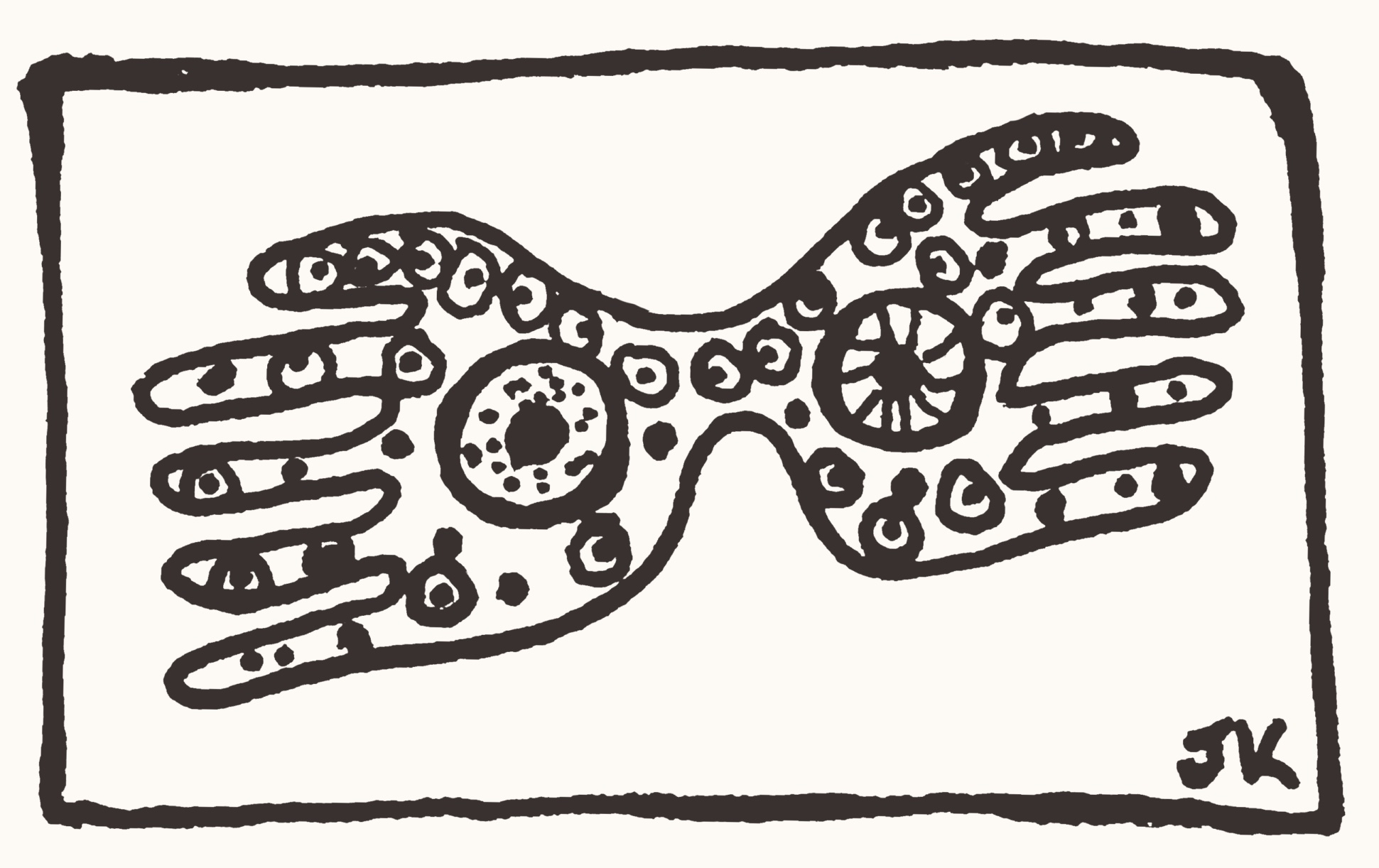
How does she stay so authentic and kind in the face of relentless bullying? They steal her shoes and snicker at her handmade jewelry.
How does she remain confident in her beliefs despite the constant doubts of others? They call her “Loony Lovegood” and truly believe she’s crazy.
Luna and Anakin Skywalker both experienced loss and suffering. But Luna became a force for good while Anakin succumbed to resentment, thirst for control, and violence.
How did Vader become so paranoid and cruel? In the same film, he massacred Jedi younglings and then claimed that he’d brought freedom, justice, and security to the new empire.
If I could understand where their paths diverged, maybe I could follow Luna’s instead of Vader’s.
Forgiveness
At first, I thought the answer was forgiveness. Vader was consumed by resentment, while Luna was clearly forgiving. But why should anyone forgive? And how does one do it? Resentment is an emotion, not something we can simply command away.
Perhaps Luna didn’t forgive everything all at once, but instead practiced small acts of forgiveness every day—letting go of frustration when she made mistakes. When she commentated the Quidditch match in Harry Potter and the Half-Blood Prince, she received some laughs from the crowd. Instead of feeling embarrassed, she let it go. Maybe small moments of forgiveness like that strengthened her ability to forgive greater injustices.
It seems like starting with small acts of self-forgiveness would be a good place to start, but could Darth Vader, obsessed with control, have been convinced to even begin to let anything slide?
Humility
I suspect it would come down to humility. Vader would need to understand that there is more to reality than his own perspective. If he’d realized this, he might have questioned his perceptions. Instead of assuming Padmé had betrayed him, he might have wondered why she opposed the Empire. He might have considered that he was missing something.
Luna embodied humility. She accepted that there was more to reality than she could understand. She believed in Nargles. She understood reality held more than what she could personally verify—and that was a source of strength.
When her classmates stole her shoes, she didn’t assume cruelty. Maybe she wondered if they needed them or intended to return them but were afraid. With reality being too complicated for a human mind to fully understand, maybe she figured it was best to simply forgive.
If Vader had been able to entertain such possibilities, might he have chosen a different path?
Open Curiosity
Humility leads to curiosity—genuine wondering rather than demanding answers. The humble person not only understands he can’t know everything, he also understands he doesn’t know everything. Out of this realization, questions arise.
Before turning to the dark side, Anakin did ask questions. He tried to find a way to prevent death and he wanted to learn everything he could about the Force. But his curiosity was driven by fear. He didn’t just ask questions. He demanded answers.
Luna, by contrast, seemed to ask questions without attachment to an answer. She was always searching for hidden wonders, like the Crumple-Horned Snorkack, even though there was little hope of finding one. Her curiosity wasn’t rooted in fear but in faith—faith that reality had goodness waiting to be discovered.
How could Vader have learned to approach life with faith instead of fear?
Faith
If he had faith—if he believed that goodness was real and not just a human construct—he might have asked questions out of hope rather than demanding answers out of fear. He might have been able to see the goodness in Padmé’s actions which would have strengthened his faith even more.
Faith is tricky though. To have faith means to believe something beyond proof. How could Darth Vader have been convinced that goodness was real if it couldn’t be proven?
He never receives absolute proof. None of us do. But in the end, he does find faith through his orphaned son. Seeing Luke consistently choose love over power, refusing to kill him even in desperate circumstances, Vader is finally confronted with enough goodness to take the leap of faith. It is Luke’s willingness to love him unconditionally—something that makes no sense if goodness isn’t real—that changes Vader’s mind.
Good Like Luna
As I explored these ideas, questions led to more questions. Maybe Luna is carefree and kind because she forgives, but how does she forgive? Maybe humility enables her to forgive, but how does she embrace uncertainty? Maybe faith allows her to approach the unknown without fear—but where does faith come from?
I went in circles. If I couldn’t prove goodness was real, how could I blame Vader for not believing in it? And in that moment, I felt solidarity with him. My heart overflowed with empathy. And in that paradox—compassion for someone who had rejected compassion—I found myself feeling a little more like Luna. In that moment of compassion, I think I unknowingly accomplished what I’d set out to do. I became a little more carefree and compassionate.