Life can feel dull and even depressing. Routines are great, but they go stale from time to time. Your mental health can be on par, but still, life can knock you down. But if you’re feeling stuck in a rut, there’s always wonder.
Wonder is that feeling of seeing a magic trick and being so impressed that you don’t care how the heck it works. No, wonder is even more than that. It’s seeing the magic in everyday life. You don’t need a ticket to a magic show or an exotic destination to experience it. It’s all around you, hidden in ordinary life, waiting to be noticed.
Here are eight ways to invite more wonder into your life.
1. Meditate.
In much the same way that jogging is exercise for the body, mindfulness is exercise for the mind. It helps you learn to focus your attention, and that is crucial for wonder. To wonder about something, you have to give it your attention.
Start simple: try a body scan meditation. Pay attention to how your toes feel, then move your focus up to your legs, then your arms… Don’t worry if your mind wanders at first. When you notice it, bring it back gently. Over time, as you practice, your focus will increase, and you’ll be able to stay alert and curious for longer spans of time.
The more you’re focused and curious, the more you’ll notice things that fill you with a sense of wonder.
2. Collect ideas.
Ideas often inspire wonder. Use a notebook, the camera on your phone, a voice recorder, whatever, to capture interesting ideas, thoughts, and observations. Over time, you’ll have a treasure chest of wonders to revisit when you need some inspiration.
Books, research papers, museums, and documentaries are all great ways to learn about nature. But the best way is to just spend some time outside-maybe bring a magnifying glass and look at bugs.
4. Visit a beautiful place.
Sometimes a change of scenery can help you feel a sense of awe. It doesn’t have to be the Eiffel Tower. You can find something closer to home. Maybe it’s a beautiful church, a breathtaking bridge, or even a funky modern building downtown. Take a moment to soak it in. Notice the little details. Wonder about it. Let yourself be amazed.
5. Read proverbs.
Proverbs are tiny packages of wisdom. They’re almost as good as fortune cookies. Sometimes you can get a fortune cookie and a proverb all in one. But sometimes all you need is the proverb. They make you pause and think.
Pick up the Bible or scroll through Pinterest, find a collection of proverbs, and see which ones stick with you. Bonus points if you write them down in your treasure notebook.
6. Ask people questions.
Wonder doesn’t have to be complicated. It can start with a simple question: “How’s your day going?” or “What do you think about this weather?” You’ll be amazed at the stories some people share-and how they can open your eyes to new perspectives. Plus, asking good questions is a skill that grows with practice.
7. Stop googling everything.
Next time you have a question—like, “Why do rhinos have horns?”—don’t immediately google it. Let yourself wonder for a bit. Go ahead, pretend you’re an armchair scientist or a time-traveling explorer. Make up theories. Play around with the possibilities. Feel free to google it later. But only after you’ve had some fun first.
8. Draw with the right side of your brain.
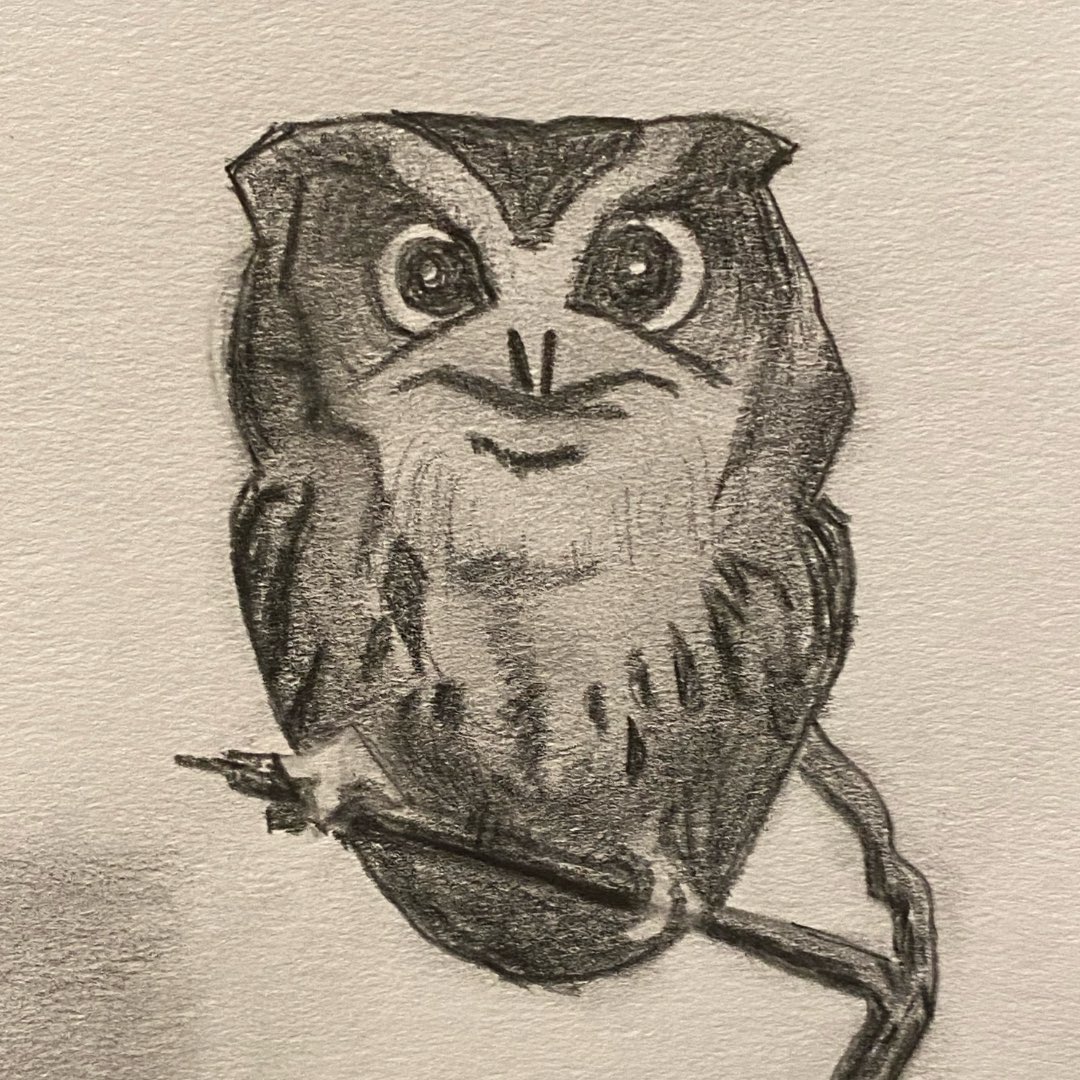
Grab a pencil and paper and try drawing something you see. Don’t worry about being good at it; just focus on seeing. The act of drawing from sight turns on the right side of your brain, the side that sees things without thinking about them, and entices you to notice details you’d otherwise overlook. Before you know it, you’ll be seeing the world in a whole new way.
If you want some guidance on drawing with the right side of your brain, I highly recommend the classic drawing book, Drawing on the Right Side of the Brain. I can’t promise it made me good at drawing, but it certainly taught me a few things.
The magic of wonder
That’s it! Wonder isn’t about having all the answers. It’s about asking questions and letting yourself be amazed even when-especially when-you don’t get the answer you were expecting.
Why not try one or two of these ideas this week and see what happens? Who knows, you might just see some real magic.
I’ve been wondering about wonder. It seems there are two parts to wonder. There’s the curiosity part: “I wonder how?” And then there’s the awe part: “How wonderful!”
It’s possible that curiosity and awe are two distinct definitions of the word wonder, but I suspect they go hand in hand. If we aren’t curious, we’ll never look to see what’s around the corner. And we’ll never be awestruck by something we can’t see.
You might suggest that, at times, we can experience wonder without looking for it, without curiosity. Sometimes it surprises us. That may be true. But I wonder if, by being curious, we might find it far more often. We might even find it in the most ordinary things, like steam rising from a mug or the pair of eyes we see every day in the mirror.
The Old Testament story of Job gets into this matter. At the beginning of the story, his life is great. But then all sorts of terrible things happen to him. His children die, his wife curses him, his health plummets. It is then that he becomes curious. “Why is this happening to me?”
However, Job takes his questioning too far. Instead of remaining curious about things, he demands answers.
In contrast to his demand for answers, Job’s friends don’t ask questions at all. Instead, they tell him why these terrible things must have happened to him. They don’t wonder, they assume. They cling to simplistic explanations, ignoring the mystery and complexity of life.
Between Job and his friends, we see two forces that destroy curiosity, and therefore wonder. Job’s experience of wonder is inhibited by his demand for answers. His friends’ experiences of wonder are inhibited by their assumptions.
Curiosity, by contrast, is neither a demand for answers nor an assumption of the answers. It’s asking questions while remaining open to mystery. And it’s the mysterious things that leave us in awe. It’s the unknown that makes us wonder and leaves us with a feeling of wonder. Neither Job nor his friends seem to understand this.
No matter. God replies to Job’s demands. But He doesn’t give him answers. He doesn’t tell him why terrible things have happened to him. Instead, He asks Job questions that Job cannot answer, questions he can only wonder at. Through some of the most beautiful poetry, God opens Job’s heart to the awesomeness of wonder.
He asks, “Where were you when I founded the earth?”
If Job wasn’t struck with wonder in that very moment, no problem. God had plenty more questions for Job to ponder. These are some of my favorites:
“Or who shut in the sea with doors, when it burst forth from the womb; when I made clouds its garment, and thick darkness its swaddling band, and prescribed bounds for it, and set bars and doors, and said, ‘Thus far shall you come, and no farther, and here shall your proud waves be stayed’?”
Chapter 38, Verses 8-11
“Have you commanded the morning since your days began, and caused the dawn to know its place?”
Chapter 38, Verse 12
“Who has cleft a channel for the torrents of rain, and a way for the thunderbolt?”
Chapter 38, Verse 25
God’s answer is one big, beautiful poem that essentially says, “Wonder.” It says, you were not the one who gave everything in the universe its form, its boundaries, its place, its beauty. You are the one who has been given it as a gift. You cannot know all the answers. You can demand to know, you can pretend to know, or you can wonder. The path that opens your heart to the experience of beauty, reality, and goodness is wonder.
So perhaps, by cultivating curiosity, we can open ourselves to awe. By asking questions without demanding answers, by being present to mystery, we might find wonder, even in the ordinary. We might find it in the similarity between the words pain and rain, or we might find it in a sprinkled donut. We might, like Job, be invited into a deeper understanding of life’s mysteries, not through explanations, but through the gift of wonder itself.
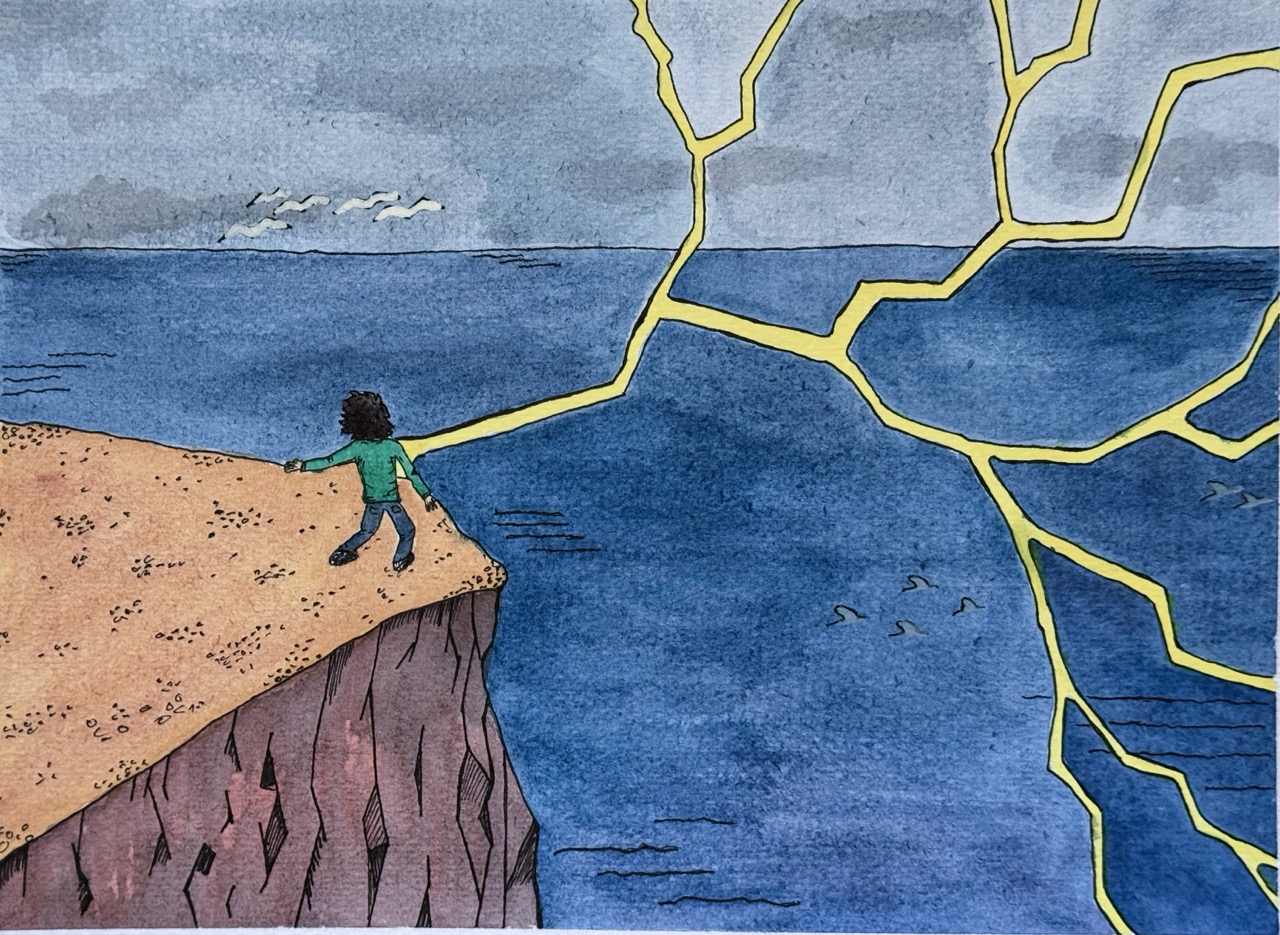
Magic is real. Most people don’t believe it because they can’t analyze it under a microscope or measure it by volume. Most don’t see it at all. Take, for example, the story of Oyo Didirod. Oyo was so lonely that a bolt of lightning sprung from his heart and turned a piece of coal into a diamond photograph. Most people never saw it or even noticed any difference created by the magic.
Oyo was lonely because his soulmate was born at the wrong time. I would tell you why she was born at the wrong time, a thousand years too late, but many people would want me dead and this more important story would go untold. Either way, she was born at the wrong time. As a result, Oyo was lonely. He was so lonely that he created lightning.
He became lonely when he met the soul sister of his soulmate. His soulmate’s sister – rather, the woman who would have been his soulmate’s sister – was born at the right time. So even though Oyo never met his soulmate, he did meet her sister. It was then that his heart swelled so full of loneliness that he could hardly breathe. He could barely even think. Every part of him ached.
He went for a long walk to try and think. With every woman he passed, his heart wondered, “is she the one?” In such desperate loneliness, he could only find one solution: sail out to sea.
The next morning, before the sun came up, he set sail. After two weeks on the Atlantic Ocean, heading in no particular direction, Oyo came to an island. Tired and hungry, but mostly lonely, he pulled his boat onto the shore.
In the middle of the island, there was a mountain. In his loneliness, he could think of nothing else but to climb the mountain. So he climbed.
He climbed, first, through a forest of palm and coconut and banana trees. A warm breeze shuffled through the leaves and branches, and stirred an air that smelled as fresh as a fruit smoothie. He ate his fill of the soft bananas and the snow white coconut flesh, and he didn’t let a single drop of the sweet coconut water go to waste.
After he climbed through the forest of palm and coconut and banana trees, he came into a forest of beech trees. Their tall trunks and wide canopies reminded him of a book about trees that he’d read some years prior.
Many people believe oaks are the mightiest trees, he remembered, but beeches can dominate oaks in a forest because beeches feed their young. The tallest beeches feed the smallest beeches through their roots. The young oaks, on the other hand, receive little nourishment from the roots of their ancestors, and they receive no sunlight because the taller trees crowd them out, and so the small young oaks starve while the small young beeches become big old beeches.
When he had climbed the whole way through the beech forest, the land cleared away and the sky became wide. He kept climbing. Now he climbed not through forests but over boulders of many shapes. Most of them were the size of polar bear skulls, but some were as big as humpback whales, and some were as small as chubby woodchucks.
During the rocky part of his climb, he was distracted by the sight of an eagle picking at a dead pelican. It caused him to miss his step and he lodged his left foot between two of the boulders. His foot swelled and he was stuck in that spot for six days. Finally, a powerful gale blew in and brought with it a sleet storm. The sleet stung when it hit Oyo’s head and back, but the cold brought down the swelling in his foot, and the wet made the rocks slippery enough that he could finally writhe himself free.
From there, he limped to the edge of a cliff at the top of the mountain. He looked out over the ocean and beheld the scene: the flowing, waving sea; seagulls hovering over, and occasionally diving into, a school of fish that glistened like foil; the untinged sky; and a pod of dolphins weaving above and below the water’s surface.
For a moment, he was lost in the beauty of it all. Then his heart burst. Or so he thought. What really happened was, he felt the weight of true beauty and he felt it all by himself. And the weight of true beauty is far too heavy for any one person to carry alone. With all its force, the beauty struck his heart like lighting. Without anyone there holding his hand, that same bolt boiled up inside him and then struck from his heart.
It generated so much energy, so much electricity, so much light, that it caused a chemical reaction which embedded a photographic image on a nearby piece of coal and turned it into diamond.
An old woman, a witch doctor who lived on the island, was the only one who saw the bolt of lightning and its product. She wondered, at first, if she was seeing things, if she had mistaken the direction of the lightning.
“Maybe,” she thought, “it came from the sky and struck the man.”
But when she walked out to get a closer look, the man was standing there unharmed, untouched, without a single singed hair on his head.
The old woman, the witch doctor, found the diamond photograph on the ground. She picked it up and showed it to Oyo. Then she listened to his story, the reason he sailed the Atlantic and climbed the island mountain. She understood his loneliness and assured him that his soulmate was out there somewhere; maybe in another place, maybe in another time, but she was out there. And, now, a small piece of his beautiful moment atop the mountain was captured in the diamond photograph. She promised him that one day, by way of the photograph, his soulmate would be with him in that moment. From that day forward, Oyo wasn’t lonely.
The witch doctor lived until she was one hundred years old. Before she died, she passed the diamond photograph onto her granddaughter. In turn, her granddaughter lived to one hundred years old and she passed the photograph onto her granddaughter. The photograph was passed through the generations of witch doctors for a thousand years.
On the thousandth year, the witch doctor’s very great, great granddaughter met Dori Didoyo, the loneliest woman she’d ever known. Dori was born lonely. Her mother and father had abandoned her right after she was born. Passed from foster home to orphanage to foster home to orphanage, she grew. Nobody seemed to want her. She didn’t fit in. They said she was born for a different time.
She suffered much. She had tremendous wounds on her heart. But she was also wise, and over time, she turned every wound into a strength. That was good because she needed strength. She needed it for her journey to her new home, the island in the middle of the Atlantic.
She didn’t aim for the island. She set sail upon the sea in no particular direction. Just like Oyo, Dori was so lonely that it just felt right. Setting out to sea was the only thing she could do.
She was starving by the time she arrived at the island, but since the only other living person on the island was the very great, great granddaughter witch doctor, there was an abundance of coconuts, mangos, pineapples, bananas, and fish from the ocean. Dori didn’t care so much for the fish because they were full of bones, but sometimes she needed a break from fruit.
When she needed a spoon, she used a little seashell. When she needed a cup or a bowl, she used a big seashell. When it rained, she built herself a delightful little house just above the high-water mark.
The island wasn’t huge, but it also wasn’t tiny. Dori had lived there for three happy, albeit lonely, years before she came across the very great, great granddaughter witch doctor. They soon became friends. This surprised and delighted Dori. She wasn’t used to people wanting her around.
One day, not long after they’d first met, the witch doctor invited Dori over for supper. After she and the witch doctor ate and had some tea from the witch doctor’s own chamomile flowers, Dori went back to her own hut to sleep.
It was then that the witch doctor realized that the diamond photograph, which now sat on top of a bookshelf in the witch doctor’s bedroom, was glowing like the moon.
Right then, the witch doctor knew that Dori was the loneliest woman on the planet. She was happy about this because she knew that her purpose, and her mother’s purpose, and her grandmother’s purpose, and her great grandmother’s purpose, and so on, would soon be fulfilled. Her mission would soon be complete.
But she was also afraid. She knew her home, along with her island, would disappear. It would be devoured by a flood and sink back into the Atlantic. But she also knew this was her destiny. So, yes, it scared her, but at the same time it made each moment of the rest of her life more precious.
In a deeper way than ever before, the witch doctor was able to savor the birds that chirped outside of her bedroom window each morning and the salty breeze that wrapped its warm arms around her every evening. Every little thing, even a passing cloud, was now rich with meaning and filled the witch doctor with tremendous joy.
She took a month to prepare herself and to enjoy her island for just a little bit longer. Then she said to Dori, “I know why you’re so lonely.”
Dori was surprised by this statement. She wondered how someone she had known for only a month could see so deeply into her heart. “How does she know I feel so lonely?”
“This diamond photograph,” the witch doctor held it close to her chest, “has been passed to me through many generations. From your soulmate. His heart cried out to you through all these years of time. He cried out with such passion that he created a burst of lightning which imprinted a piece of his most beautiful moment onto a piece of coal and turned it into diamond.”
Still embracing the photograph, she continued, “if you behold this photograph, you will share that beautiful moment with him. You will be with him. If not, you will be lonely for the rest of your life, and your soul will not be whole until your body turns back to dust.”
The witch doctor looked off into the distance and said, “but giving you this photograph will result in a flood that sinks our island back into the Atlantic…forever.”
A dizziness came over Dori. It lifted her up and dropped her down like an ocean wave. “But the island is your home,” she said, “and now…it’s my home too. Where will you go?”
“I do not know where I will go,” the witch doctor said, “but I am confident that, wherever I go, it will be the right place.”
Something about the witch doctor made Dori trust her, made her trust that if the island really did sink into the Atlantic, it would be okay. After reflecting on it for some time, she told the witch doctor that she was ready to behold the diamond photograph.
They enjoyed one final meal together. Then, the witch doctor held out the diamond photograph toward Dori and said, “a piece of a moment, a piece of a soul, a piece, but only a piece is yours to behold. But maybe a piece contains the whole.”
Dori beheld it. In that moment, the witch doctor became a deep blue vapor that rose into the sky, spread out over the entire island, and then poured down like a thick rain.
Just as the witch doctor had predicted, the island flooded. When the rain stopped, it was gone.
All that was left was Dori, her memory of the witch doctor, and her sail boat. She sailed back across the Atlantic Ocean and back in time one thousand years. When she arrived, she was never lonely again.
What splendid magic! The soulmates, despite human failings, were brought together after all. You see it, don’t you? Most people miss the magic entirely. Only the rain saw lightning strike from Oyo Didirod’s heart, but it happened alright, and that was magic. It exists.
It’s there where a cliff overlooks the ocean. It’s there in the connection between soulmates. It’s there in a photograph that enables distant lovers to share the beauty of a fleeting moment.