Tag: #Migrated-1730296137420

  • Despair is a Window to the Divine

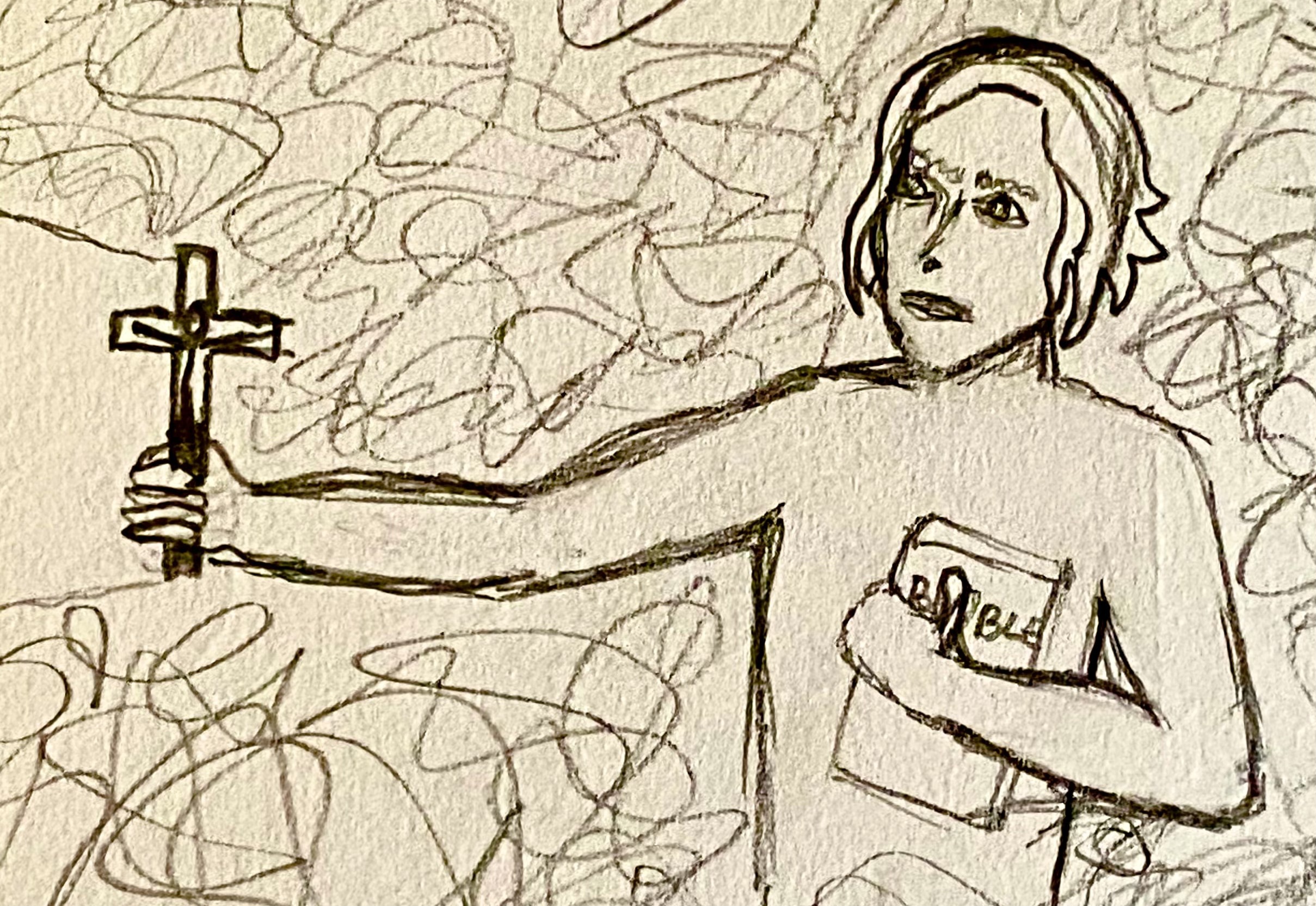
    Despair is a Window to the Divine

    “Magnanimous Despair alone

    Could show me so divine a thing…”

    Andrew Marvell

    This idea fascinates me. It is one I believe is true, yet cannot prove. It is the idea that only when we are in our deepest suffering and worst despair can we receive this certain divine gift. Despair is a window through which divine light shines.

    It reminds me very much of Jesus Christ’s first beatitude, “blessed are the poor in spirit, for theirs is the kingdom of heaven.” (Matthew 5:3)

    The experience of divinity is the most amazing thing about it, no doubt. But also amazing is that man can conjure neither the divine nor his own despair.

    Men cannot bring God to Earth. We lack that power. And men naturally hate despair, are absolutely repulsed by it, and will do just about anything to avoid it. And many succeed in avoiding it. But those who happen upon it, or intentionally choose not to avoid it, are endowed with riches beyond any riches physics could ever measure, “so divine a thing.”

    Avoiding this despair is, especially in our world, quite simple; there’s suicide, there’s intoxication, there’s amusement. But in any man with even the tiniest shred of faith, such despair becomes inevitable because even the littlest bit of faith will cause a man to accept life, to choose a moment of sobriety, to allow his mind a period of thought long enough to be crushed by the weight of life.

    And when the weight has so destroyed him that he has lost all hope, he must once again choose between suicide, intoxication, and amusement, on one hand, or to continue in his despair. Again his faith is tested, and if he continues further in his despair, he has affirmed his faith. He has affirmed it because the only way he could have possibly continued in such despair is by faith. And if he continued, he might have come to see “so divine a thing,” and if he continues still, he will come to see “so divine a thing.”

    Then he can walk through the storm he never believed he could survive because he has accepted superhuman aid. He can walk through death to new life because it is only in despair that he realizes his inability to live on his own and so accepts divine assistance. Only when the torential downpours of mortality halt his journey does he recognize his desparate need for his divine father’s help, and so only then does he open his eyes to see the divine hand offering divine support.

    Then his faith, which has been tempered and tried by fire, becomes stronger. And in such faith, faith which has been purified by “magnanimous despair,” comes abundant joy and abundant peace.

    Magnanimous despair:
    the voice of Christ crying out,
    “why have you abandoned me?”

    Magnanimous despair:
    the tragedy of humans mistakenly
    – “they know not what they do” –
    murdering their protector, their father.

    Magnanimous despair:
    the terror of learning that
    our victim is God, and has come back.

    Oh so divine a thing
    to be forgiven, to be redeemed,
    even after we have committed such vicious acts,
    and before we even have to beg for mercy.

    It couldn’t have happened without magnanimous despair.
    Magnanimous despair alone could show us so divine a thing.

    “The darker the night, the brighter the stars. The deeper the grief, the closer is God.”

    Fyodor Dostoyevsky

  • The Alarming Coloration of Our Digital Devices

    Have you looked at your computer or phone screen lately? Of course you have, but have you noticed how bright and saturated everything looks?

    Our devices display intense coloration because bright, saturated colors appeal to our instincts, our animal natures. They catch our attention. They look like sweet fruits and poisonous animals, but much brigther and more saturated, and in nature we only see such colors on occasion, and when we see them they mean something important. That’s why they catch our attention. Now, in this digital world, we see them all the time. I’m not confident that viewing such intense coloration so often is harmless. It is certainly not natural.

    It reminds me of my youth when I regularly consumed unnatural foods with intense flavors. My tongue loved them because, in nature, delicious foods are generally nourishing foods. But my tongue was deceived because food scientists have learned to produce delicious foods that offer little or no nourishment. Lack of nourishment makes us vulnerable to illness, but such foods are widely distributed because they are highly profitable. I wonder if the producers of our digital tools have adopted the same trick.

    A couple months ago, seeking to remove non-essential pieces of my digital toolset, I turned on my operating systems’ (MacOS and iOS) color filter settings. I configured them to desaturate colors, with a grayscale filter, so that I could only see enough color to distinguish things that I might need to distinguish by color, like the circle in my employer’s chat system that shows red when my manager is busy and green when he’s available.

    I knew the colors on these devices were intense, but until I spent two months using a desaturated screen, I had no idea just how intense they were.

    One day, I needed to see an accurate representation of an image on my screen, so I turned off the color filter. Only then did I realize the excess in the coloration on these devices. I was alarmed, so I want to bring this to your attention in case it, in its contrariness to nature or in its deception of our instincts, is doing some harm to our bodies, minds, or souls.

    It would be wise to, at least, test these things for some time. For that reason, I am providing links to instructions for desaturating today’s most commonly used operating systems. In addition to those links, I am also providing links to two Apple Shortcuts that I created to easily switch the desaturation settings on and off.

    As the producers in our physical world compete with the producers in our digital world for our attention, especially in the consumer sector, it may also be wise to wear sunglasses in shopping centers. That is partly a joke but worthy of consideration. If we choose not to wear sunglasses in stores, we also open our senses to powerful forces of manipulation.

    Microsoft Operating Systems

    Color filter Windows

    Google Operating Systems

    Color filter Google Pixel

    Color filter Samsung Galaxy

    Apple Operating Systems

    Color filter iPhone

    Color filter iPad

    Apple Shortcuts

    Shortcut to desaturate colors

    Shortcut to re-saturate colors

  • The Difference Between Meditation and Contemplation

    The Difference Between Meditation and Contemplation

    Among the many beautiful traditions handed down through the Catholic faith, we have meditation and contemplation. In fact, these processes are traditional to many human cultures. One might call them universal. In recent times, even scientists have adopted and studied the effects of meditation and contemplation.

    Unfortunately, the two processes are often misunderstood or wrongly defined. Misunderstanding leads to untruth. Untruth is the opposite of Christ who is “the way and the truth and the life.” (John 14:6) The opposite of Christ is the Antichrist, spiritual tragedy, Hell.

    If we want to practice meditation and contemplation in truth, then we must know what each one is.

    The outcomes of many prayers, rites, and sacramentals, of the Church depend on the practitioner knowing the meaning of and understanding their words. For example, the process for praying Lectio Divina includes a meditation piece and also a contemplation piece. Mixing up the definitions of those two words significantly changes how Lectio Divina is prayed. This could result in further misunderstandings and unexpected outcomes.

    For those reasons, I am compelled to define meditation and contemplation, and explain why the definitions I provide are their true definitions.


    Many popular websites and blogs present the wrong definitions of meditation and contemplation. A few get them right.

    In a quick web search, from which I simply pulled the top results, I found several incorrect definitions of the words meditation and contemplation.

    On mindfulnessbox.com, author Ryan Kane mixes up the definitions of the two words.

    He writes, “The main difference between contemplation and meditation is that meditation is a practice that focuses on clearing the mind, while contemplation is a more analytical and reflective practice that involves thinking deeply about a particular topic or concept.”

    In truth, contemplation deals with clearing the mind while meditation involves deep thought; just the opposite of what Kane wrote.

    We can also see mix-ups and mis-definitions in responses on the popular forums, Reddit and Quora.

    On Reddit, user greenraylove writes, “Meditation is quieting the brain entirely,” but in truth, meditation involves thought, so the brain is not entirely quiet.

    On Quora, user J. writes, “Contemplation is thinking and reflecting with the mind. Meditation is listening.” Again, the two terms are confused.

    Sandra Anderson, in an article published on yogainternational.com, also mixes the two words up. She writes, “While contemplation is a train of thought about something, meditation is training the mind to rest in a particular focus that leads to a connection to the source of consciousness itself.”

    In fact, meditation involves thought, seeking to understand. Contemplation involves restful watching, listening. Sandra has written the opposite.

    On a Christian spiritual direction website called anamchara.com, someone seems to have finally written the truth.

    It is there that Carl McColman writes, “this kind of meditation is a process of cognitive, mental engagement,” and “In contemplation, we seek to make ourselves radically available for the presence of God.”

    Another truthful answer is given by Sister Mary Colombiere on carmelitesistersocd.com. She writes, “the basic difference between meditation and contemplation is that meditation is a human mode of prayer whereas contemplation is divinely infused prayer.”

    I am happy to see that some writers tell the truth. At the same time, the internet is seething with lies. So how do you know I, myself, am not lying or accidentally providing incorrect information?


    We can find the true meanings of the words by tracing them back to their roots.

    If you’re thinking, “who is this guy to say which definition is true and which one is false?” That is a valid concern. Why should you trust me? What is the source of my information? How do I know which definition is right and which one is wrong?

    Here’s how I came to the true definitions of contemplation and meditation: I researched the etymology of the two words. In the etymology, we trace words back to their roots. By looking at their roots, we can often determine their true definition.

    This is especially true when it comes words like meditation and contemplation which a) have roots in Latin, and b) are used in instructions that were also originally written in Latin, like those of Lectio Divina. By understanding what the word means in Latin, we can understand what the author, writing in Latin, meant when he used the word.

    The etymology indicates that meditation involves thought while contemplation involves observation.

    Meditation comes from the Latin word meditationem. Meditationem is defined at etymonline.com as “a thinking over, meditation,” “to meditate, think over, reflect, consider,” and “take appropriate measures.”

    In the etymology, we see that meditation involves thought.

    Contemplation comes from the Latin word contemplationem. Contemplationem is defined at etymonline.com as the “act of looking at,” “to gaze attentively, observe; consider, contemplate,” and “to mark out a space for observation.”

    In the etymology, we see that contemplation involves observation.


    Proper definition and understanding of the words we use are essential.

    Mixing the definitions of words, or not taking care to properly understand them, can lead well-meaning people to misguide themselves and others. Who knows what destructive effects result from such misunderstanding.

    Hopefully, to any of us who sincerely seek truth and understanding, the Lord will meet us where our knowledge falls short. Nonetheless, faith alone will not suffice.

    If we do not understand the words of Christ and his bride, the Church, then the words don’t matter. I can read that “love is patient” a million times, but if I do not understand the meaning of the word patient, then I am at risk of misunderstanding love altogether.

    The writings of Scripture were given to us because they matter. The writings of the desert fathers have been handed down for hundreds of years because they matter.

    Words matter, and so I will leave you with the words (shared on thomasmertonnyc.org) of the renowned and beloved Trappist monk, mystic, and author, Thomas Merton, who knew the true definitions of contemplation and meditation.

    ”Contemplation is the highest expression of man’s intellectual and spiritual life…It is spiritual wonder. It is spontaneous awe at the sacredness of life, of being. It is a vivid realization of the fact that life and being in us proceed from an invisible, transcendent and infinitely abundant source. Contemplation is, above all, awareness of the reality of that source.”

    ”To meditate is to exercise the mind in serious reflection.”

  • Get the Most Out of Your Journaling Practice

    Get the Most Out of Your Journaling Practice

    The Scientific Evidence of Journaling’s Benefits Looks Promising

    There exists an abundance of scientific evidence showing the benefits of journaling, especially for specific journaling protocols. Neuroscientist Andrew Huberman discussed one of them on his podcast (linked below). It’s a fascinating episode, but as with most scientific expositions, it both oversells and undersells the solution.

    Science oversells because it looks at groups instead of individuals. A statement like, “more than 200 quality peer-reviewed studies…reveal that the positive physical shifts that occur in people that complete this [protocol] are both significant and long-lasting,” makes journaling seem very powerful, but there are many complexities and confounding factors when looking at these outcomes. And many people don’t fit into the average. There are outliers to whom the evidence does not hold true.

    The scientific discussion also undersells. It fails to mention any benefits that cannot be quantified or measured. Science does not provide an individual’s perspective and observations. For that reason, I want to share some of my own thoughts on journaling.

    My Own Introduction to Journaling

    My story begins with English class way back in 2001. I wasn’t even a teenager yet. My English teacher would have the class sit in silence for ten or fifteen minutes and write anything we wanted. In those journaling sessions, I discovered my passion for writing.

    I looked forward to those few minutes when I could escape into myself and write about the colorful trees I had seen on a bike ride or my plans for summer vacation.

    That experience ignited a habit that I have continued ever since. Now, journaling has been with me through all the ups and downs of my life, the good times and the bad times. This leads me to my first point.

    Journaling is Not a Magic Bullet

    Expressing myself in writing has added value to my life, and I certainly would not call it a waste of time. At the same time, though, the simple act of writing does not cure mental, physical, or spiritual ailments. In my experience, it can even exacerbate them.

    Journaling is not a magic bullet. It is mirror reflection of the heart. As we write, we are studying that reflection.

    If my heart is diseased, my writing will be diseased, and that will reflect again back to my heart. In that case, journaling is no cure.

    But if I make a small and positive change in the words I write, that change will reflect to my heart. Then, the next time I write, the light shining from my heart will be a little brighter and the writing will reflect that. It can become a beautiful cycle of healing. But if the changes I make are negative, or if I have a negative mindset and write exactly that (changing nothing), then it can be a tragic cycle.

    For that reason, we must see journaling not as a cure all, but as a part of the soil in which we grow. When our soil is full of rocks and thorns, we do not grow well, but when it is rich with dirt and living organisms, we have the conditions we need to thrive.

    To develop healthy soil, we must journal the right way. So what is the right way to journal?

    How to Journal the Right Way

    There are a couple requirements in order to journal in a way that promotes health and positivity. First, we need a reason for writing. Second, we must strive to reflect reality with honesty.

    Have a Reason

    If we have no reason for writing, we will sit down in front of an empty page and fill it with nothing. We must have a reason. There are many possible reasons for journaling.

    Some reasons for journaling:

    • To record a specific memory
    • To express feelings about something
    • To weigh pros and cons
    • To think through a problem
    • To plan for the future
    • To track progress toward a goal
    • To learn about yourself

    Whatever the reason is, we most likely will not journal to record a fictional story. That would fall under the definition of fiction writing rather than journaling.

    Reflect with Honesty

    In general, journaling deals with reality. We might write a poem in a journal, but it is likely going to reflect our own reality rather than a fictional or mythical one. And it wouldn’t really be journaling if we set about writing a piece of fiction. Because we are dealing with reality when we journal, we should strive to be honest in our writing.

    Honesty is the accurate reflection of reality. It is an excellent guide. As we write honestly about the things of our lives, we have the opportunity to see them with a deeper level of clarity. This leads to the discovery of new insights and revelations.

    Noticing and Correcting the Lies We Tell Ourselves

    Many modern day versions of psychotherapy, which are often used for the same purposes as journaling (e.g. self-discovery, solving problems, achieving goals), center around a patient, who is aided by a therapist, in discovering the lies or inaccuracies in their thoughts and beliefs. The prime example of this is Cognitive Behavioral Therapy.

    In Cognitive Behavioral Therapy, a patient is taught to disrupt or correct faulty thought patterns known as cognitive distortions. Cognitive distortions, put simply, are lies we tell ourselves. In working with a therapist, the patient learns to catch these lies before they turn into negative emotions or beliefs. With practice, catching and correcting these lies can heal faulty mental programming and disordered thought patterns.

    If we pay careful attention as we write about our experiences, we can catch some of our own cognitive distortions. This happens organically when we strive to write with honesty. The process might look like this.

    Correcting Cognitive Distortions, An Example

    1. Kanye West was dating a woman who broke up with him. After telling him it was over, she blocked his phone number so he could no longer get in touch with her. At first glance, the blocking seemed unprovoked. He wasn’t harassing her or anything. He only tried texting her once to apologize for being a jerk. That’s when he found out she had blocked him.
    2. In a song about the woman, Kanye wrote, “how could you be so heartless?” In that moment, he was ignoring the complexities of this woman. Instead, he slapped the label, “heartless,” on her. This is a cognitive distortion called “labeling.” It feels good in the moment, but can result in harmful beliefs and unnecessary suffering.
    3. Later, as he was journaling about a date he had with the woman, he recalled that she told him about her ex-boyfriend who was abusive and kept harassing her to the point that she had to get a restraining order on him.
    4. As he wrote honestly about the situation, Kanye realized that the woman’s perspective was very different from his own. Even though he hadn’t provoked her to block his phone number, she had reason to believe it would be the best way to avoid drama. This helped him to see the woman as a human being and to learn from the situation.

    Okay, that didn’t actually happen – not that I know of – but it gets the point across.

    Kanye’s deeper analysis seems messier and less conclusive than “she’s heartless,” but it is a more accurate reflection of reality. Life is messy. There are many things we do not know, many mysteries, and when we accept them, when we write them into our stories, we give them an identity. When something has an identity, we can face it, learn from it, and even embrace it. When it doesn’t have an identity, it is a monster; it cannot be faced or embraced.

    In order to help catch cognitive distortions, I made a list (linked here) of common cognitive distortions along with definitions, examples, and ways to correct them.

    As we embrace honesty in our writing, we begin to see how complex and magical the world is. This brings us to the greatest aim of journaling.

    The Best Reason to Journal

    In my own experience, facing the complexity and mystery and magic of the world, through honest journaling, brought me to my knees. It terrified me. It made me sick and poor.

    In order to carry on, I had to acknowledge my lack of understanding, my incompleteness of knowledge, my mortality. When I was in that place of weakness and poverty, I needed God. I needed the aid of the one who knows and understands everything that I cannot know or understand.

    When I went to him, in faith, that is when journaling really paid off. I went to him and he was there, and he comforted me. I felt peace deeper than any peace I had ever felt before.

    Can someone go to God without journaling? Yes, of course. But we can use journaling as a tool to help us get to the truth, and the truth helps us get to God. God is The Truth, and what better use is there for journaling than as a means for seeking and discovering him?

    I am the way and the truth and the life.

    Jesus Christ, John 14:6

    Journaling Resources

    List of common cognitive distortions with explanations, examples, and solutions.

    Andrew Huberman podcast – A Science-Supported Journaling Protocol to Improve Mental and Physical Health

    My Favorite Journal Brands (Not Sponsored)

    • Field Notes – made in USA; pocket-sized; available with lined, dotted, or graphed pages
    • Dingbats – high quality; designed with sustainability and human-rights in mind
  • Cognitive Distortions and How to Fix Them

    Cognitive Distortions and How to Fix Them

    “Above all, don’t lie to yourself. The man who lies to himself and listens to his own lie comes to a point that he cannot distinguish the truth within him, or around him, and so loses all respect for himself and for others. And having no respect he ceases to love.”

    Fyodor Dostoevsky, The Brothers Karamazov

    Cognitive distortions are ways we deceive ourselves. These lies, that tell ourselves and believe, cause all sorts of suffering and pain. With practice, though, we can catch them and correct them. We can develop an honest, undistorted way of seeing the world.

    When we see a situation with unclouded eyes, our beliefs about it change, and when our beliefs change, our feelings change.

    For example, if I have $5 and I believe I need $10 to be prepared, then I feel unprepared. If I have $5 and I believe I only need $1 to be prepared, then I feel prepared. I have the same amount either way, but my feelings differ because my beliefs differ.

    In all truths, there is beauty and goodness, so when we get to the truth, we increase our sense of peace and joy.

    Here are nine common cognitive distortion and how to correct each of them.


    All-or-Nothing Thinking

    All-or-nothing thinking is viewing things as though there were only two possible categories. Quite often, this thought pattern does not reflect reality, therefore it is a distortion.

    An example of all-or-nothing thinking: “I had a headache and it ruined my whole day.”

    To combat this type of lie, we can reflect on the grey areas and complexities in the situation or object.

    “I had a headache. It hurt, but I laughed when grandma farted, and I got some grocery shopping done.”

    Overgeneralizing

    Overgeneralizing is viewing a single negative event as a never-ending pattern of defeat.

    An example of overgeneralizing: “I always get the slowest line in the grocery store.”

    To combat this type of lie, we can think of a specific and concrete exception to the generalization.

    “I got the slowest line at the grocery store today, but I did get a fast one at Ralph’s last Saturday.”

    Mental Filtering

    Mental filtering is viewing the negative aspects of a situation while ignoring or filtering out the positive aspects of it.

    An example of mental filtering: “He said he doesn’t like my haircut.”

    To combat this type of lie, we can think about the parts of the situation that we are filtering out.

    “He said he doesn’t like my haircut, but that I am beautiful even with a bad haircut.”

    Mind Reading

    Mind reading is assuming you know what someone is thinking or feeling.

    An example of mind reading: “She hasn’t texted back. She must be mad at me.”

    To combat this type of lie, think of alternative possibilities and/or communicate with the person.

    “She hasn’t texted back. Maybe she is busy with work. Maybe she dropped her phone in the toilet. Maybe she is driving.”

    Or communicate: “hey, I thought I would have heard back from you by now. Is everything okay?”

    Fortune Telling

    Fortune telling is predicting that things will turn out in a negative way and you won’t be able to cope with the outcome.

    An example of fortune telling: “I am going to trip on stage or something. I just know it. Everybody will be embarrassed for me. It’ll be so awkward.”

    To combat this type of lie, consider the likelihood of your prediction, and then plan for the worst case scenario.

    “I have practiced a ton, so I am less likely to make a mistake. If I do make a mistake, the very worst case is that I will be fired and then not be able to find another job and lose my apartment and end up homeless and have to start from scratch. If that happens, I will start by spending two hours at the library each day applying for jobs.”

    Magnifying or Minimizing

    Magnifying or minimizing is overvaluing or undervaluing the importance of a situation or fact.

    “This is the fifth time I’ve been rejected. It’s shameful to have been rejected so many times.”

    To combat this type of lie, look at the situation or fact from different perspectives. How will it look in a month, in a year, on your deathbed?

    “In a month, I might be rejected three more times, and then five won’t seem nearly as shameful. In a year, I might actually be accepted by someone, especially if I can get these cognitive distortions under control, and then the rejections won’t matter so much. On my deathbed, I’ll be glad I at least tried, and surely I’ll have some successes to look back on, and I’ll have nurses who care for me all day long, and soon I will be even closer to God, who loves his children.”

    Emotional Reasoning

    Emotional reasoning is assuming that how you feel is an accurate reflection of how things are.

    An example of emotional reasoning: “I feel anxious. That must mean something bad is going to happen.”

    To combat this type of lie, realize that emotions are influenced by beliefs. Our unique perspectives in regards to the facts shape our beliefs about the facts, and our beliefs shape our emotions.

    “I feel anxious, but it’s not necessarily because something bad is going to happen. It is because I believe something bad is going to happen. Why do I believe that? What are the facts about the situation?”

    Shoulds, Musts, and Have-Tos

    Shoulds, musts, and have-tos are the beliefs that things should or shouldn’t, must or mustn’t, have to or can’t, be a certain way without any evidence to support those claims.

    An examples of shoulds, musts, and have-tos: “I should start working on this project now.”

    To combat this type of lie, consider the reasoning, the why, behind the “should,” “must,” or “have to.”

    “If I start working on this project now, I will be less stressed as the deadline approaches.”

    Labeling

    Labeling is applying labels or stereotypes to situations, to yourself, or to others.

    An example of labeling: “I’m late for work again. I’m such a loser!”

    To combat this type of lie, acknowledge the facts and details instead of simply labelling the situation or person.

    “I’m late for work again. I forgot to set my alarm.”

    Personalizing

    Personalizing is holding yourself accountable for something that isn’t or wasn’t entirely under your control.

    An example of personalizing: “She ghosted me because I am an annoying person.”

    To combat this lie, define healthy boundaries in your relationships.

    “She ghosted me because of her own beliefs, feelings, and perspective about the our relationship. I am not responsible for her choices.”


    Please note, this is not an exhaustive list of cognitive distortions. There are many more documented in the psychological and scientific literature. However, these are some of the most common cognitive distortions in our culture. Beginning with these nine cognitive distortions can open your heart to many truths it had not previously known.

    If you spend a few minutes every day reviewing the cognitive distortions you commonly falling into, you will grow in your ability to recognize and combat them in the moment. Then you can stop them in their tracks and find greater peace and joy in any situation.

  • Carl Jung Resources for Beginners

    Someone who had trouble understanding Carl Jung asked me for resources. I am documenting them here.


    Diagram of Jung’s Model of the Human Psyche


    Resources for Learning Jung’s Ideas

    Jung is not always easy to understand. In fact, he’s usually far from it. His ideas build on one another, so misunderstanding one, or not knowing its meaning, creates a domino effect. That said, he does have a couple works that are on the easier side and work well for beginners.

    The Undiscovered Self

    The Undiscovered Self is a short and relatively easy read that works as a good introduction into Jung’s world of ideas.

    Mother Archetypes

    This is an interesting, and free, copy of a chapter of one of Jung’s books on archetypes. It is a good introduction to Jung’s archetype theories.

    Transcripts of Jung’s Talks

    I have found that reading transcripts of Jung’s talks is a much easier way to understand the man’s ideas in his own words. Here is an example of that.

    Works Edited by Jung

    Man and His Symbols, Conceived and Edited by Carl Jung

    Man and His Symbols is an excellent way into Jung’s ideas. The book is a compilation of essays by Jung’s contemporaries, edited by Jung himself.

    It has some excellent essays that cover a range of Jungian topics, from the symbolism in Beauty and the Beauty to dream analysis to approaching the unconscious.

    If you can find it, I highly recommend the old hardcover version (that’s the version I linked to above) that has larger and full-color images. In a book about symbols, big, colorful images really help.

    YouTube Videos that Explain and Quote Jung’s Ideas

    The way I first came to learn about Jung and his ideas was through one of my favorite YouTube channels: Academy of Ideas. They have a whole playlist of videos introducing Jung’s ideas. The videos are full of great quotes and wonderful art.

    Your Own Mind

    Ultimately, I think you have to do a lot more thinking about Jung’s idea than reading about them. You have to really chew on them; “is this what he meant by that? No, that would contradict this. He must have meant this. Oh wait, this scholar puts it this way. Yes, that seems right, doesn’t it? No, if that’s so, then this could not be.” Eventually, Jung makes you go crazy and his whole purpose is accomplished.

    Works by Jungian Scholars

    King Warrior Magician Lover by Robert Moore and Douglas Gillette

    King Warrior Magician Lover is a popular book from the 1990s that gives an interesting persective on Jung’s ideas of archetypes and the shadow. The book describes what the authors call the four masculine archetypes, and each of their shadow archetypes.

    I believe these archetypes apply to women as well. They are really just personifications of what the Catholic Church calls “the cardinal virtues.”

    The book also has a method of shadow work toward its conclusion. That part of the book is a gem because most sources that offer a method of shadow work (e.g. the shadow work journals you might find on Amazon) were created by people who have no real understand of Jungian psychology.

    A Word of Caution

    There are many people on the internet who will speak of Jung’s ideas as though they have a strong grasp on them, but miss the mark entirely. This post on Reddit is a good example of the broad range of beliefs among Jung’s followers. It is also an interesting idea to think about.

    Addition

    I originally posted this on Medium.com. There, Samantha Price Fischer left the following comment:

    I would say his autobiography “Memories, Dreams, and Reflections” is another beautiful way to get a feel for Jung the man. It was completed near the end of his life and is excellent as an audible.

  • Integrity: How I Learned to Be Myself

    Integrity: How I Learned to Be Myself

    Why would I want to be myself? Maybe people don’t like me. Don’t I want to be someone else then? Ah, but there is great danger in changing myself for others. Changing the way I dress so that I can fit in at work may not be a big deal. Changing my values or moral actions so I can fit in at work, that is tragic.

    The fact is, my life was a tragedy for many years. I didn’t know how to be myself. I didn’t know who I was. I didn’t know what I valued or needed or wanted.

    By God’s grace, I was knocked down. I was hurt. I realized that I must learn to be myself or risk greater tragedy. Pleasing others doesn’t work. After some major failures, and some deep contemplation to learn from them, I realized why I needed to be myself.


    Three Reasons to Be Myself

    1. Being true to myself, being honest about my values, is a good way to ward off people who won’t accept me for who I am.

    2. Not being myself is a good way to lose people who might have actually accepted me for who I am, if they had seen the real me.

    3. Changing myself to please others is a good way to end up doing something I sincerely regret. I suspect this is a reason why so many Germans allowed and/or participated in the holocaust. They simply wanted to fit in.


    A Thought Experiment

    I spent a serious amount of time thinking about the third reason.

    First, I wondered this: if a Nazi asked me to turn in all of my Jewish neighbors, would I do it? “No way,” I thought.

    At the same time, I asked myself: what have I always wanted more than anything in my entire life, but don’t have?

    Then I imagined a person I loved dearly coming to me with great kindness and charisma, and offering me exactly what I’ve always wanted.

    I wondered what I would do. Would I accept her offer? What if she said I had to betray my best friend in return? Would I still do it?

    I contemplated these questions with honesty. I did not hide my fallen human nature, my selfish tendencies. Then I went further.

    What if she didn’t ask for something as difficult as betraying my best friend? What if she just asked me to turn in all of my Jewish neighbors? People I barely know. I can have exactly what I want if I just tell her where the Jewish people in my neighborhood are hiding. And if I refuse to tell her, then I will not get what I have always wanted.

    I took it further. If I refuse to tell her where my Jewish neighbors were hiding, then she would take my life. Would I turn my neighbors in if I were offered such a thing? Would I betray my deepest values?

    How could I resist? I would need a damn good reason. I might even need access to the peace and joy of Heaven in order to find the fortitude to pass up the one thing I have always wanted. Only Heaven could be better than that. Only Heaven could give me the strength to give up a life of whatever I want.

    “The kingdom of heaven is at hand.”
    Jesus Christ


    The Problem with Just Being Myself

    The silly little maxim, “just be yourself,” holds some degree of wisdom. Insomuch as it means “do not change yourself in order to impress others,” it is a reasonable thing to say.

    In general, though, just being myself presents a problem. If I am to just be myself, then what am I to do with my evil traits? What am I to do with the aggression that resulted in me punching a wall and breaking my hand when I was a kid? What am I to do with the disagreeableness that resulted in the demise of so many of my friendships? What is the mother supposed to do when just being herself results in the abuse of her child?

    How can I be my true self without committing evil acts when there is indeed evil in me?


    Solution 1: Sacrifice My Morality

    I could simply do all the things I feel like doing, whenever I feel like doing them, whether they are evil or not.

    I could let go of my morals. This would only really work, in the long run, if I was a nihilist. Then I could be myself because my broken hand wouldn’t matter, my friendships wouldn’t matter, the abused child wouldn’t matter. Whatever I would do, it wouldn’t matter. I would have the freedom to be purely myself.

    In regards to this problem of integrity, Carl Jung said, “To destroy a man’s morality does not help either because it would kill his better self…” (https://archive.nytimes.com/www.nytimes.com/books/97/09/21/reviews/jung-lecture2.html)

    When I lose my morals, I also lose the best parts of myself. Without morality, my life has no meaning. The meaningful parts of my life are crucified along with my morals, and the meaningful parts are often the best parts. Comforting a friend, saving a life, suffering with dignity; none of these have any value without morality.

    No, giving up my morals is not the answer. Acting on every whim, betraying my values in order to be true to myself ends up devaluing the best parts of my life, the parts with meaning and virtue.


    Solution 2: Repress My Selfish or Undesirable Traits

    I could simply ignore, blind myself to, anything I see as evil in myself.

    Another option is to approach the problem with repression. I can hide my negative personality traits away. I can even hide them from myself. I can forget that moment in eighth grade when I punched a wall. I can place all the blame on my friends for our relationship issues. I can refuse to believe that I have evil tendencies and reassure myself that I am good person.

    Then I am not, at least consciously, doing evil things. But I am not being my true self either, so we still have a problem.

    There is great strength, great virtue, to be gained in knowing the evils of which I am capable. In fact, if I am incapable of evil, then I have no real virtue at all. I am only good because I have no choice in the matter. That is not virtue.

    In addition to losing the positive values of my negative traits, such as the ability to protect loved ones that comes with my aggression or the ability to negotiate on their behalf that comes with my disagreeableness, I also run the risk of bursting out in moments of weakness or committing evils without even realizing it.

    “…a practice the Nazis used in training the SS officer corps. The candidates for the corps would raise puppies, caring for them in every way, tending them when they were sick, feeding and grooming them, playing with them. Then, at an arbitrary moment decided upon by the trainer, these men were ordered to kill their puppies, and to do so with no sign of feeling. This training in unfeeling sadism evidently worked well, because these same men became killing machines that manned the death camps — systematically, and without emotion, torturing and murdering millions of human beings while still thinking of themselves as ‘good fellows.’”

    Moore and Gillette, King Warrior Magician Lover

    We have a conundrum. On the one hand, there is honesty in just being myself, doing whatever I want. At least, then, I am not changing myself for others. On the other hand, there are evil parts of myself that must be restrained if my life is to have meaning and value, and if I am to coexist with others.

    Am I doomed to choose between honesty and every other virtue? No.


    A Better Solution

    Live My Life By an Ethic

    There is a better solution than immorality or repression. There is ethic. Abiding by an ethic enables me to live with integrity while restraining my evil traits.

    How can I live an honest and integrated life if I am restraining a part of myself, though? I can do it by exercising a uniquely human power that is a part of myself: the ability to make a moral decision before acting or reacting.

    In a question and answer video from January 2018 (watch the video here), someone asked the psychologist, Jordan B. Peterson, his thoughts on healthy expression of sexuality. Peterson’s answer, though it is specific to sexual repression, applies to the problem addressed in this writing.

    The question was, “how can we know the difference between unhealthy repression and healthy self-restraint of sexuality?”

    After some talk about the ethics of sex, Peterson got to the point that answers the problem I have laid out in this writing. He said, “there’s the necessity to forgo immediate gratification for the purpose of medium-to-long term thriving. So if your sexuality is integrated in an ethic that encompasses the rest of your life, and if it serves that ethic, then I would say it’s properly restrained. If it’s unhealthily repressed, then you’re angry and bitter and resentful.”

    We can substitute any personality trait for sexuality. Peterson’s answer still applies. For example, if my aggression is integrated in an ethic that encompasses the rest of my life, and if it serves that ethic, then it is properly restrained. I can still act on my aggression, but before I do, I must stop to decide whether using my aggression in that scenario fits into my ethic. In that case, I can avoid the resentment that comes with unhealthy repression because I am doing what I choose, not what some rule or authority has chosen for me. Thus, I avoid the classic “pushover holds in anger until he explodes” scenario. At the same time, I am maintaining my morality and being myself.

    Ultimately, Peterson is saying that if I restrain a trait for a reason that is so important to me that it applies to every part of my life, then that is proper restraint. If I restrain my disagreeableness in regards to a small argument because my relationship with my best friend is so important that it applies to every part of my life, that is not a sacrifice of my integrity. It is a proper ordering of and acting upon what I value most. When my values are ordered and my actions align with that, then I have true integrity.

    I would actually be less myself if I were to sacrifice my relationship with my best friend in order to allow myself to be disagreeable on a whim. I would be destroying a part of myself that I value greatly, my ability to make sacrifices for my friends, for something that I value less, my ability to disagree.

    This fits with Jung’s teaching that “a mere suppression of the shadow is just as little of a remedy as beheading against headache.” Mere suppression is no remedy to an imbalanced personality trait, but recognizing one’s shadow and then restraining certain traits for a good reason, like adherence to a life-encompassing ethic, might just work.


    Living with Integrity While Not Acting on Every Whim

    To live with integrity, I must know the reasons for my actions. This is no easy task. How do I know if I am truly giving to the poor because I want what is best for the poor? Maybe I am doing it because I believe I am building up good karma for myself. I must know myself as well as possible. I must know my evil tendencies, know what I am capable of, and know my weaknesses.

    Then, I must do everything I can to act consciously and morally. I must, in each moment, strive to know what I am doing and why I decided to do it. I must act because I believe that my action is the best action for me to take. I can do that by adhering to an ethic, a set of morals and values, that I believe is the proper way to live.

    If I act because I made a moral decision to act, then I am acting with intent instead of acting on autopilot. If my morality is built on a solid foundation, if it is built upon Truth, then it will never change. And if I am faithful to my unchanging morals, then I have integrity.

    Integrity means adhering to the same values and standards in every situation.

    Living by an ethic, that is how I can “just be myself” without acting on every whim or feeling. Many evils can be overcome in this way.


    I have integrity when all of the parts of myself are integrated. The way I integrate all of my parts is by directing them all toward an ethic.

    Then, they sail like a fleet of ships guided to the same location by the same compass and map. They do not veer off or collide. The fleet that is my self sails with integrity.

    The solution is pretty simple. Know my core values and beliefs, act with intent, and do not act contrary to my values and beliefs. Find a way of life with enough meaning that it can justify healthy restraint of my vices.


  • I Stopped Using Map Apps for a Month

    As part of an ongoing effort to slow myself down, to “stop and smell the roses” more often, I quit using map apps on my phone for one month. I learned a few things along the way.


    The most surprising was that I felt less rushed. I can’t quite explain it, but somehow I felt relief.

    I think it has to do with the cost of using these devices and apps that have become our world. They cost us our attention. We must give it to them in order to extract any value from them. And when our attention is directed at a tool, or directed at our destination but filtered through a tool, we feel some level of stress. Maybe it’s just the stress of having one more thing to do as we’re heading out the door.

    When I didn’t use the map app, I didn’t just avoid one step. I avoided several steps. I kept my attention directed at my destination instead of being pulled in multiple directions.

    Instead of picking up my phone to open the app, getting distracted by some other notification or app, finally opening the map app, entering my destination, getting distracted by another notification, checking my estimated arrival time, and then deciding exactly when I needed to leave in order to arrive exactly five minutes early, I just left as early as I could so that I would not be late.

    Yes, I ended up losing a few minutes a few times per week by arriving at places early. Yes, I ended up getting lost and arriving a few minutes late at times. But I had no choice other than to accept those things, and having no choice in a prison of choices is like that first breath of fresh air when the prison doors are opened and you are set free.

    I left my place, got in my car, drove to my destination, and walked in without being distracted by anything on my phone. It seems that the attention, peace, and perhaps even the freedom, I had given up in exchange for easy navigation was of far greater value.

    When I gave up map apps, I had only to give my attention to driving, and that was a relief.


    Another surprising discovery was that, after a year of living in Pittsburgh, I know the city far better than I thought. Maybe that is how these apps hold our attention. They provide us with value so we keep using them, and then we forget we can live without them. It turns out, I was able to find my way to almost any place in the city without using a map app.


    I also learned some practical things that might be helpful for anyone who would like to try the experiment, and I highly recommend trying it.

    1. Watch for one-way streets. A few times, I used my computer to look up directions to a destination, and then wrote the directions down in a notebook. However, on my way back home, I realized that one of the streets I came from was a one-way street, so I couldn’t go back the same way I came. Instead, I had to find another way which is not always easy in a city like Pittsburgh where the streets are not laid out in nice blocks or squares.
    2. If you do get lost, the trick is to remember landmarks and keep circling until you get back on track. When you see a landmark, you will know whether or not you already surveyed that area for the street you are looking for; “there’s that church, so I already tried that street and it wasn’t the right way. Next, I’ll try this other street.”
    3. Pay attention to the name of the street you are on. It was not as hard to remember directions as I thought it would be, but as a consequence of nobody needing to know street names anymore, many intersections do not have street signs. It helps to get in the habit of spotting them when they are there at one intersection because you may not get them at the next.

    Right at end of the challenge, I was on my way to church. As though God wanted to remind me of the blessings that he can bestow on us through our tools, I ran into a situation in which several roads were closed for a 5k race.

    I passed by one closed street, thinking, “I’ll just take the next one over,” only to find that it was closed to, and so was the next one. After some hesitation, I realized I would be late for Mass, where I was scheduled to sing in the choir, if I just tried to find my way instead of using the map app on my phone.

    I gave in. I used the map app. I arrived at Mass just in time. The benefit of using the app was worth the cost that time.


    Attention is in high demand. Whether app creators are intentionally vying for that attention or not, they captivate us. Quite often, they hold us captive. Typically, they want to. It’s how they make money.

    If the cost of using an app is the loss of freedom or the diminishment of morality – both of which occur readily once our attention is held captive – then the cost outweighs the benefits. If we are careful about how and when we use our devices, about the attention we give them, then perhaps we can maintain our freedom and morality and still have the benefits they provide.

    The important thing is that we remain watchful and intentional so that we continue to own our tools rather than allowing our tools, or their inventors, to own us.

  • Fear Without Courage Produces Puppets

    You must have courage if you are to avoid being someone’s puppet.

    If they know your deepest fear, and you lack the courage to face it, evil ones can manipulate you. They only need to do one of two things: promise to free you from your fear without the need for courage or force you to face your fear so that you will do anything to get them to stop.

    Through observation and science, we have learned that most humans have the same fears. Most humans fear at least one of the following: aging, death, germs, psychosis, isolation, spiders/mice/snakes/critters, and public speaking.

    By exploiting those fears, individuals can control other individuals and, now that broadcasting of messages exists (it didn’t exist for most of human existence), individuals can control masses.

    We have also learned how to destroy someone’s courage. It’s quite simple, really. Courage, like any virtue or muscle, is lost when it is not practiced.

    To destroy their courage, give people every reason to not face their fears. Hide death, aging, and psychosis away in hospitals and nursing homes, out of sight, out of mind. Hide germs behind sanitization and masks and vaccinations. Hide isolation and public speaking behind the veils of social media and broadcasting. Keep pests away with all sorts of chemicals and traps.

    Now, we have a whole bunch of puppets. Are you one of them?

  • An AI-Generated Blog Post About Why AI Cannot Replace Poets

    There is a growing concern that artificial intelligence (AI) will eventually replace poets. After all, AI can already generate text, translate languages, and write different kinds of creative content. So why would we need poets anymore?

    Here are 1000 words on why AI will not replace poets:

    • Poetry is about more than just words. It is about emotion, experience, and connection. AI can generate text, but it cannot generate emotion. It cannot understand what it means to feel love, loss, joy, or sorrow. And it cannot connect with readers on a personal level.
    • Poetry is about creativity. AI can be used to generate new ideas, but it cannot come up with original ideas. It cannot think outside the box or challenge the status quo. And it cannot create something truly new and innovative.
    • Poetry is about beauty. AI can generate text that is grammatically correct and factually accurate, but it cannot generate text that is beautiful. It cannot capture the beauty of nature, the beauty of love, or the beauty of the human spirit. And it cannot create something that is truly moving and inspiring.
    • Poetry is about humanity. AI can generate text that is about humans, but it cannot generate text that is truly human. It cannot understand what it means to be human, to experience the world, to feel emotions, and to make choices. And it cannot create something that is truly relatable and meaningful.

    In short, AI cannot replace poets because poetry is about more than just words. It is about emotion, creativity, beauty, and humanity. And these are things that AI cannot replicate.

    Of course, AI can be a useful tool for poets. It can be used to generate ideas, to research topics, and to experiment with different forms and styles. But it cannot replace the human element of poetry. It cannot replace the poet’s unique perspective, their personal experiences, and their creative vision.

    So, while AI may be able to generate text that is grammatically correct and factually accurate, it will never be able to replace poets. Poets are artists, and artists are human. And that is something that AI can never replicate.