Regret and worry are side effects of our richness
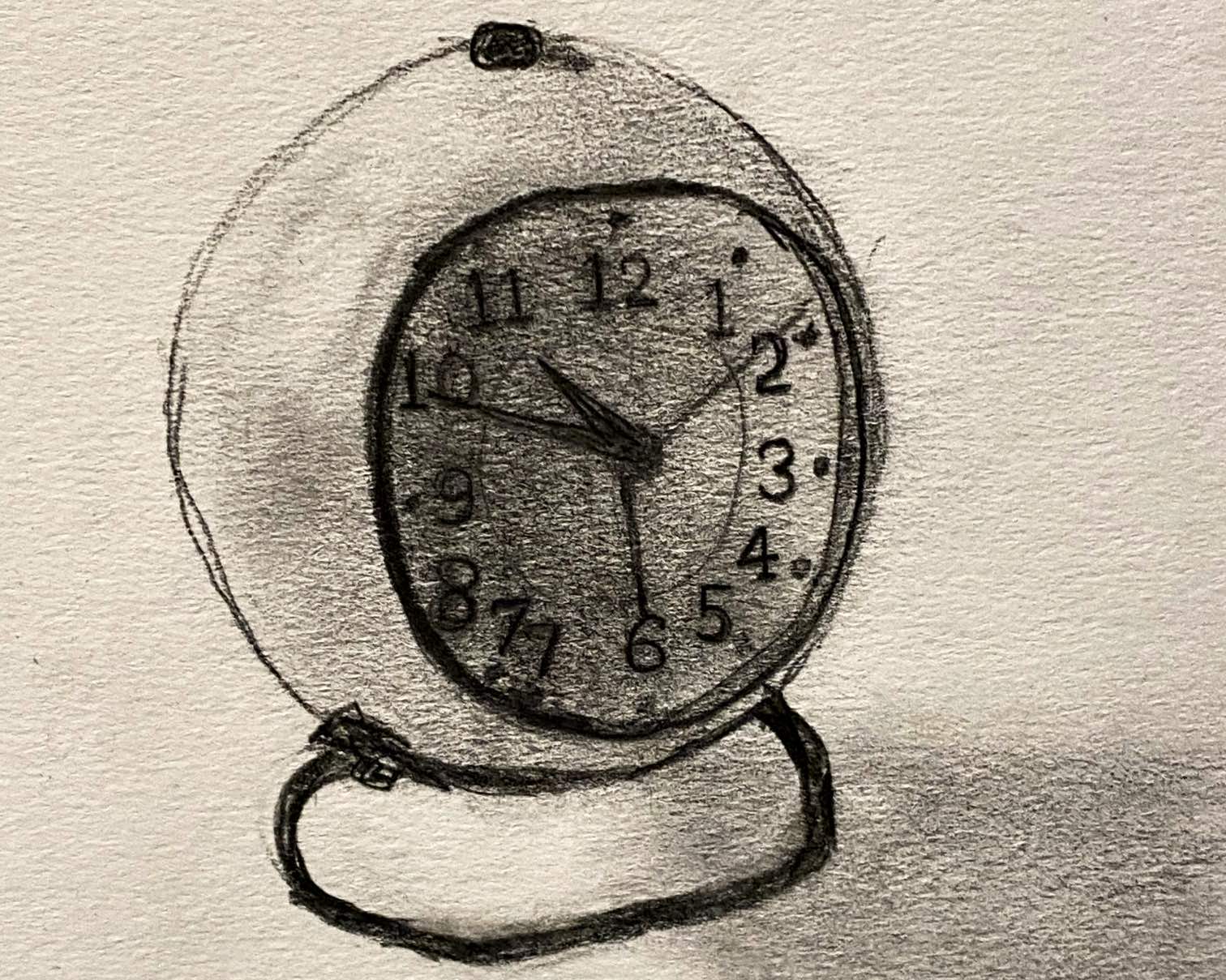
Regret and worry, these are two of the greatest plagues of our time, and they only exist because we have this incredible ability to imaginatively inhabit a past or a future.
Regret is a bringing of the past into the present moment. Worry is a bringing of the future into the present moment. As far as we know, no other creature on Earth has the ability to perform such sorcery; at least not to the degree that we do.
Imagination enables us to survive with less energy expenditure
Mosquitos have a million babies because they can’t stop before crossing the road and imagine that, if they don’t look both ways, a bus might run them over. If they didn’t have a million babies, the species wouldn’t survive.
Humans don’t need to have a million babies because we can stop before crossing the road and imagine a future scenario in which a bus might run us over. In a sense, we’re able to produce a million lives — what richness! — with our imaginations so that we don’t need to produce a million lives in reality for our species to survive.
It’s an incredible gift, really, to be able to imagine. Yet, I am continually amazed by the number of problems that can be attributed to this gift, this ability to inhabit imaginary moments outside of the present reality.
Inhabiting only the present moment makes us poor
Most creatures inhabit only the present moment, especially on a conscious level. Humans, though, can imagine past moments and future moments. This makes it impossibly difficult for us to inhabit only the present moment.
When we do not fully inhabit the present, we are bathing in a wealth of time, an abundance of past and future.
The present, though, is always passing, along with all that we have in it, and so it’s a place where little, if any, wealth exists. For this reason, one who inhabits only the present is, in some sense, poor in spirit.
“Blessed are the poor in spirit.”
Imagination, memory, and speculation are gifts of God’s love
The richness of past and future has been given to us, as a gift, from God. It’s a way for us to choose something other than his love and his grace.
Why is such a thing a gift? Because unconditional love, true love, cannot be forced upon someone. It’s not love if it’s not freely given and freely accepted. There must be a freedom, held by the receiver, to deny the love. Otherwise, it’s not love. Love is never forced.
Our ability to inhabit an imaginary past or future is one way we can deny God’s love by escaping to a place where his love does not exist.
Of course, this denial makes us miserable because all that is good is part of God. By denying him, we are denying ourselves the source of all goodness.
Yet we are fallen. We suffer from original sin. We are rich in our ability to inhabit a broad span of time through imagination, and it’s nearly impossible for us to give up that richness. Maybe it is impossible.
Possible or not, this ability to inhabit a past or future moment in the present is wealth on a fundamental level.
“The miser whose treasure has been taken from him. It is some of the frozen past which he has lost. Past and future, man’s only riches.”
Simone Weil, Gravity & Grace
Dopamine is a fundamental currency for which humans work
The dopaminergic system is what, at a neurological level, drives us. The dopaminergic system is all about anticipating some future reward based on past experiences.
Neuroscientists call dopamine a “universal currency.”
“Dopamine is a universal currency in all mammals, especially humans, for moving us towards goals. How much dopamine is in our system at any one time compared to how much dopamine was in our system a few minutes ago and how much we remember enjoying a particular experience of the past dictates your so-called quality of life and your desire to pursue things.”
Dr Andrew Huberman, Found My Fitness Episode 91
A particular experience of the past drives us to pursue or not pursue something. Pursuit is an anticipation, a seeking of some future thing.
Coffee made me feel good in the past. I am driven to pursue more coffee. Most of coffee’s perceived value exists only because we remember how it made us feel in the past and can imagine feeling that way again in the future.
Your caregiver broke your heart in the past. Now, you will be driven to avoidance or possessiveness due to the past injuries. Much of a relationship’s perceived value (or lack thereof) exists only because we remember how a relational pattern made us feel in the past and can imagine feeling that way again in the future.
The past can cause us very real pain in the present. At the same time, we often give it more power than it deserves.
We often turn this richness into a curse
Even though it causes us pain to do so, we often fixate on painful memories. Why? Because doing so can save our lives, can prevent present and future recurrences.
It’s very useful to be able to imagine that if I step in front of a bus then the bus will hit me.
But we take on this richness in excessive or disordered ways. We fixate on worst case scenarios and rob ourselves of not only the fullness of joy available in the present, but also of any joy we might have had by imagining what could go right, by expecting miracles instead of disasters.
“Always trust. Trust more and more, even to the point of expecting a miracle. Don’t stop halfway or you will set limits to my love. Always count on me, never on yourself.”
Gabrielle Bossis, quoted in Fear is Useless by Conrad Baars
Sometimes subconscious regrets and fears drive us
Focusing on the present, or at least the best of the past and future, doesn’t always help. Sometimes our subconscious minds, or maybe our bodies, hold onto regrets or worries without our awareness.
These are like daemons that leech onto the richness that is our memory and our imagination. They are the excesses and disorders that inhabit only the backgrounds of our minds, existing only as unnamed, unidentified dark feelings in the present.
The infant who was left crying in her crib all night, un-soothed by her mother; she doesn’t remember those terrible nights, but many years later, she feels the same terror when her husband doesn’t answer her phone call.
Daemons — subconscious auto-pilot programming — can use our wealth of memory and imagination against us even when we’re not consciously thinking about the past or the future.
We are able to exercise freedom over our daemons
While the answer to worry and regret — which are conscious thoughts — is a shift in focus toward the present moment, good memories of the past, and hope for the future; the answer to daemons is a shift in focus toward Christ.
When it comes to daemons, we have a couple unique strengths. We have self-awareness, which allows us to see our behavioral patterns, and we have the freedom to behave in ways contrary to those patterns.
As we become aware of our instinctive patterns, we must use our freedom to break the harmful ones, and to guide our actions toward love.
Still, we will fail. But the more we fail, the more we ache, the more we recognize our own shortcomings, the more we are open to receiving grace. And grace, received through faith and focus on Christ, is the true salvation.
Many blessings come when we make ourselves poor in spirit
Many problems plague us due to our richness of past and future, of memory and imagination. To experience more joy in the present moment, much of our strength must be spent making ourselves poor in those things.
We will rarely, if ever, be able to live completely, nakedly in the present. But the more we try, the more we practice, the more open we will be to experiencing the fullness of joy in the present moment.
Still, there will be times when we cannot merely inhabit the present. To apologize when we’ve done something wrong, we must acknowledge the past. To prevent the same failure from happening repeatedly, we must anticipate it. But when it’s not absolutely necessary to remember a wrong or anticipate a failure, it is best for us to focus on the good memories, not the bad ones, and to hope for and expect miracles, not disasters.
That, in many ways, is a work of faith. Being present requires faith — faith that things can be different than they were in the past, faith that grace will be given in whatever measure necessary for us to navigate whatever comes. Faith is essential.
Practical advice to develop presence, joy, and hope
Here’s some practical advice. As an act of faith, spend a few minutes each day embodying yourself in the present moment. Go for a walk outside. Using all of your senses, remind yourself of what you notice, what it reminds you of, and what you wonder about it.
Just a few minutes of this each day will strengthen your ability to experience the present more often and more deeply. It will help you take off your fancy garments of past and future.
And when you can’t embody the present — you’re only human after all — remember something good, or imagine a future where everything works out in your favor, where grace favors you and joy is yours.