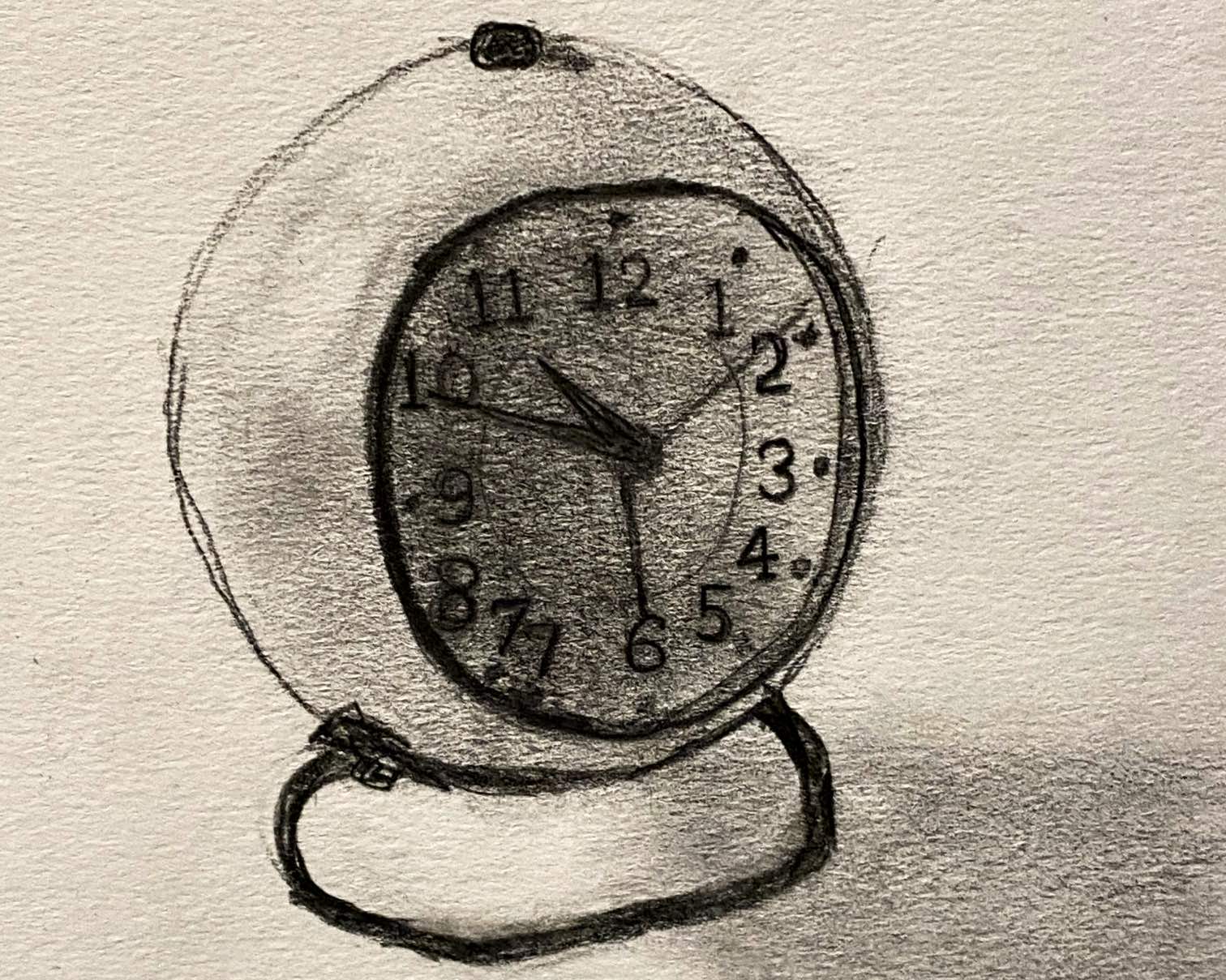
Tag: philosophy

  • Man’s Only Riches

    Regret and worry are side effects of our richness

    Regret and worry, these are two of the greatest plagues of our time, and they only exist because we have this incredible ability to imaginatively inhabit a past or a future.

    Regret is a bringing of the past into the present moment. Worry is a bringing of the future into the present moment. As far as we know, no other creature on Earth has the ability to perform such sorcery; at least not to the degree that we do.

    Imagination enables us to survive with less energy expenditure

    Mosquitos have a million babies because they can’t stop before crossing the road and imagine that, if they don’t look both ways, a bus might run them over. If they didn’t have a million babies, the species wouldn’t survive.

    Humans don’t need to have a million babies because we can stop before crossing the road and imagine a future scenario in which a bus might run us over. In a sense, we’re able to produce a million lives — what richness! — with our imaginations so that we don’t need to produce a million lives in reality for our species to survive.

    It’s an incredible gift, really, to be able to imagine. Yet, I am continually amazed by the number of problems that can be attributed to this gift, this ability to inhabit imaginary moments outside of the present reality.

    Inhabiting only the present moment makes us poor

    Most creatures inhabit only the present moment, especially on a conscious level. Humans, though, can imagine past moments and future moments. This makes it impossibly difficult for us to inhabit only the present moment.

    When we do not fully inhabit the present, we are bathing in a wealth of time, an abundance of past and future.

    The present, though, is always passing, along with all that we have in it, and so it’s a place where little, if any, wealth exists. For this reason, one who inhabits only the present is, in some sense, poor in spirit.

    “Blessed are the poor in spirit.”

    Imagination, memory, and speculation are gifts of God’s love

    The richness of past and future has been given to us, as a gift, from God. It’s a way for us to choose something other than his love and his grace.

    Why is such a thing a gift? Because unconditional love, true love, cannot be forced upon someone. It’s not love if it’s not freely given and freely accepted. There must be a freedom, held by the receiver, to deny the love. Otherwise, it’s not love. Love is never forced.

    Our ability to inhabit an imaginary past or future is one way we can deny God’s love by escaping to a place where his love does not exist.

    Of course, this denial makes us miserable because all that is good is part of God. By denying him, we are denying ourselves the source of all goodness.

    Yet we are fallen. We suffer from original sin. We are rich in our ability to inhabit a broad span of time through imagination, and it’s nearly impossible for us to give up that richness. Maybe it is impossible.

    Possible or not, this ability to inhabit a past or future moment in the present is wealth on a fundamental level.

    “The miser whose treasure has been taken from him. It is some of the frozen past which he has lost. Past and future, man’s only riches.”

    Simone Weil, Gravity & Grace

    Dopamine is a fundamental currency for which humans work

    The dopaminergic system is what, at a neurological level, drives us. The dopaminergic system is all about anticipating some future reward based on past experiences.

    Neuroscientists call dopamine a “universal currency.”

    “Dopamine is a universal currency in all mammals, especially humans, for moving us towards goals. How much dopamine is in our system at any one time compared to how much dopamine was in our system a few minutes ago and how much we remember enjoying a particular experience of the past dictates your so-called quality of life and your desire to pursue things.”

    Dr Andrew Huberman, Found My Fitness Episode 91

    A particular experience of the past drives us to pursue or not pursue something. Pursuit is an anticipation, a seeking of some future thing.

    Coffee made me feel good in the past. I am driven to pursue more coffee. Most of coffee’s perceived value exists only because we remember how it made us feel in the past and can imagine feeling that way again in the future.

    Your caregiver broke your heart in the past. Now, you will be driven to avoidance or possessiveness due to the past injuries. Much of a relationship’s perceived value (or lack thereof) exists only because we remember how a relational pattern made us feel in the past and can imagine feeling that way again in the future.

    The past can cause us very real pain in the present. At the same time, we often give it more power than it deserves.

    We often turn this richness into a curse

    Even though it causes us pain to do so, we often fixate on painful memories. Why? Because doing so can save our lives, can prevent present and future recurrences.

    It’s very useful to be able to imagine that if I step in front of a bus then the bus will hit me.

    But we take on this richness in excessive or disordered ways. We fixate on worst case scenarios and rob ourselves of not only the fullness of joy available in the present, but also of any joy we might have had by imagining what could go right, by expecting miracles instead of disasters.

    “Always trust. Trust more and more, even to the point of expecting a miracle. Don’t stop halfway or you will set limits to my love. Always count on me, never on yourself.”

    Gabrielle Bossis, quoted in Fear is Useless by Conrad Baars

    Sometimes subconscious regrets and fears drive us

    Focusing on the present, or at least the best of the past and future, doesn’t always help. Sometimes our subconscious minds, or maybe our bodies, hold onto regrets or worries without our awareness.

    These are like daemons that leech onto the richness that is our memory and our imagination. They are the excesses and disorders that inhabit only the backgrounds of our minds, existing only as unnamed, unidentified dark feelings in the present.

    The infant who was left crying in her crib all night, un-soothed by her mother; she doesn’t remember those terrible nights, but many years later, she feels the same terror when her husband doesn’t answer her phone call.

    Daemons — subconscious auto-pilot programming — can use our wealth of memory and imagination against us even when we’re not consciously thinking about the past or the future.

    We are able to exercise freedom over our daemons

    While the answer to worry and regret — which are conscious thoughts — is a shift in focus toward the present moment, good memories of the past, and hope for the future; the answer to daemons is a shift in focus toward Christ.

    When it comes to daemons, we have a couple unique strengths. We have self-awareness, which allows us to see our behavioral patterns, and we have the freedom to behave in ways contrary to those patterns.

    As we become aware of our instinctive patterns, we must use our freedom to break the harmful ones, and to guide our actions toward love.

    Still, we will fail. But the more we fail, the more we ache, the more we recognize our own shortcomings, the more we are open to receiving grace. And grace, received through faith and focus on Christ, is the true salvation.

    Many blessings come when we make ourselves poor in spirit

    Many problems plague us due to our richness of past and future, of memory and imagination. To experience more joy in the present moment, much of our strength must be spent making ourselves poor in those things.

    We will rarely, if ever, be able to live completely, nakedly in the present. But the more we try, the more we practice, the more open we will be to experiencing the fullness of joy in the present moment.

    Still, there will be times when we cannot merely inhabit the present. To apologize when we’ve done something wrong, we must acknowledge the past. To prevent the same failure from happening repeatedly, we must anticipate it. But when it’s not absolutely necessary to remember a wrong or anticipate a failure, it is best for us to focus on the good memories, not the bad ones, and to hope for and expect miracles, not disasters.

    That, in many ways, is a work of faith. Being present requires faith — faith that things can be different than they were in the past, faith that grace will be given in whatever measure necessary for us to navigate whatever comes. Faith is essential.

    Practical advice to develop presence, joy, and hope

    Here’s some practical advice. As an act of faith, spend a few minutes each day embodying yourself in the present moment. Go for a walk outside. Using all of your senses, remind yourself of what you notice, what it reminds you of, and what you wonder about it.

    Just a few minutes of this each day will strengthen your ability to experience the present more often and more deeply. It will help you take off your fancy garments of past and future.

    And when you can’t embody the present — you’re only human after all — remember something good, or imagine a future where everything works out in your favor, where grace favors you and joy is yours.

  • The Value That Numbers Can’t Measure

    The Value That Numbers Can’t Measure

    Not all hours are equal, even though the clock says they are.

    It was Sunday. The grocery store was noisy and packed. I offered my sympathy to the cashier. “But does it at least make your shift go faster?” I asked.

    “At times,” she said. “But then there’s the last hour. That last hour is definitely sixty minutes.”

    She didn’t mean the minutes were literally longer. Everybody knows sixty minutes is the exact same quantity of time as an hour. She was expressing the paradox that those two things are not at all equal, especially when you’re anxiously counting down the minutes.

    The last hour is equal to all the other hours. It’s also much longer. How can both of those statements be true? Because there are different kinds of value.

    There are quantifiable, metrical values; four and four is eight; trees are plants. And then there are paradoxical, felt values, like the old saying, “the whole is greater than the sum of its parts.” Both are real, but we often forget the second one, which may matter even more.

    Patience can’t be bought. Love can’t be measured. An old growth forest is more valuable than the price of all its timber. A single smile can carry more weight in a life than a million dollars.

    What is something you’ve experienced that was more valuable than its quantity?

  • To Now From Then

    To whomever finds this time capsule,

    The year is 1914. My name is Alfred Burdock, and I am a dairy farmer. My wife, Eloise, and I have been married ten years. We have four children: Suzanna, Maria, Theodore, and Vincent.

    This letter is being sealed inside the wall of our new barn as a kind of commemoration. Whoever you are, I pray that your livestock are thriving the way ours have in recent years. The Good Lord has blessed us with abundance.

    But I must tell you something stranger than I ever imagined I’d live to witness. Something I believe belongs to the future, maybe your time, or maybe long before your time, or perhaps far beyond it.

    It began one night after I blew out my candle. As I reached to draw the curtain beside our bed, I glanced out the window and saw a faint glow. At first I thought it was a trick of the eye, but no matter how many times I blinked or rubbed them, the soft, unmoving light remained.

    Concerned for my family’s safety, I took my rifle and stepped out the back door. The glow hovered still, near the old chestnut tree. I crept forward, heart pounding. When I reached the tree, I realized the light was coming from within the trunk itself. A small, unflickering glow, barely the size of a coin.

    I raised my gun and inched closer.

    It just sat there glowing, still as could be for a minute. I sat there wondering what it was, what I should do.

    Then it began to grow. It expanded until it lit the entire yard as though the sun had risen. I turned to run back, but the house was gone. My wife and children were gone. The sky was bright, but it wasn’t morning. It was like I’d awakened from a dream into some terrible imitation of life.

    I sprinted to the police station, but it was no longer there. In its place stood a tall, square building of glass and steel—no cornices, no stonework, no signs of craftsmanship. Just a sheer wall of windows, towering and blank. It looked… soulless. I couldn’t imagine what it must be like inside a place with so few windows.

    Then I saw a vehicle fly past. It had wheels, yes, but was larger, smoother, and far quieter than any automobile I’d ever seen. It looked sturdier too, and fast, like a beast built for speed.

    I looked around for help.

    That’s when I saw a man emerging from the glass building. He wore a shirt dyed a blue more brilliant than any cloth I’d ever seen, and his shoes were orange as pumpkins. He looked like a piece of candy. I could almost taste him.

    “Sir,” I said, “I’m not sure what’s happening, but my wife and children are missing. I believe they’ve been taken. Do you know where I might find a policeman?”

    “F*** the police,” he muttered.

    Then he pulled a little flat rectangular thing out of his pocket. It lit up in his hand, and he began tapping it with his fingers. I didn’t know what was happening, so I waited. I thought maybe he was going to offer some sort of help, but he just stared at the light, entranced. Completely still. Not even a glance in my direction.

    “Sir, please,” I said again. “I need help.”

    “I said, f*** the police, man.” Still, he did not look up.

    At that moment, a bus hissed to a stop in front of the lot. I’d never seen one in person, only pictures of something similar in the Sunday papers. It was enormous and impressive, but I was in no mood for marveling. I ran to it.

    Inside, I found dozens of people, every one of them staring into those same glowing rectangles. Some had odd plugs in their ears; others wore bulky contraptions covering their heads. Not one person looked up when I shouted.

    “My wife and children are missing!” I cried. “They’ve been abducted!”

    No reaction. Not a flinch. Nothing.

    “Pay the fare or get off the bus,” the driver barked.

    “I’ve no money,” I said, embarrassed to realize I was still in my nightgown. “Please, I just need help.”

    “Fare or off.”

    The chill hit me then. The bus was cold—unnaturally cold. I wondered if I’d taken ill. But once I stepped off, the warmth of the day returned. It wasn’t me. It was the bus.

    I spotted a sidewalk and followed it. The people I passed were just as absorbed by their glowing boxes. Some mumbled aloud, to themselves it seemed. Back home, we’d call them mad.

    After some time, I reached a small grocery store. I heard music playing inside, but I saw no band. It seemed to pour down from the very ceiling.

    People moved through the aisles, and when they reached the cashier, they merely waved their glowing rectangles. No coins. No cash. Perhaps these devices were a kind of currency. They worship them. They must hold some significance.

    Desperate, I pushed through a door at the back, hoping to find a manager. It led to a restroom… indoors, not an outhouse. There were standing toilets that offered no seat. And even here, a man stood before one, eyes fixed on his glowing screen.

    I tried another door. That one lead to an office.

    “My wife and children are missing,” I told the manager.

    He asked for their names, then spoke into a strange device. His voice echoed through the store.

    “Will that reach them outside?” I asked.

    “No, just the store.”

    “They’re not here. They vanished from our home. Can you send that voice through the whole town?”

    “Sorry, pal, it doesn’t work like that. If your family’s missing, you should call the police.”

    “I’ve been trying. The station’s moved.”

    He gave me directions. I ran there and cautiously opened the glass door. Inside, I explained everything.

    “Have you tried calling them?” the officer asked.

    I hadn’t. Not in the way he meant. I tried yelling, but my voice isn’t loud. I said as much. He stared at me, either puzzled or suspicious.

    “Doesn’t your wife have a phone, buddy?”

    “A what?”

    He led me to a sleek vehicle with cushioned seats and blinking lights. He had me sit in the back behind a partition. It felt like a cage.

    As we drove through the city, the sun began to set. The sky burned gold and lavender, fading into a pearly white. I remember thinking, this is the most beautiful sunset I’ve ever seen. Strange, isn’t it? How in the midst of chaos and loss, you can still witness a sunset so beautiful it stops your breath.

    Soon, we were outside of the town. There were wide fields all around us, and one big, boxy building a little ways off. Along one of the hillsides, two people sat on a bench. They were holding those little glowing boxes up in front of their faces, even when they could be watching such a beautiful sunset. I wanted to yell out to them, “you’re missing the whole thing!”

    We arrived at another building. The officer led me inside.

    I sat in a waiting room while he talked to a woman behind a glass window. I noticed a little black spot on the other side of the room. It was the blackest black I had ever seen. I blinked my eyes a few times, but it remained.

    I stood up for a closer look. As I leaned in, the whole world seemed to tilt. I lost my balance and began falling. Then, before I realized what had happened, I was outside again. I was in my own backyard. It was dark. The little glowing spot was gone.

    I ran to the children’s rooms. They were all there, asleep. I held Eloise’s hand. She stirred and smiled and asked if I was alright.

    I said I was. I didn’t tell her what I’d seen. Not that night. I wondered if I’d even seen it at all. Maybe I’d dreamt the whole thing. But it was more real than a dream. And yet, it was stranger than reality.

    With sincerity and wonder,
    Alfred Burdock
    July 7, 1914