Why screen life feels hollow, and how to come back to your body
When Prompt Engineering Isn’t Enough
For a while, because of its ability to reason at such an impressive level, I thought AI might be one of the better inventions of the modern age. But life isn’t just reasoning and logic. Much of life makes no sense at all. Much of our reasoning, even, is illogical and based instead on feelings. AI can’t feel. Reasoning is no longer a problem for humanity. AI solves that. But disembodiment has become more a problem than ever. AI, with all of its brilliant reasoning, can’t help us when our feelings defy logic, or when we lose touch with our own bodies.
When you need to scream into a pillow or go for a run to let off some steam, all of the ChatGPT prompt engineering in the world won’t solve your problem. Worse, it could distract you from the problem, enabling it to go unsolved and fester like an untreated wound. That is disembodiment, losing touch with the signs and feelings and intuitions of your physical body.
Our Technological Landscape
Most technologies haven’t done much to improve our actual well-being. Sure, there are specific tools that have made certain things easier, but how many have truly made us better off than our ancestors? And even then, are we really better off?
Modern medical technology might help us live longer. But does it help us live better, more virtuous, more fulfilled lives? And would we even need help living longer if we spent our days outside, away from screens, moving our bodies and eating the way our ancient ancestors did?
Maybe our technologies just solve problems that other technologies created. We use blood glucose monitors to keep diabetes in check, but diabetes itself is a disease often caused by the sedentary life style enabled by technology and the hyper-palatable-but-devoid-of-nutrition foods developed as a sort of technology themselves. Maybe life was better before all of it.
I still believe it’s possible to use our tools wisely, especially if we cultivate virtues like temperance and prudence. With intention, we can benefit from technology without letting it hollow us out.
But after about a year of testing and experimenting with AI, I’m starting to lose hope that it’s actually going to improve our lives in any meaningful way.
A Hopeful View of the Future
Still, despite my reservations, I haven’t given up hope entirely.
In the long run, I see a positive light. If we ever reach that future where artificial general intelligence handles all of our labor, leaving us only the most human work to do, that could be beautiful. The only jobs left might be the ones centered on connection and compassion: listening, empathizing, consoling, comforting, being present, loving. The kind of work that often goes unnoticed now might become the most valuable.
What AI Can’t Do
But we’re not there yet. We might never get there. Maybe this whole AI movement is just another tech trend, another wave of hype.
Even without general intelligence, the AI we have today can do some impressive things. It can act like a therapist or a friend. It can solve complex problems, teach new skills, generate art and poetry and recipes. It can write jokes. It can organize your life into a neat PDF.
It’s convincing, even comforting at times.
But it can’t live for you.
That’s the hard part. That’s the part we have to do ourselves. And in this digital age, it’s exactly what we need most: embodiment.
AI can help us plan. It can suggest habits. It can make a checklist. But it can’t walk the path. It can’t be in your body. It can’t be present in your world. That’s your work.
Embodiment Is No Longer the Default
In the past, embodiment was just how life worked. Everything was physical and analog. We didn’t have usernames or avatars. We were who we were; flesh and blood, personality and presence, names given by our parents, bodies shaped by our lives.
Now, embodiment is a practice. Life has become so digitized that living in the real world requires intentional effort. We have to choose it.
And embodiment matters. It’s not just a poetic ideal. It means fewer mental health issues, fewer physical health issues. It means clarity. It means connection to reality. It means being truly, fully alive.
Embodiment matters and, if we are to be embodied, we must be intentional about it.
Why Embodiment Matters in the Digital Age
When we’re out of touch with our bodies, it affects everything. We might feel anxious or tired in ways that rest doesn’t fix. Emotions can pile up inside without a way out. It’s like we’re always buzzing, but not in a good way.
The psychiatrist, Bessel van der Kolk, who wrote The Body Keeps the Score, talks about how stress and trauma live in the body. And how healing comes through the body too. It comes through movement, breath, and feeling.
When we’re disconnected, we’re also more easily influenced. More easily overwhelmed. It’s harder to feel clear and grounded.
Simple Practices to Reconnect With Your Body
The good news is, it doesn’t take much to come back. You don’t need to escape your life or overhaul everything. You just need to take a few small, intentional steps to come back to your body:
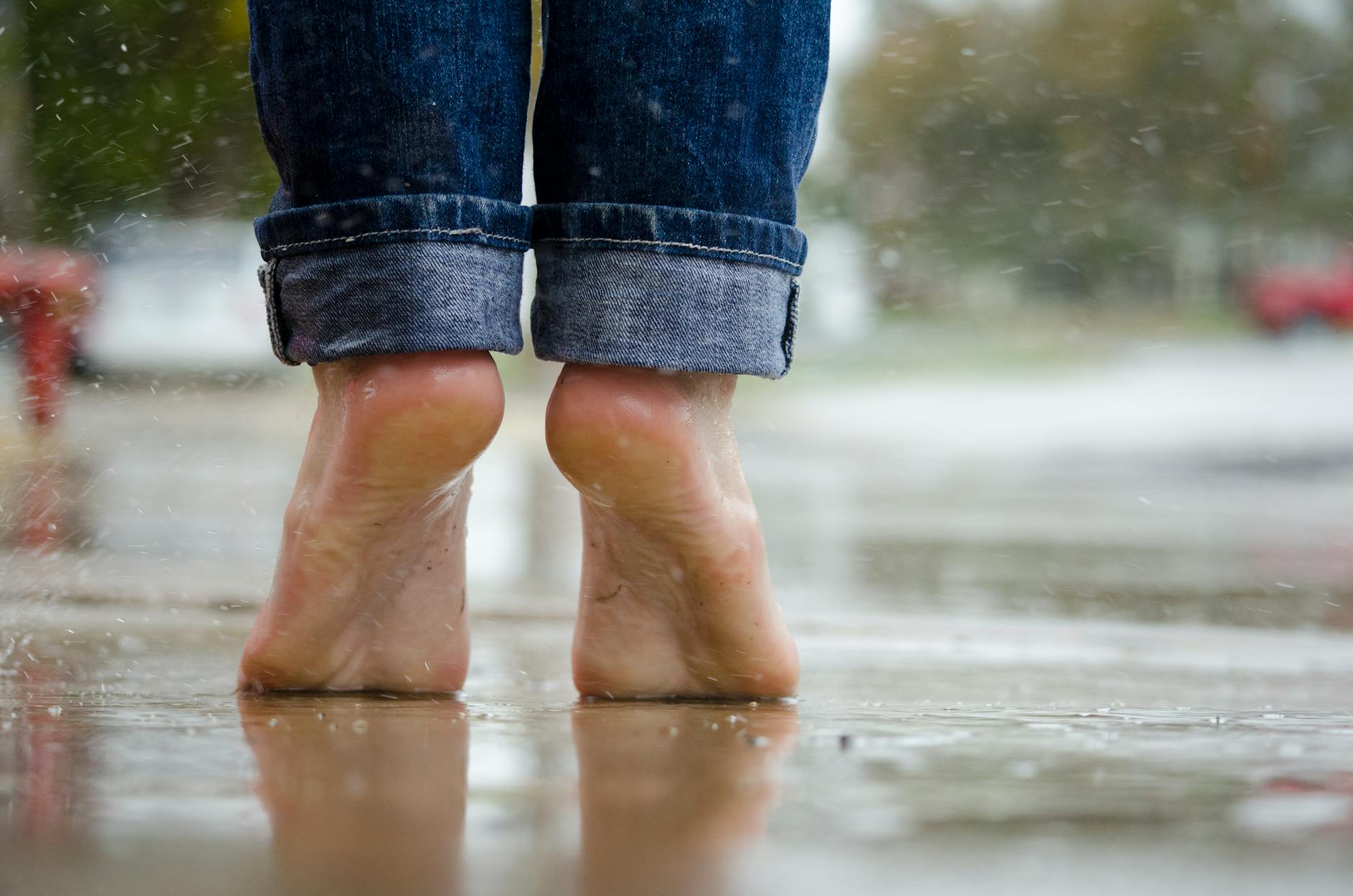
- Go barefoot. On grass or dirt or sand. It helps your feet remember the ground.
- Touch cold water. A cool splash of water on your face or a quick dip in a stream can really wake up your senses.
- Write by hand. No screens. Just pen and paper. Let it be slow.
- Move a little. Stretch, sway, lie on the floor. No rules. Just move however feels good.
- Use your hands. Make something—bread, a little drawing, a pot of soup. Anything.
- Breathe and rest. Sit still. Feel your breath. Let silence be a friend, not something to avoid.
These are ways home, back to embodiment.
Our Bodies Matter
I believe we’re not just minds or spirits. We’re souls deeply interconnected with bodies. That matters. Jesus Christ didn’t come as a theory or a thought. He came in flesh. He walked, touched, healed, got tired, wept, laughed, bled.
Your body matters too. It’s part of your life. With yourself. With others. You don’t have to live floating above everything. You can land. You can be here. Come back to yourself. And if you’re feeling far away right now, that’s okay too. You’re not broken. Just a bit disembodied. And you can return, gently but steadily, to embodiment.
This has been on my heart for a while. I hope it helps you find a part of yourself that may have been lost.