Tag: wonder

  • The Curious Groundhog

    Where I live, there are lots of groundhogs. I see them all the time, but not during winter. Last spring, as the world was finally coming back to life, I saw one who also saw me. This poem came to me then. Happy Groundhog’s Day!

    Most of the trees and shrubs
    Have begun to bud.
    As I walked past a field
    Of last year's grass and frozen mud

    I saw a groundhog waddle toward
    The bank beside me.
    He ducked behind a culvert pipe
    But didn't crawl beneath.

    He waited 'til I passed beside him —
    Peaking like he wondered what
    This thing that moves so high above,
    And with so strange a strut,

    Might be or do or be and do,
    Or how he smells or how he sounds —
    And then, when I could see his face,
    He swiftly climbed beneath the ground

    Into a hole where, I assume,
    He has a blanket and a book,
    And having gathered vegetables,
    He hums as he begins to cook.
  • Storm Fronts and Jeremiads

    Storm Fronts and Jeremiads

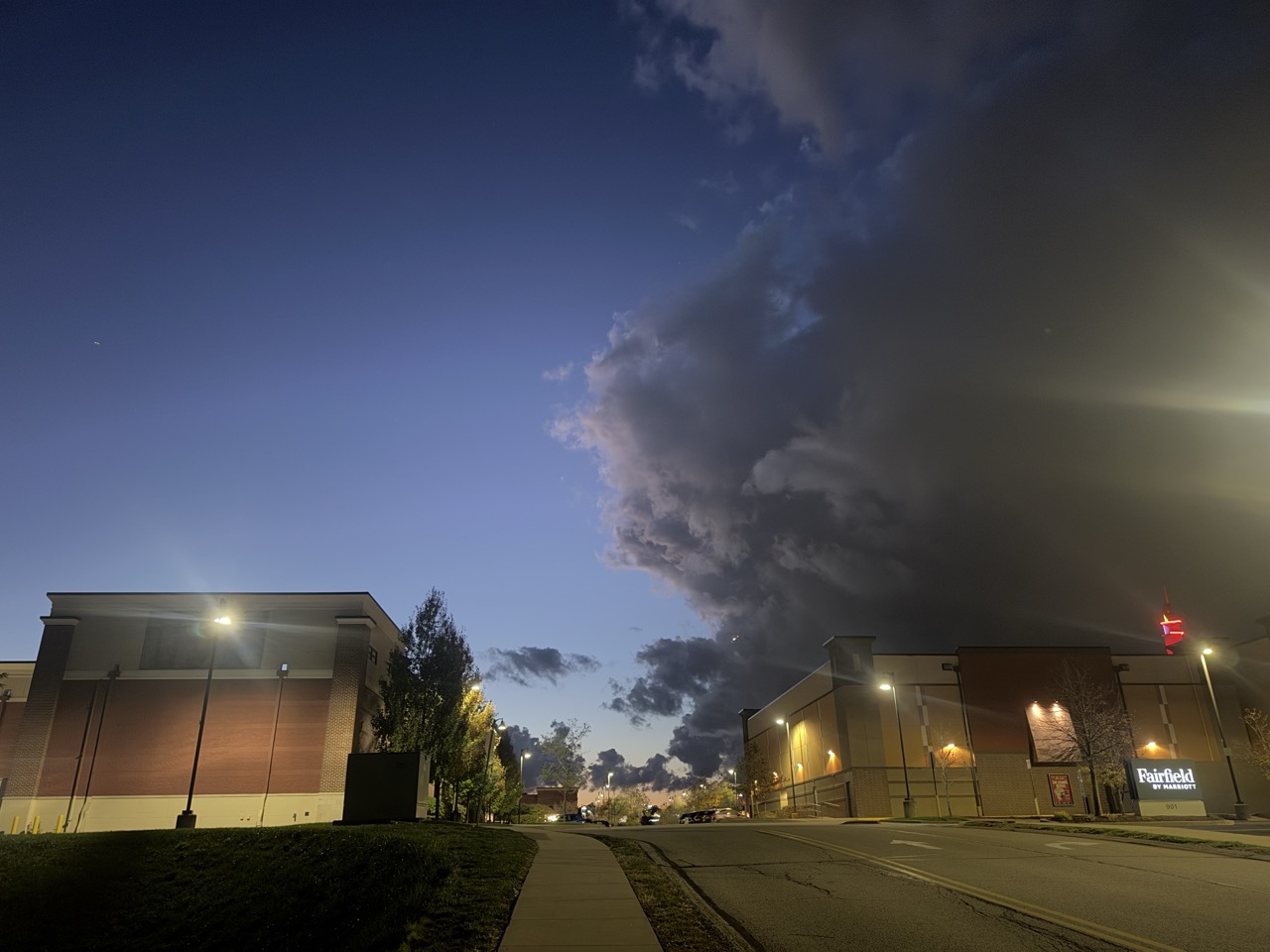
    A few months ago, I began noticing extreme cloud changes. I’m sure they’ve always been there, but for the first thirty-five years of my life, I failed to see them.

    In the past year, though, I’ve seen and taken pictures of a few of these storm fronts.

    These abrupt changes strike me as beautiful. They also remind me of The Book of Jeremiah in The Old Testament.

    For most of the book, Jeremiah prophecies doom and gloom for Israel. He explains the terrible agonies the nation is experiencing because they’ve turned their backs on God.

    As I read the book, I kept thinking, “this is terrible. Is it ever gonna end?” Every page seemed to weigh a thousand pounds. I’d flip through and see that I had many pages to go.

    Then, around verse 16 of chapter 30, there is an abrupt change. Chapters 27-29 are entirely prose. Chapter 30 is almost entirely poetry.

    For the first half of chapter 30, the Lord recounts the pains of Israel.

    All your lovers have forgotten you;

    they care nothing for you;

    for I have dealt you the blow of an enemy,

    the punishment of a merciless foe,

    because your guilt is great,

    because your sins are flagrant.

    Why do you cry out over your hurt?

    Your pain is incurable.

    Because your guilt is great,

    because your sins are flagrant,

    I have done these things to you.

    (Jeremiah 30:14-15)

    But then, in verses 16 and 17, it all changes. It looks, to me, exactly like those sudden, drastic changes in the cloud formations.

    Therefore all who devour you shall be devoured,

    and all your foes, every one of them, shall go into captivity;

    those who plunder you shall be plundered,

    and all who prey on you I will make a prey.

    For I will restore health to you,

    and your wounds I will heal,

    declares the Lord,

    because they have called you an outcast:

    ‘It is Zion, for whom no one cares!’

    (Jeremiah 30:16-17)

    Thus says the Lord:

    Behold, I will restore the fortunes of the tents of Jacob

    and have compassion on his dwellings;

    the city shall be rebuilt on its mound,

    and the palace shall stand where it used to be.

    Out of them shall come songs of thanksgiving,

    and the voices of those who celebrate.

    I will multiply them, and they shall not be few;

    I will make them honored, and they shall not be small.

    (Jeremiah 30:18-19)

    Unfortunately, Jeremiah darkens again in the remaining chapters. The ending is not a happy one. Too, in the pictures of the cloud changes, the storm is as often coming as it is going. But those small moments in between, when everything is changing, leave us with awe. They remind us that, through clear skies and storms, something wonderful is happening.

  • Pondering

    We ponder less these days, filled with so much to ponder. Urged incessantly to scroll down or click next, to turn pages and tick boxes. How about reading a poem and staying with it a while?

    Here’s one of my favorites by one of my favorites:

    If anyone asks you how the perfect satisfaction of all our sexual wanting will look, lift your face and say,

    Like this.

    When someone mentions the gracefulness of the night sky, climb up on the roof and dance and say,

    Like this.

    If anyone wants to know what “spirit” is, or what “God’s fragrance” means, lean your head toward him or her. Keep your face there close.

    Like this.

    When someone quotes the old poetic image about clouds gradually uncovering the moon, slowly loosen knot by knot the strings of your robe.

    Like this.

    If anyone wonders how Jesus raised the dead, don’t try to explain the miracle. Kiss me on the lips.

    Like this. Like this.

    When someone asks what it means to “die for love,” point here.

    If someone asks how tall I am, frown and measure with your fingers the space between the creases on your forehead.

    This tall.

    The soul sometimes leaves the body, then returns. When someone doesn’t believe that, walk back into my house.

    Like this.

    When lovers moan, they’re telling our story.

    Like this.

    I am a sky where spirits live. Stare into this deepening blue, while the breeze says a secret.

    Like this.

    When someone asks what there is to do, light the candle in his hand.

    Like this.

    How did Joseph’s scent come to Jacob?

    Huuuuu.

    How did Jacob’s sight return?

    Huuuu.

    A little wind cleans the eyes.

    Like this.

    When Shams comes back from Tabriz, he’ll put just his head around the edge of the door to surprise us

    Like this.

    Rumi

  • Blue Jay Mimicry

    Walking yesterday evening, I heard what sounded like baby crows cawing in the tops of trees around a little grove.

    When I finally spotted one of the birds making the noise, I realized it was a blue jay. It turns out blue jays have been known to mimic crows, hawks, and even dogs.

    Nature is full of wonders and surprises, beauty and encounter.

  • Why I Deleted the Weather App from My Phone

    Why I Deleted the Weather App from My Phone

    I deleted the weather app from my phone. Then I got caught in a storm. But that was the point. I wanted to be surprised. I wanted to rebel against our modern tendency to control and predict everything.

    Prediction, especially if it’s accurate, gives us a sense of control over something by taking away its ability to surprise us. We try to love the wild, unpredictable world, but only on our own terms. We try to control what is not meant to be controlled. But true love and deep relationships, whether with a person or with nature, cannot exist under the weight of conditions and control. The myth of Davy Jones and Calypso (Pirates of the Caribbean) expresses this painful truth.

    Calypso, the goddess of the sea, and Davy Jones, a mortal sailor, fell in love.

    Calypso rewarded Davy Jones by giving him the sacred task of ferrying souls who died at sea to the world beyond. Jones agreed to set foot on dry land once every ten years. If the love between him and Calypso was true, his task would be complete.

    Calypso, like the seas, was fickle and unpredictable. After ten years, Jones went ashore, but she was not there. This meant Jones would have to ferry souls for another ten years. He refused.

    Years later, when Calypso was imprisoned, the lovers finally met again.

    Davy Jones approached her cell and said, “Ten years, I devoted to the duty you charged me. Ten years, I looked after those who died at sea, and finally, when we could be together again, you weren’t there. Why weren’t you there?”

    “It is my nature,” said Calypso. “Would you love me if I was anything but what I am?”

    As painful as her words are, they are beautifully honest. Only free things can be loved. Machines, things under our control, cannot. We can only truly love beings, and beings are unpredictable.

    If we refuse to love a person unless they’re predictable, we’ll never love them. People are inherently unpredictable. And to truly love someone is to love them as they are.

    True love is unconditional. The moment it becomes conditional, it ceases to be love, and instead becomes a transaction; I’ll give you my love only if you are predictable. True love is far greater. True love is given without any expectation of repayment or even the expectation that it will be accepted.

    While Davy Jones’s story is a cautionary tale about conditional love, the ultimate example of unconditional love can be found in Jesus Christ’s Passion. Christ gave his life to redeem the sins of humanity without any expectation that humanity would accept this redemption. We’re entirely free to deny it. He knew many would deny it, and gave it anyway.

    Davy Jones was the opposite. He ferried souls to the afterlife not as an unconditional gift to Calypso, but so that she would be with him. When she wasn’t there, he stopped ferrying souls. His “love” for her was closer to the love a client has for his prostitute. In other words, he didn’t love her. He was paying her for an intimate relationship by ferrying souls to the world beyond.

    While it’s definitely not cool that Calypso didn’t hold up her end of the agreement, it also was against her nature to make such an agreement in the first place. And if Davy Jones had truly loved her, he would have loved her true nature, not her as he wanted her to be.

    So, what does the weather have to do with all of this? Well, for one, we saw weather as fickle and unpredictable, like Calypso, until we developed meteorology. And like Davy Jones, we refused to accept the unpredictable nature of it. Instead of loving it as the living thing it was, we took away its ability to surprise us. We turned it into something that could not be loved.

    By forecasting the weather, on-demand, we can be inflexible and unrelated to it. If it’s going to be hot outside, we can plan to be in an air-conditioned room all day, ignoring the heat. We don’t need to adapt as much. We don’t need to be surprised by it. We can, to a large degree, disconnect from the weather as it truly is; wild, natural, beautiful.

    Of course, we can’t totally control the weather. We can’t make it rain. By avoiding the heat, we’re still reacting to the weather. But not as deeply, not as personally. We don’t have to go outside and look at the sky to guess if it might rain. We just look at some data on a screen.

    It’s a subtle change in the relationship. But relationships are everything, and subtle doesn’t mean negligible.

    There are different levels of relationship. One of the deepest levels is what sociologist Hartmut Rosa calls resonance. At its core, resonance is about the quality of our relationship with the world; whether with nature, other people, art, work, music, ideas, or even with ourselves. Resonance is a level of relationship that opens us to that sense of awe we feel when we really see a beautiful work of art or someone helping a neighbor in need.

    According to Rosa, when we resonate with something, it calls us. But if we control a thing, then we cannot be called by it. It can only do what we allow it to do, and so it can never surprise us. And if it can’t surprise us, it can’t call us, and then we can’t resonate with it. We can’t relate to it on that deeper level. Instead of relating like lovers, we relate transactionally, like Davy Jones and Calypso.

    Weather is a wild, living thing, but by constantly knowing what it’s about to do, we blind ourselves to its ability to surprise us the way a wild or living thing can. It’s a shallow way to relate to anything, but especially something as wonderful as the weather.

    That’s why I deleted the weather app from my phone. Not because I’ll never look at a forecast again, but because I want to deepen my relationship with the weather itself. I want to be surprised by it. I want to resonate with it.

    Davy Jones made the mistake of demanding certainty from something that was never meant to be certain. He only wanted love if he could predict its shape. But love, whether for a person or for the living world, is always given into mystery.

    Weather is like that. It’s wild, fickle, alive. To stand in its presence without trying to reduce it to a chart or a number is to allow wonder back in.

    We might get caught in storms, but we’ll also be caught by awe.

    That, I think, is the better forecast.
  • Unlock the Magic: 8 Simple Ways to Rediscover Wonder

    Unlock the Magic: 8 Simple Ways to Rediscover Wonder

    Life can feel dull and even depressing. Routines are great, but they go stale from time to time. Your mental health can be on par, but still, life can knock you down. But if you’re feeling stuck in a rut, there’s always wonder.

    Wonder is that feeling of seeing a magic trick and being so impressed that you don’t care how the heck it works. No, wonder is even more than that. It’s seeing the magic in everyday life. You don’t need a ticket to a magic show or an exotic destination to experience it. It’s all around you, hidden in ordinary life, waiting to be noticed.

    Here are eight ways to invite more wonder into your life.

    1. Meditate.

    In much the same way that jogging is exercise for the body, mindfulness is exercise for the mind. It helps you learn to focus your attention, and that is crucial for wonder. To wonder about something, you have to give it your attention.

    Start simple: try a body scan meditation. Pay attention to how your toes feel, then move your focus up to your legs, then your arms… Don’t worry if your mind wanders at first. When you notice it, bring it back gently. Over time, as you practice, your focus will increase, and you’ll be able to stay alert and curious for longer spans of time.

    The more you’re focused and curious, the more you’ll notice things that fill you with a sense of wonder.

    2. Collect ideas.

    Ideas often inspire wonder. Use a notebook, the camera on your phone, a voice recorder, whatever, to capture interesting ideas, thoughts, and observations. Over time, you’ll have a treasure chest of wonders to revisit when you need some inspiration.

    3. Learn about nature.

    Nature is basically a wonder factory. Did you know that some eagles are strong enough to carry off wild pigs? I learned that in How to Know the Birds. Or did you know that deer taste bad to trees? I learned that in The Secret Network of Nature. Or have you ever seen a bonsai kumquat tree full of kumquats? I saw one at the conservatory in my city.

    Books, research papers, museums, and documentaries are all great ways to learn about nature. But the best way is to just spend some time outside-maybe bring a magnifying glass and look at bugs.

    4. Visit a beautiful place.

    Sometimes a change of scenery can help you feel a sense of awe. It doesn’t have to be the Eiffel Tower. You can find something closer to home. Maybe it’s a beautiful church, a breathtaking bridge, or even a funky modern building downtown. Take a moment to soak it in. Notice the little details. Wonder about it. Let yourself be amazed.

    5. Read proverbs.

    Proverbs are tiny packages of wisdom. They’re almost as good as fortune cookies. Sometimes you can get a fortune cookie and a proverb all in one. But sometimes all you need is the proverb. They make you pause and think.

    Pick up the Bible or scroll through Pinterest, find a collection of proverbs, and see which ones stick with you. Bonus points if you write them down in your treasure notebook.

    6. Ask people questions.

    Wonder doesn’t have to be complicated. It can start with a simple question: “How’s your day going?” or “What do you think about this weather?” You’ll be amazed at the stories some people share-and how they can open your eyes to new perspectives. Plus, asking good questions is a skill that grows with practice.

    7. Stop googling everything.

    Next time you have a question—like, “Why do rhinos have horns?”—don’t immediately google it. Let yourself wonder for a bit. Go ahead, pretend you’re an armchair scientist or a time-traveling explorer. Make up theories. Play around with the possibilities. Feel free to google it later. But only after you’ve had some fun first.

    8. Draw with the right side of your brain.

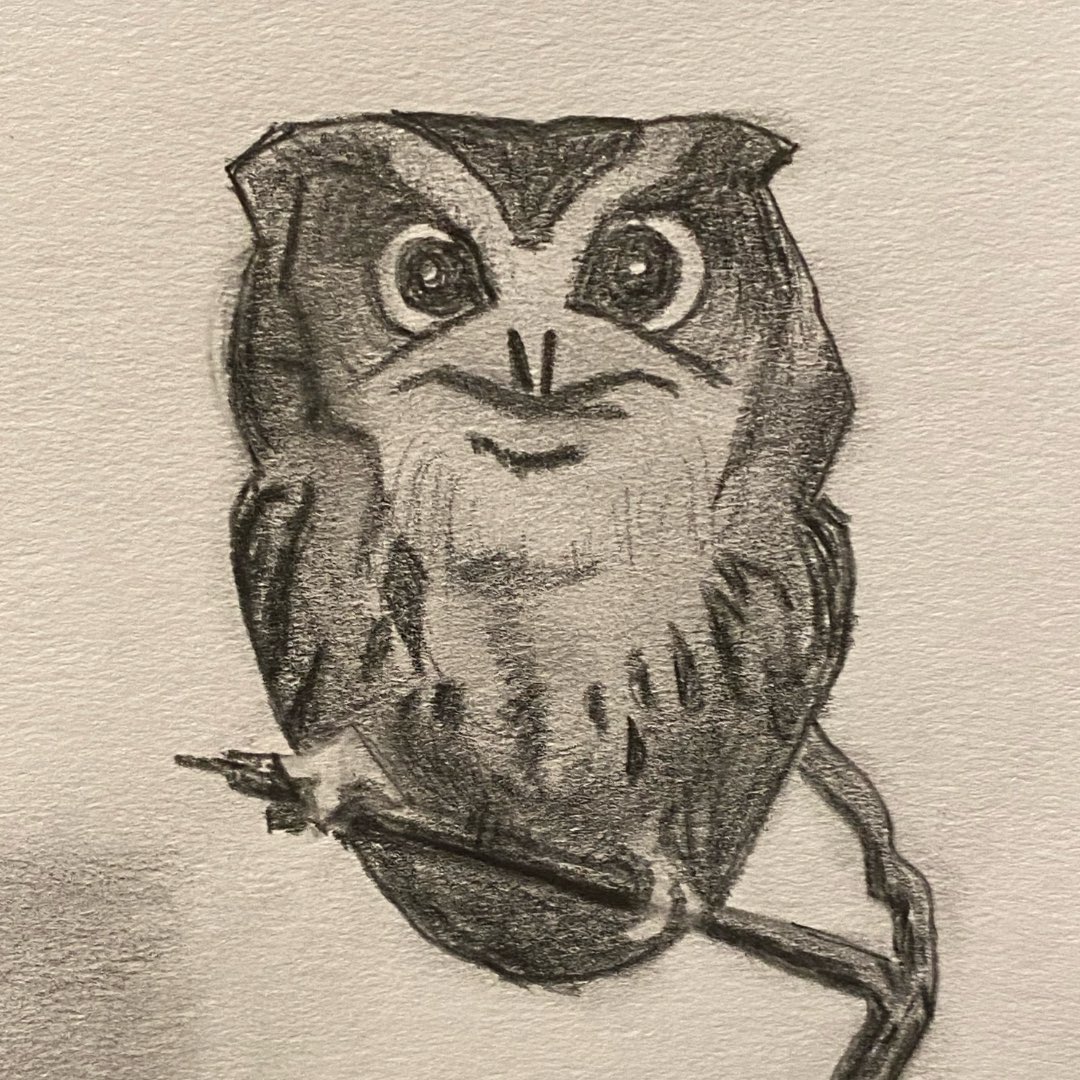
    Grab a pencil and paper and try drawing something you see. Don’t worry about being good at it; just focus on seeing. The act of drawing from sight turns on the right side of your brain, the side that sees things without thinking about them, and entices you to notice details you’d otherwise overlook. Before you know it, you’ll be seeing the world in a whole new way.

    If you want some guidance on drawing with the right side of your brain, I highly recommend the classic drawing book, Drawing on the Right Side of the Brain. I can’t promise it made me good at drawing, but it certainly taught me a few things.

    The magic of wonder

    That’s it! Wonder isn’t about having all the answers. It’s about asking questions and letting yourself be amazed even when-especially when-you don’t get the answer you were expecting.

    Why not try one or two of these ideas this week and see what happens? Who knows, you might just see some real magic.

  • The Art of Wonder: Curiosity, Awe, and the Story of Job

    The Art of Wonder: Curiosity, Awe, and the Story of Job

    I’ve been wondering about wonder. It seems there are two parts to wonder. There’s the curiosity part: “I wonder how?” And then there’s the awe part: “How wonderful!”

    It’s possible that curiosity and awe are two distinct definitions of the word wonder, but I suspect they go hand in hand. If we aren’t curious, we’ll never look to see what’s around the corner. And we’ll never be awestruck by something we can’t see.

    You might suggest that, at times, we can experience wonder without looking for it, without curiosity. Sometimes it surprises us. That may be true. But I wonder if, by being curious, we might find it far more often. We might even find it in the most ordinary things, like steam rising from a mug or the pair of eyes we see every day in the mirror.

    The Old Testament story of Job gets into this matter. At the beginning of the story, his life is great. But then all sorts of terrible things happen to him. His children die, his wife curses him, his health plummets. It is then that he becomes curious. “Why is this happening to me?”

    However, Job takes his questioning too far. Instead of remaining curious about things, he demands answers.

    In contrast to his demand for answers, Job’s friends don’t ask questions at all. Instead, they tell him why these terrible things must have happened to him. They don’t wonder, they assume. They cling to simplistic explanations, ignoring the mystery and complexity of life.

    Between Job and his friends, we see two forces that destroy curiosity, and therefore wonder. Job’s experience of wonder is inhibited by his demand for answers. His friends’ experiences of wonder are inhibited by their assumptions.

    Curiosity, by contrast, is neither a demand for answers nor an assumption of the answers. It’s asking questions while remaining open to mystery. And it’s the mysterious things that leave us in awe. It’s the unknown that makes us wonder and leaves us with a feeling of wonder. Neither Job nor his friends seem to understand this.

    No matter. God replies to Job’s demands. But He doesn’t give him answers. He doesn’t tell him why terrible things have happened to him. Instead, He asks Job questions that Job cannot answer, questions he can only wonder at. Through some of the most beautiful poetry, God opens Job’s heart to the awesomeness of wonder.

    He asks, “Where were you when I founded the earth?”

    If Job wasn’t struck with wonder in that very moment, no problem. God had plenty more questions for Job to ponder. These are some of my favorites:

    “Or who shut in the sea with doors, when it burst forth from the womb; when I made clouds its garment, and thick darkness its swaddling band, and prescribed bounds for it, and set bars and doors, and said, ‘Thus far shall you come, and no farther, and here shall your proud waves be stayed’?”

    Chapter 38, Verses 8-11

    “Have you commanded the morning since your days began, and caused the dawn to know its place?”

    Chapter 38, Verse 12

    “Who has cleft a channel for the torrents of rain, and a way for the thunderbolt?”

    Chapter 38, Verse 25

    God’s answer is one big, beautiful poem that essentially says, “Wonder.” It says, you were not the one who gave everything in the universe its form, its boundaries, its place, its beauty. You are the one who has been given it as a gift. You cannot know all the answers. You can demand to know, you can pretend to know, or you can wonder. The path that opens your heart to the experience of beauty, reality, and goodness is wonder.

    So perhaps, by cultivating curiosity, we can open ourselves to awe. By asking questions without demanding answers, by being present to mystery, we might find wonder, even in the ordinary. We might find it in the similarity between the words pain and rain, or we might find it in a sprinkled donut. We might, like Job, be invited into a deeper understanding of life’s mysteries, not through explanations, but through the gift of wonder itself.

  • Beauty or Comfort? How a Conservatory Visit Changed My Perspective

    Beauty or Comfort? How a Conservatory Visit Changed My Perspective

    A trip to Phipps Conservatory and the wonders of real world beauty.

    I almost stayed home last night. I almost spent the night in front of my laptop, being “productive.” My sister asked me to visit Phipps Conservatory. I said, “no.” But after the idea bounced around in my head for an hour or two, I changed my mind. After dinner, we ventured out into Phipps’ world of natural beauty and wonder.

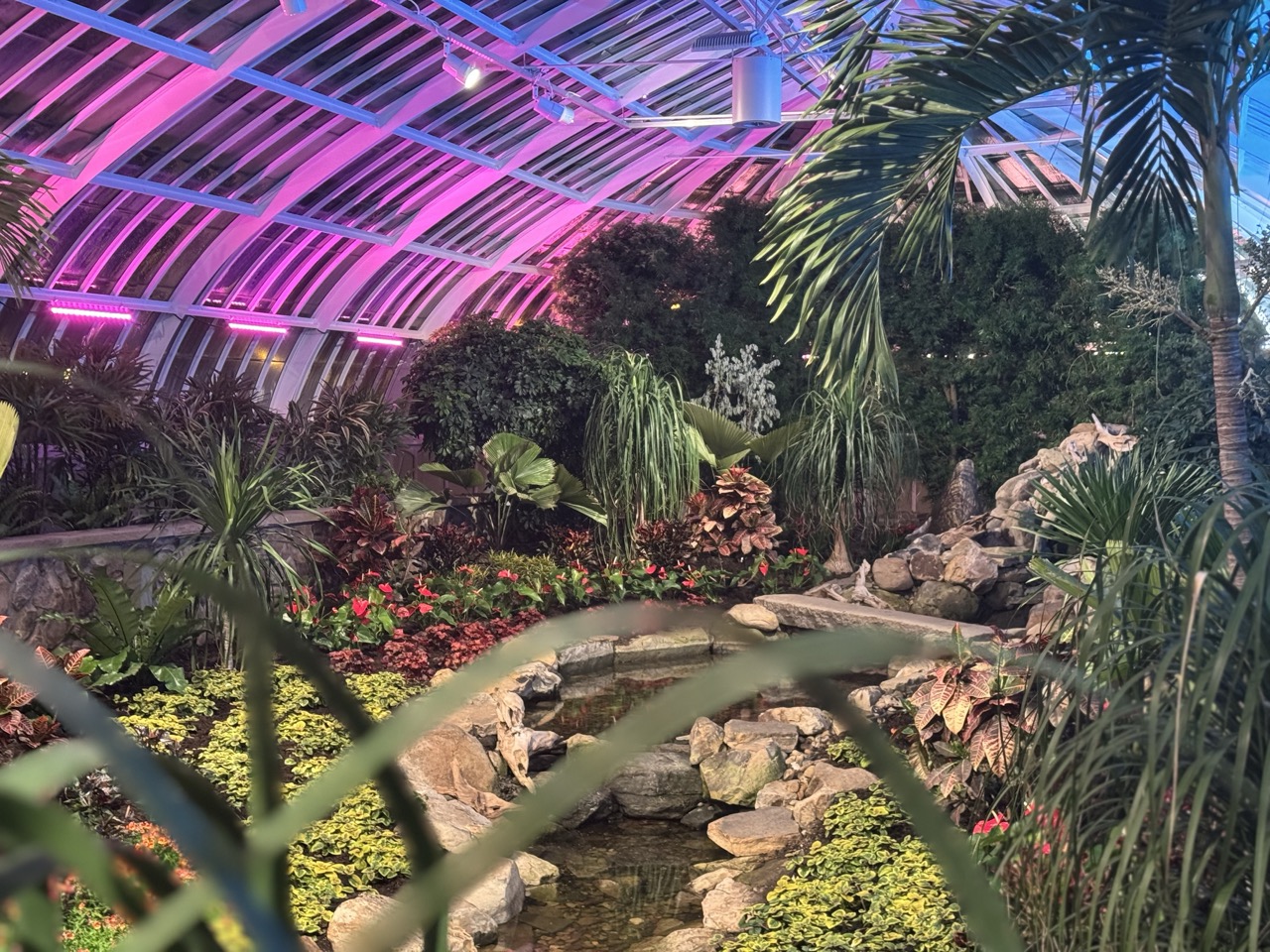
    But first we had to get through brutally cold temperatures, winter’s darkness, and a little snow. Those discomforts initially deterred me. It seemed easier to keep hibernating. I’m glad I braved the winter weather because, well, the incredible beauty waiting inside was worth every shiver. Here’s a taste of what I was in for.

    Yet, if I had seen that picture before I went, it probably wouldn’t have swayed me. It’s a cool picture, but it doesn’t capture the incredible smells in each of the conservatory buildings. The one where trees were in bloom smelled like a spring day. The one full of ferns smelled like summer trips to my grandfather’s cabin. The air was fresh and light, a reminder that digital media simply cannot capture the fullness of such beauty.

    It makes me wonder if, by spending so much time in the digital world we are losing something important. Don’t get me wrong, I am a huge fan of the internet and cool productivity tools and connecting with old friends online. But there’s not much room there for real, tangible experiences, moments that fill life with awe and wonder. I must have said, “I wonder…” thirty times while my sister and I walked around the conservatory.

    The dessert room, with its strange cacti creeped me out a bit. I wonder what’s inside those big round ones.

    The intricate bonsai trees left me in awe. I wonder how many years the artist spent shaping such masterpieces.

    My sister said these orchids look like those jumping frog toys. To me, they look like alien spiders. I wonder what planet they came from.

    I wonder, when was the last time you stepped away from your screen to experience something real, something you could see, smell, or touch?

    For the past couple weeks, I had been hibernating, working on projects, working hard to become successful and wealthy, reading books and blog posts, watching YouTube videos, organizing my task lists and goals and bookmarks and files, listening to lo-fi music, and hibernating. And all that stuff is great. They even had lo-fi music playing at the conservatory too. It set the vibe nicely. And while no photo can replicate the smells and textures of real life, sharing this experience online reminds me how both worlds can intersect to inspire and connect.

    But, man, am I glad I ended up saying “yes” to visiting the conservatory with my sister. The real, tangible experience of beauty touches the soul in ways that bits and bytes cannot. Not only did the little trip refresh me, it reminded me why life is such a wonderful gift. It renewed my heart. It gave me a fresh perspective.

    I hope you have the opportunity to get out into the world and experience real beauty sometime, and soon. Maybe you can take a trip to a conservatory near you. Or maybe you can visit a museum. Or maybe, at least, you can go for a walk and pause for a moment to wonder, to let awe and curiosity renew your heart, just as it did mine.