Tag: essays

  • Curses: On the Virality of Language

    The powers of this world, through seemingly benign language, curse us.

    Shaming and invalidating language can spread through songs, coworkers, neighbors, family members, movies, and just about any other medium. This kind of language is viral and toxic, and it works in the most sinister way.

    Repeated phrases become repeated thoughts, repeated thoughts become repeated feelings, and repeated feelings become core beliefs. Even a common, seemingly harmless phrase can perpetuate a cycle of shame or distorted belief. Take, for example, this phrase from a popular Blink 182 song: “Don’t waste your time on me.”

    In many cases, we apply no meaning to such a phrase. It’s just a catchy lyric that bounces around between our ears. But when our lived experience seems to line up with the phrase, when we’re wounded or hurt, the phrase takes on a certain life of its own and lives inside us, leeching our courage and disavowing our humanity.

    When I say, “don’t waste your time on me,” it implies two terrible lies: one, that spending time on me is a waste of time, that spending time on a human being could possibly be a waste of time; and two, that the person spending time is not smart enough to use their time wisely, that they waste their time, and that time is a currency.

    These lies promote a sense of shame, scarcity, broken relations, and, ultimately, untrue core beliefs. They are toxic.

    They are spread through a single line in a simple song, a curse. And we have endless access to an endless number of very catchy songs, catchphrases, movie quotes, etc, with curses just like that one.

    For our own mental wellness, for our own perception of reality, we must examine the language we use in our thoughts and in our speech.

    The phrases we think, listen to, and speak are healthiest when they support positive social interaction; acknowledge the full dignity of every human person; promote a realistic sense of abundance, especially of the abundance of love; express emotion and experience with integrity, courage, and honesty; encourage ourselves and others to bear challenges and sufferings; inspire wonder by asking questions without demanding answers; and thank, praise, and glorify God, The Good Father.

    But we don’t need to worry about a list of phrases that are okay or not. We only need to “think of what is above, not of what is on earth.” (Colossians 3:2) We only need to dispose our attention toward God, love, and virtue. Then, we will find freedom from the curses that the powers of this world place upon us.

    “Do not conform to the pattern of this world, but be transformed by the renewing of your mind.”

    Romans 12:2

  • Gods, Demons, and People with Faces

    Gods, Demons, and People with Faces

    I read, as part of a book club, C.S. Lewis’s Till We Have Faces. As I read, I was reminded of a very different book I’d read for a book club a couple years before: Rene Girard’s I See Satan Fall Like Lightning. In both of these, I am reminded of grief, the irrational facts of experience, the importance of forgiveness, and a couple mental health practices.

    In chapter eight of Till We Have Faces, the narrator-protagonist’s beloved sister, Psyche, is taken as a human sacrifice to her village’s goddess. The narrator-protagonist, Orual, felt tremendous grief, and C.S. Lewis wrote it with incredible precision.

    For many days after [Psyche was taken away] I was sick, and most of them I do not remember. I was not in my right mind, and slept (they tell me) not at all. My ravings—what I can recall of them—were a ceaseless torture of tangled diversity, yet also of sameness. Everything changed into something else before you could understand it, yet the new thing always stabbed you in the very same place. One thread ran through all the delusions. Now mark yet again the cruelty of the gods. There is no escape from them into sleep or madness, for they can pursue you into them with dreams. Indeed you are then most at their mercy. The nearest thing we have to a defence against them (but there is no real defence) is to be very wide awake and sober and hard at work, to hear no music, never to look at earth or sky, and (above all) to love no one. And now, finding me heart-shattered for Psyche’s sake, they made it the common burden of all my fantasies that Psyche was my greatest enemy. All my sense of intolerable wrong was directed against her. It was she who hated me; it was on her that I wanted to be revenged. Sometimes she and Redival and I were all children together, and then Psyche and Redival would drive me away and put me out of the game and stand with their arms linked laughing at me. Sometimes I was beautiful and had a lover who looked (absurdly) a little like poor, eunuch’d Tarin or a little like Bardia (I suppose because his was the last man’s face, almost, that I had seen before I fell ill). But on the very threshold of the bridal chamber, or from the very bedside, Psyche, wigged and masked and no bigger than my forearm, would lead him away with one finger. And when they got to the door they would turn round and mock and point at me. But these were the clearest visions. More often it was all confused and dim—Psyche throwing me down high precipices, Psyche (now very like the King, but still Psyche) kicking me and dragging me by the hair, Psyche with a torch or a sword or a whip pursuing me over vast swamps and dark mountains—I running to save my life. But always wrong, hatred, mockery, and my determination to be avenged.

    The beginning of my recovery was when the visions ceased and left behind them only a settled sense of some great injury that Psyche had done me, though I could not gather my wits to think what it was. They say I lay for hours saying, “Cruel girl. Cruel Psyche. Her heart is of stone.” And soon I was in my right mind again and knew how I loved her and that she had never willingly done me any wrong, though it hurt me somewhat that she should have found time, at our last meeting of all, talking so little of me, to talk so much about the god of the Mountain, and the King, and the Fox, and Redival, and even Bardia.

    Soon after that I was aware of a pleasant noise that had already been going on a long time.

    ”What is it?” I asked (and was astonished at the weak croak of my voice).

    ”What is what, child?” said the voice of the Fox; and I knew somehow that he had been sitting by my bed for many hours.

    ”The noise, Grandfather. Above our heads.”

    ”That is the rain, dear,” he said. “Give thanks to Zeus for that and for your own recovery. And I—but you must sleep again. And drink this first.” I saw the tears on his face as he gave me the cup.”

    Gods or Biases

    Isn’t it strange that Orual projected all of her anger, about the victimization of her sister, onto the victim, her sister? Perhaps that strangeness is why humans blamed such things on gods. Perhaps they truly are caused by gods.

    These days, we use psychological terms like projection and cognitive bias and splitting to describe Orual’s irrational thoughts and feelings. Whether they’re gods or biases, they’re part of our humanness. It is clear that we are not entirely rational beings. That irrationality can serve a good purpose, but it can also serve evil.

    Scapegoats and Sacrifice

    The polymath philosopher, Rene Girard, posited that every culture is born out of sacrificial offerings. To put it briefly, human relations become tense when shared resources become limited. That tension builds up until, finally, the group (that seemingly single-minded entity that is a crowd of people) spontaneously chooses a scapegoat. The scapegoat might be an actual goat, or another animal, or it might be a human being. It’s usually something that has blood. The tension that has built up between members of the group is, almost magically, released when murder is committed. That is the function of the scapegoat, to take all of the tension upon itself, releasing it from everyone else in the group.

    It’s strange enough that this actually works (it actually resolves terrible societal problems), and that it has been practiced in almost every culture in human history, but to add to the strangeness, the crowd experiences a common hallucination. The scapegoat becomes the scapegoat when the crowd sees them as a monster, or something less-than-human. Then, after the murder or scapegoating occurs, the victim is often venerated as a god or goddess, something more-than-human. Girard claims that every god and goddess was actually, at one point, a sacrificial victim.

    That’s exactly what happened in the beginning of Till We Have Faces. Psyche was first seen as beautiful, and people started believing her touch could heal them. But then, a plague came over the land, and people started blaming Psyche’s touch for spreading the plague. The plague, along with famine, generated tension among the people. That tension needed somewhere to go. Psyche, who was seen as more and/or less than human, became the scapegoat.

    This strange dance of perceiving a person as a god and then a demon and then a god, and so on, can be seen in individuals as well.

    Splitting, Scapegoating, Not Seeing

    Orual’s relationship with Psyche mirrored the arc of the villagers. In the beginning, Orual’s love for Psyche was something akin to worship. She said, “I wanted to be a wife so that I could have been her real mother. I wanted to be a boy so that she could be in love with me. I wanted her to be my full sister instead of my half sister. I wanted her to be a slave so that I could set her free and make her rich.”

    But, after Psyche was taken away, Orual stopped seeing her as perfectly good and, instead, saw her as a perfect enemy.

    In many mental illnesses, like Borderline Personality Disorder and depression, but also in mentally healthy people in situations that are highly stressful or emotional, psychologists have identified a common cognitive bias they call splitting.

    Splitting is a useful mental tool, often a defense mechanism. The person who is splitting sees another person or situation as entirely good or entirely bad; entirely one thing or another. They become blind to complex, nuanced realities. They see only gods and demons. In a stressful relationship, for example, one person might see the other as perfect for a while, and then, all of a sudden, they see the other as pure evil.

    By seeing someone as only good or only evil, they defend themselves from the uncomfortable, conflicting emotions of a relationship between two flawed human beings.

    To put it simply, if I see my ex-girlfriend as a demon rather than a human, it’s easy for me to write her off and not have to look too closely at the painful emotions and experiences around the relationship.

    It looks a lot like what Orual was doing in her grief over the loss of Psyche. She couldn’t handle the irrational fact of experience that our dearest loved ones can be taken from us in an instant, so she turned her dearest loved one into an enemy instead. It makes more sense for an enemy to be taken. It’s more bearable that way.

    Here, I want to be careful not to vilify splitting, or other cognitive biases. They are never entirely good or evil themselves. Splitting can be extremely beneficial and even necessary. The crazy thing about scapegoating is that it actually works. It actually resolves the weird psychic-plagues that groups of people experience. And in Orual’s case, by splitting, she could shelve certain feelings about the loss of her sister, perhaps so she could work through them slowly or one at a time.

    She couldn’t handle loving her sister while she grieved, so she didn’t. But when the time was right, the splitting needed to be seen through. It was good while it served a good purpose, but it ultimately prevented her from seeing with clarity. Like medicine, it treated the problem, but it also had its side effects.

    When Orual’s mind began to clear, she became aware of “a pleasant noise that had already been going on a long time.” The sound of rain on the rooftop was a beautiful part of life that she lost because she failed to see the true reality in front of her.

    Of course, we each need to come around to these things in our own time. But we must also be aware that, by seeing the world through cognitive biases, like splitting, we remain blind to many good things.

    Ultimately, and most tragically, splitting results in seeing another not as they are, a human being, but as something far greater or far less. That’s the only way scapegoating actually works.

    If a human sees another human as they are, as a human, then scapegoating and sacrificing cannot be justified because humans are not only incredibly complex and impossible to fully comprehend, but we are also children of God. We have a very particular and special element of consciousness within us. If we are aware that exists in another person, then murder can’t be justified. On the other hand, if we only see a monster or a demon, then murder makes perfect sense.

    As long as we fail to acknowledge that not everything in life makes sense, that is, as long as we cling to our cognitive biases to make sense of an often irrational reality, we must murder (even if only symbolically) and commit sacrifices to maintain that fragile notion of a sensible, fair world. There’s a beautiful innocence in the belief that everything can be made sense of, that every question can be answered, but it also reeks of blood.

    To be clear, the problem is not in believing that the world can make sense. Perhaps the world does make sense. There’s good evidence to suggest such a thing. The problem is in believing that we can make sense of the world. We are only human. We must live with mystery. If we fail to accept that, then we must offer blood sacrifices in order to uphold the illusion that we can make sense of it all.

    While surrendering our cognitive biases, once they’ve served their purpose, is essential for mental health, it is also an essential piece in how we view and treat others.

    Inquisitiveness and Mindfulness

    That leads me to the final piece of this essay, in which I would like to share two practices that cannot take grief away, but can offer moments of reprieve in the midst of it, can help us to suffer no deeper than is necessary, and can open us to seeing and accepting the humanity in others.

    First, going all the way back to chapter one in Till We Have Faces, we see this stoic-like Greek man, the Fox, who mentors Orual and her sisters. The Fox is like a grandfather to the sisters, but he isn’t related to them. In fact, he is a slave, taken in war, taken from his homeland, his community, and his family. He has every reason to be miserable, but he manages to keep his spirits up.

    Orual says this about the Fox:

    He had all sorts of sayings to cheer himself up with: “No man can be an exile if he remembers that all the world is one city,” and, “Everything is as good or bad as our opinion makes it.” But I think what really kept him cheerful was his inquisitiveness. I never knew such a man for questions. He wanted to know everything about our country and language and ancestors and gods, and even our plants and flowers.

    What really kept him cheerful was his inquisitiveness. C.S. Lewis wrote that back in 1956, and psychologists have verified, time and again, that inquisitiveness is essential to mental wellness.

    In terms of cognitive biases, like splitting, a mindset of inquisitiveness enables one to ask questions without demanding answers (like why or how a person behaves the way they do) and come to an understanding that a person is rarely purely good or purely evil.

    In terms of life, inquisitiveness opens a person up to wonder and experiences of beauty, truth, and goodness. Those experiences nourish our souls. They give us reasons to keep going, to keep seeking.

    Long before C.S Lewis wrote Till We Have Faces, Saint Francis of Assisi said, “O Master grant that I may never seek so much…to be understood as to understand…Make me a channel of your peace.”

    Perhaps Orual could have used some of the Fox’s inquisitiveness, some of Saint Francis’s seeking, while she was grieving. She might have, at least, treated the spirit of Psyche more fairly if she had sought to understand her instead of labelling her. She might have noticed the rain a little sooner. And she might have found some ease even while she grieved.

    But in order to pause her ruminations long enough to be inquisitive, she might have needed a mental breather. The second mental health practice I want to mention is meant to provide that.

    Our instinctive minds are at ease when there is no immediate threat to our lives. When we can pull our minds out of our ruminations of the past or the future, we can experience the present moment. Rarely, in any given moment, are we in grave danger, and so by focusing on the present, we can give some ease to our minds.

    If Orual could have brought her mind to the sound of the rain, instead of waiting for her mind to stumble upon it, she might have had a moment or two of solace. In those moments, she might have sought understanding, instead of blindly blaming Psyche. A moment of clarity can work wonders.

    Yet, I think it was okay that Orual grieved and did not understand. I think she needed that for a while. The tragedy wasn’t that she saw through distorted lenses while she grieved. The tragedy was that she continued to see through distorted lenses long after she’d grieved, after the distortions no longer served a good purpose.

    Nonetheless, some reprieve can be found in releasing one’s thoughts of past or future, and grounding oneself in the present. For that, there is a well-documented grounding technique, often called the 5-4-3-2-1 Method, aimed at gaining that same clarity that Orual experienced when she noticed the rain.

    The technique reduces anxiety and rumination by grounding the person practicing it in the present moment. It’s very simple. Name five things you can see, four things you can touch, three things you can hear, two things you can smell, and one thing you can taste. By doing that, you anchor your mind in the present moment.

    Life doesn’t always make sense, but the present moment usually does. Most of the time, in our culture anyway, the present moment is a safe place. Perhaps by rooting ourselves there, and then taking an inquisitive approach toward life, we can give ourselves, and others, a lifeboat when things get hard.

    More than that, perhaps we can surrender old cognitive biases that no longer serve our God-given purpose, biases that not only make our own lives more difficult but might even lead to unnecessarily scapegoating and sacrificing other humans or animals. Maybe then, we can treat our loved ones more fairly.

    The Ultimate Scapegoat

    Maybe then we can see beyond gods and demons, to the one true God who made himself the ultimate scapegoat, the “pure victim, holy victim, spotless victim” who, rather than requiring a sacrifice, sacrificed himself to atone for all of our tensions and biases and sins.

    So often, when we see a flawed person, we label them so that our world makes sense. But humans are too complex to be made sense of. Labeling someone makes us blind to every part of who they are that doesn’t fit that label. This is tragic because humans are always a great deal more than any label other than their name.

    “The human being is always unique and unrepeatable, somebody thought of and chosen from eternity, somebody called and identified by his own name.”

    Saint John Paul II, Urbi et Orbi, December 25, 1978

    Christ points the way beyond labels and splitting and biases. We must see the flaws of others (like their own tendencies to split or label), and we must admit those flaws are not all they are. Those flaws are parts of a whole that is greater than the sum of the parts. We must, as Christ did, see those flaws and make the self-sacrifices (sacrificing our comfortable view of a world that always makes sense) necessary to forgive them, to see the whole person beyond them.

    “Forgive them, they know not what they do.”

    Jesus Christ, after his crucifixion, before his death

  • The Theft of the Night Sky: Why 1 Million Satellites are a Threat to Our Souls

    The Theft of the Night Sky: Why 1 Million Satellites are a Threat to Our Souls

    The night sky is changing faster than most people realize. Within a decade, there may be hundreds of thousands, or even millions, of satellites orbiting above us.

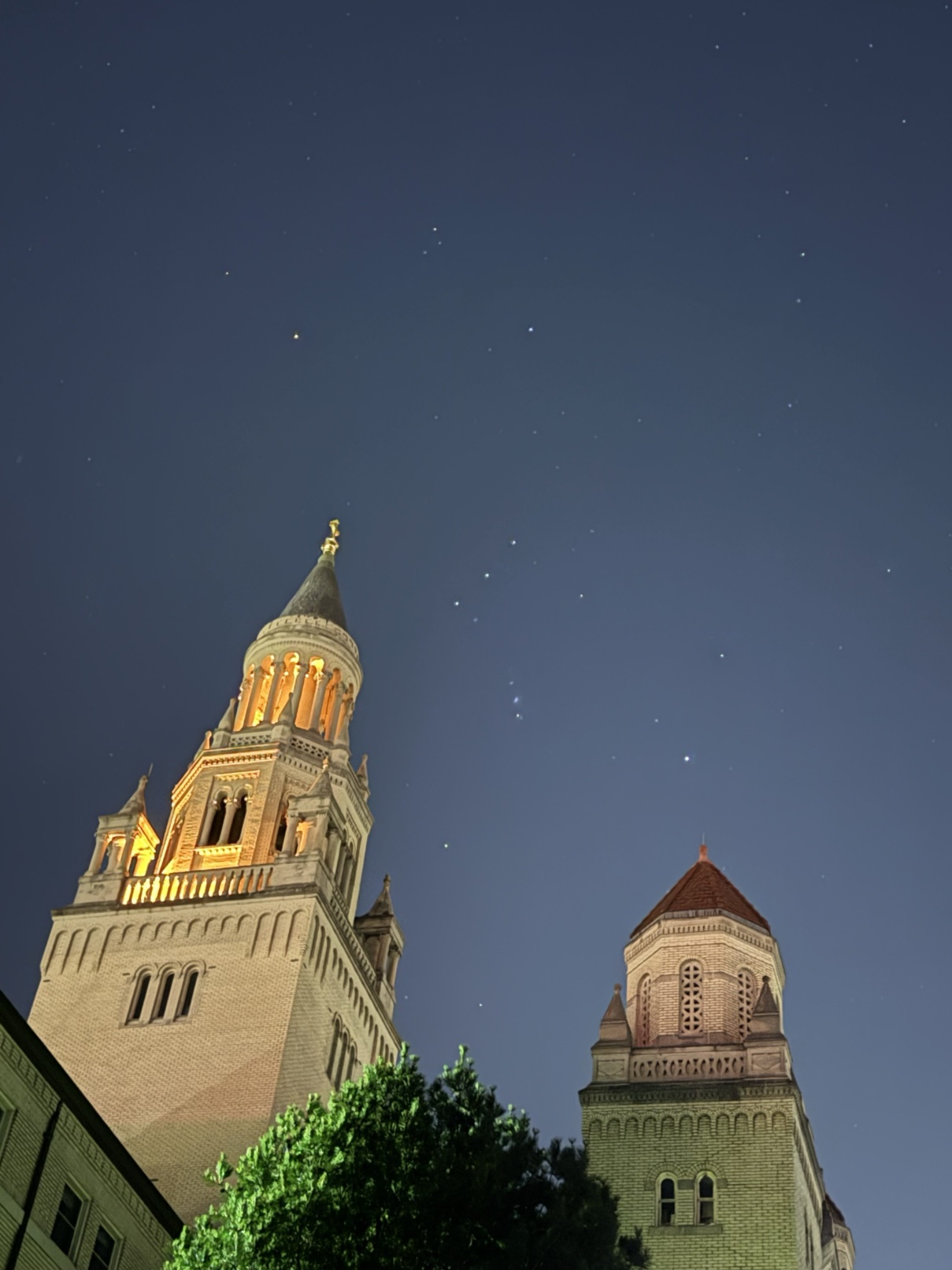
    Have you looked up at the night sky and seen a row of satellites moving among the stars? It’s clear they’re not stars. They move more at man’s pace than God’s. They form constellations straighter, more rigid, than nature’s. They are a constant reminder that man has left no material realm unconquered. It’s a problem, and it’s growing into a monster that will hunt the hunter, Orion, shatter the feeding spoon, Ursa Major, and violate the beautiful queen, Cassiopeia.

    By desecrating the skies with man-made satellites, we are forging the constellations that will guide us to our prideful demise. All the while, we are losing sight of the true stars, the ones that can guide us home.

    Satellite mega-constellations are not just a technological or environmental issue, though they are very much those things. They are also a spiritual and cultural issue, and an existential threat to humanity.

    I’ve been following, and disturbed by, the satellite situation for a few years now. I had, naively, hoped the problem would just go away, but it’s only getting worse.

    Sometime in 2019 or 2020, I read news that the FCC had approved companies like StarLink and Amazon to launch a total of around 30,000 satellites into the sky. Disturbed by the nightmares produced in my mind by that news, I wrote It Is So No More (the poem at the end of this post).

    The Problem is Getting Worse and Worse

    I can see it now. As if there aren’t enough billboards littering the countryside, corporations will start forming satellites into screens. We’ll see constellations of StarLink and Amazon logos among Taurus and Leo. Talk about a horoscope.

    Even if it in never goes farther than it has, we’ve already haplessly stolen the night sky’s purity. Already, when a child looks up on a dark, cloudless night, he cannot see unadulterated nature. He must see man-made satellites amidst the precious stars.

    But all signs indicate it’s about to get much worse. In mid-January 2026, PC Magazine reported that “As SpaceX Works Toward 50K Starlink Satellites, China Eyes Deploying 200K”.

    But it gets worse. As I was editing this article, more news came. At the end of January 2026, PC Magazine reported “SpaceX Eyes 1 Million Satellites for Orbital Data Center Push“. One million satellites! God help us.

    I wouldn’t be surprised to see mega-constellations displaying the faces of political leaders, the flags of nations, or the logos of corporations, across the night sky in a few years. Whether it’s a corporate logo or a political figure, the result is the same: the sky becomes a canvas for human ego.

    That doesn’t seem to be a concern of the journalists reporting on the satellite situation. It seems all they care about is the threat to national security.

    This is far worse than a threat to national security. This is a threat to spiritual security. This is an existential threat.

    Yes, one million satellites buzzing around our planet is a threat to our privacy, especially with the development of mind-reading technologies like this.

    Yes, one million satellites hovering above our nation is a threat to our national security. In this Space.com piece, there is mention of “powerful lasers” and other space-based weapons.

    Yes, one million satellites will undoubtedly contribute to the pollution of outer space. NASA admits that, “Due to the rate of speed and volume of debris in LEO [low Earth orbit], current and future space-based services, explorations, and operations pose a safety risk to people and property in space and on Earth.”

    Yes, one million satellites orbiting Earth is a material threat, but the problem runs deeper.

    The Roots That Feed This Disaster

    The people spewing these satellites across the heavens cannot see the stars. It must be so. If they could feel that wonder one feels on a summer night somewhere far away from city lights, they would surely stop this nonsense of dominating every last inch of nature.

    They can’t see the stars. They only see burning matter to be taken as a resource and sold for money. They only see complex phenomena, like consciousness and love and meaning, as systems of individual physical components and processes. They only see statistical realities. The world, to them, is a mechanism, and mechanisms must be dominated and exploited.

    But I’d like to offer a different perspective, one shared by some of the greatest thinkers in human history, thinkers like Heraclitus, William Blake, and Iain McGilchrist. Their view is that the world is not just some dead mechanism. It’s more akin to an organism. To them, the world is alive, and living things must be cared for, not dominated or exploited.

    The worldview that sees only dead matter moving in a series of mechanical processes is called scientific material reductionism. It has given us a lot: sanitation, refrigeration, the internet, protection against superstition, weather forecasting. I could go on all day. Because it has given us so much, it has become the dominant worldview in many of our Western institutions, in our educational systems, in our explanations of the world, and in our governments.

    Science is great for explaining mechanisms. It offers precise and standardized measurements, which are invaluable for prediction and control, but it cannot account for meaning, value, or purpose. It is insufficient for understanding lived reality as a whole. There’s more to the world than what can be measured.

    To science, love is not real, matter has no meaning, and suffering is just a bunch of neurons firing in the brain. Science doesn’t care about beauty or loyalty or courage. But in our lived experience, those things are tremendously important. It’s obvious in the art we create and in the stories we tell. It’s obvious when we look at the constellations and see great mythologies.

    The stars guide us. Odysseus steered his raft by keeping his eyes fixed on the Pleiades. Europeans made transoceanic voyages thanks to stars like Polaris (the North Star). Magi from the East found God incarnate as Jesus Christ because they followed the Star of Bethlehem. The Egyptians could predict when the Nile would flood based on Sirius’s rising in relation to the sun. Stellar calendars governed agriculture that stabilized civilizations for millennia. And those are only material examples.

    The stories carried in the constellations are invaluable guides in their own way. They show us what is noble and good. They teach us our purpose. From stories, we learn the meanings that science can’t grasp. We lift our eyes to the glowing firmament and encounter truths that nothing else in this world can show us. We owe the skies a terrible loyalty.

    And we’re letting corporations destroy them for profit and power.

    The people launching thousands of satellites into the sky each year are accomplishing their task. In their arrogance, they want to be our gods. They’re creating new stars, new guides. They’re deciding where we go. They’re telling us what the truth is. But we don’t have to buy into it, and without our support, they will fall.

    The Stories They’re Telling

    They know they need our support. That’s why they’re spreading propaganda.

    The current pro-satellite propaganda falls into three main categories.

    1. Bridging the Digital Divide. These headlines and articles frame satellite expansion as a moral imperative for rural or underserved populations.
    2. National Security and Sovereignty. These focus on the necessity of satellites for defense, using high-stakes language.
    3. Solving Climate Change. These frame satellites as primary tools for climate accountability and disaster response.

    Do you see their narrative? Satellites will save us from foreign attacks, bring wealth to the poor, and end global warming.

    Amazing. And the power held by the few organizations in control of these satellites will never be abused. And the people who are so rural that they can’t have wired internet, well, maybe the satellites can deliver food to them too. And so what if we destroy the once-pristine night sky to save the world from climate change? So what if we “pose a safety risk to people and property in space and on Earth”? At least we can detect that landfills are releasing methane into the atmosphere. We couldn’t figure that out without satellites, apparently.

    Seriously, though, homo sapiens have survived without internet or satellites for 300,000 years. Do we really need them all of a sudden?

    Rural connectivity, wildfire monitoring, and geopolitical communication are all good things. But the question is not whether satellites offer benefits. It is whether the cost of planetary-scale sky pollution, surveillance infrastructure, and cultural desecration is justified.

    The Costs

    It’s funny, the most obvious and foreseeable costs of satellite mega-constellations are quite opposite the benefits proposed by the pro-satellite propagandists. Power and wealth imbalances will increase, making the poor poorer. Another tool for tyrannizing a nation will be set in place, ready for the next Hitler that comes along. And the world will become more polluted with greenhouse gases and other junk. Worst of all, though, the firmament will lose its purity and we will lose sight of the stars that have guided us for generations.

    Rural Communities Will Remain Underserved

    Let’s start with the idea that satellite networks will provide new economic opportunities to rural communities, where current internet infrastructure is lacking.

    What they say is true. More remote communities will have access to high-speed internet. That is a noble goal, but is it worth the costs?

    Satellites are expensive to launch, and the knowledge to do so is specialized and widely unavailable. This means that only wealthy corporations with highly educated workers will be able to build satellite networks, creating yet another medium that will be controlled and owned by a powerful few.

    This opens opportunities for satellite providers to unjustly raise prices, especially in those rural communities that become dependent on them because wired infrastructure was unavailable or unmaintained.

    At the same time, these rural communities often rely on systems and environments that will be directly harmed by satellite mega-constellations. With a million satellites in orbit, the night sky will be permanently changed. This will fundamentally alter and degrade the astro-tourism industry that small communities, like Cherry Springs State Park, in Potter County, Pennsylvania, rely on.

    Cherry Springs is world-renowned for its exceptionally dark skies, making it a premier destination for stargazing and viewing the Milky Way, planets, and meteor showers. But with all the light pollution from satellite mega-constellations, Cherry Springs will be a very different place.

    And astro-tourism is only one example. Astronomical research, indigenous cultural practices, and natural ecosystems, all heavily intertwined with the rural communities of which they partake, will undoubtedly be impacted by such changes in the night sky.

    Yet the impact on rural communities is only the first symptom of a deeper problem. These mega-constellations trade local self-reliance for a system ripe for centralized authoritarian control.

    Turnkey Tyranny

    In 1984, George Orwell showed us how technology can be used for total state control. For the most part, we have optimistically ignored Orwell’s dystopian warning. We’ve allowed cameras into our bedrooms. We’ve built tools that can precisely digitize oral communication, making it searchable and indexable by governments and corporations. We pay for devices that can be unlocked by scanning, and recognizing, our faces. We allow anyone offering a digital service to track our location at any given time. Our technology couldn’t be more Orwellian.

    It could, however, be even worse than what Orwell predicted. In 1984, there were places that couldn’t be seen. There were hidden patches of woods and dark corners of rooms. In the US, just a couple years ago, there were cellular “dead zones” where mobile devices couldn’t be reached, where one could disconnect entirely. But with satellite mega-constellations, far less is unreachable. The places on Earth to hide from a signal are fewer and fewer.

    It’s not just cellular signals, either. New constellations are being equipped with “edge computing,” where AI on the satellite analyzes imagery in real-time. It doesn’t just take a picture. It can recognize gatherings of people or unusual movements.

    Unlike older satellites that only passed over a spot once a day, mega-constellations offer persistent views. We aren’t being watched periodically; we are being watched constantly.

    This opens the doors for greater surveillance, even to the point of thought-policing (now that mind-reading technologies, though in their infancy, exist and are improving); predictive prosecution (targeting suspects that the algorithms deem at high risk of future criminal activity before they’ve even committed a crime); and the abolition of free speech.

    When the infrastructure is built, an oppressive leader or organization only needs to turn the key and all the power is theirs. As NSA whistleblower, Edward Snowden, said in a 2013 CBS News interview, “a new leader will be elected. They’ll flip the switch, say that, ‘because of the crisis, because of the dangers that we face in the world, some new and unpredicted threat, we need more authority, we need more power,’ and there’ll be nothing the people can do, at that point, to oppose it. And it’ll be turnkey tyranny.”

    Satellite mega-constellations open the doors to thought-policing and centralization by establishing continuous ground coverage and using AI-driven data analysis, and putting that power in the hands of a select few. These mega-constellations are a terrifying leap in turnkey infrastructure, if they don’t destroy our lives and planet first.

    Satellites are Toxic

    While the pro-satellite propaganda pushes the narrative that satellites will help us fight global-warming, the truth is that satellite mega-constellations will cause a great deal of harm.

    The concluding paragraph from a research paper titled “Dirty Bits in Low-Earth Orbit: The Carbon Footprint of Launching Computers,” makes the point.

    “In particular with a sustainability lens, computing in LEO is costly for the environment. An obvious contributor is the launch—which offsets positive aspects of space operations (e.g. increased solar panel efficiency due to missing atmosphere). However, an even larger contributor is re-entry, where both payload and 2nd stage burn, turning into NOx that is significantly more dangerous than CO2. This paper has shown that even with an improved launch technology, the orbital applications will not beat terrestrial ones.”

    The pro-satellite propaganda says “SpaceX launches $948 million NASA satellite designed to shed new light on climate change,” but the science “has shown that even with an improved launch technology, the orbital applications will not beat terrestrial ones.”

    In other words, laying all that wire for broadband internet to reach rural communities still has a lower carbon footprint than launching LEO satellites.

    And carbon footprint is only one measure of toxicity.

    Even setting aside spirituality, meaning, or politics, mega-constellations are environmentally destructive on a scale their advocates rarely disclose.

    If all of that is not enough, there’s still the loss of one of our purest and greatest wonders, the night sky. And when we lose the night sky, we lose much more than constellations.

    Losing Sight of Our Guiding Lights

    By losing the night sky, we’ve lost the last untouched, uncommoditized piece of nature. The night sky is a shared resource. Nobody should own it, and nobody should be able to treat it as though they own it. But that’s exactly what is happening.

    The night sky has been a reliable, nourishing, and powerful companion to humanity. Defiling its purity must be akin to martyring saints or massacring innocents. Yet it’s being taken over by a bunch of tech magnates in the name of progress or shareholders or some other false god.

    Maybe they don’t care about progress or shareholders. Maybe they’re creating their own constellations because they want to be gods, or because they believe they are gods.

    Beyond being a guide, a provider, a storyboard, and a calendar, the night sky is also a fundamental part of religion. Constellations are named after gods. The Star of Bethlehem led the way to Christ, and wrote his birth into the mathematics of the universe.

    In cultures across history, a red moon has meant much more than a total lunar eclipse that causes Rayleigh scattering. To the Incas, it meant a jaguar ate the moon, and would soon turn its attention toward Earth. To the Ancient Mesopotamians, it was an assault on the king. Native American tribes in California believed the moon was ill or wounded, and would chant healing songs toward it. In parts of Africa, to this day, it is a time for old feuds to be set aside. These are not rational beliefs. They’re religious.

    Religions take up the night sky in celebration of something beyond. The people building satellite mega-constellations destroy the night sky in celebration of themselves.

    It reminds me of something Carl Jung had to say about religion as a defense against totalitarian regimes (like the Nazi’s in the mid-twentieth century) in his book, The Undiscovered Self.

    “In order to free the fiction of the sovereign State—in other words, the whims of those who manipulate it—from every wholesome restriction, all socio-political movements tending in this direction invariably try to cut the ground from under the religions. For, in order to turn the individual into a function of the State, his dependence on anything beside the State must be taken from him. But religion means dependence on and submission to the irrational facts of experience.”

    In other words, totalitarian states cannot be the supreme rulers if their citizens adhere to a religion because religion means believing in something beyond statistics and reason, and if there is something beyond statistics and reason, then the state can’t dictate it. And if the citizens submit to religion, then the state is not the supreme ruler (unless, as Jung later notes, the religions “compromise with the State”).

    What better way to destroy man’s belief in something beyond than to cut off access to the stars and moon and constellations? Destroy his ability to look up at the night sky and wonder.

    Jung goes on to explain what happens when man’s religion is stripped away.

    “The individual who is not anchored in God can offer no resistance on his own resources to the physical and moral blandishments of the world…The State has taken the place of God…Free opinion is stifled and moral decision ruthlessly suppressed, on the plea that the end justifies the means, even the vilest. The policy of the State is exalted to a creed, the leader or party boss becomes a demigod beyond good and evil, and his votaries are honored as heroes, martyrs, apostles, missionaries. There is only one truth and beside it no other. It is sacrosanct and above criticism. Anyone who thinks differently is a heretic, who, as we know from history, is threatened with all manner of unpleasant things. Only the party boss, who holds the political power in his hands, can interpret the State doctrine authentically, and he does so just as suits him.”

    That is a sorry state. Some may say it is Hell on Earth. And it all starts when a few powerful people “try to cut the ground from under the religions.”

    If the corporations building these mega-constellations replace the stars that guide us with their own, if they usurp the night sky as a source of religious truth, we’re well on our way to that awful state.

    What Can We Do?

    I hope I’ve made it clear that: satellite mega-constellations are capable, on multiple levels, of becoming invaluable tools for oppressive tyrants to build a totalitarian state; they’re capable of further ruining our economies, our planet, and our lives; and their defilement of the night sky is absolutely tragic.

    Now, I want to offer some hope. We have the ability to stand up against these corporations. Maybe if enough of us unite against them, we can win. They need us. Corporations (at least in a free market) don’t survive if nobody buys what they’re selling. There is power in boycotting.

    For now, I will be doing four things, and I invite you to join me.

    1. Configuring the settings on my phone so that it uses satellite services as little as possible. Unfortunately, there isn’t much granularity when it comes to satellite settings on iPhone and Android, and some of the satellite-related features can’t be turned off at all. But we can do our best.
    2. Committing to refusing all services that use mega-constellations. This includes the obvious services, like Starlink satellite-based internet, but also things like in-flight Wi-Fi on United Airlines and Jet Blue, which use Starlink, and avoiding using mobile devices in areas where there is no cellular service (because cellular carriers have made deals with satellite companies to provide service when a device is out of cellular tower range).
    3. Committing to refusing investments involving satellite and satellite-related companies. Companies like SpaceX depend heavily on investments and investor sentiment. Spreading the news and refusing to invest in these companies may be our best chance at keeping a clean sky.
    4. Getting involved with organizations, like Dark Sky International, that are actively fighting for our night sky.

    If enough of us take those small steps, maybe we can change the course of history. Maybe we can leave a clear view of the night sky to future generations.

    And even if we can’t sway the corporations, at least we can live knowing we didn’t pay, or encourage, them to launch all of these damned satellites.

    If you want to do even more, there’s plenty more that can be done. Write letters to government officials, speak during public comment periods for FCC decisions, join and support local astronomy groups, pressure airlines, and support terrestrial broadband initiatives. These are all parts of the fight.

    If we allow the night sky to be rewritten by profit and power, we lose something irreplaceable, something no technology can restore. We must act while there is still time.

    It Is So No More

    Look at the pictures, young one.
    Oh, the way Orion danced across the sky.
    He danced as slow as icebox honey flows
    —In perfect rhythm, though.
    We watched him every winter night.

    He danced and glowed. Each lustrous node
    Was notched with reverie and delight.
    Oh, the way he danced so free (and leisurely),
    Unbound, at liberty, untied!

    Look at the pictures, young one.
    Oh, the sight, Orion danced away the night.

    It is so no more.

    His light has been obscured.
    Man and Mammon waged their war.

    They hid him in the sky
    Behind thirty thousand satellites.
    Stars that could be bought and sold
    Were slung like nets upon his home.

    Oh, he used to dance, child.
    We watched him move so gracefully.
    But now the night time sky is glowing
    Bright with forgeries.

    Orion’s hands and feet are bound,
    His dance no longer seen.
    He’s been uncrowned,
    His radiance drowned,
    Lost behind a spellbound screen.
  • Against Confident Nonsense

    Against Confident Nonsense

    I recently heard a podcast with a thirty-year-old woman who had written a book about dating. Aside from writing the book and being married, she had no other credentials in the field. Yet she spoke like she’d discovered the universal rules of modern romance: how to approach online dating, how to ask someone out, and what a good first date should be.

    But I’ve asked many women similar questions (what a date should be, what a man should or shouldn’t say, what they’re looking for in a partner) and the answers are all over the place. One woman said a man should never bring up his job on a first date because it’s boring and impersonal. Another said, if a guy doesn’t ask about her work or mention his own, it feels like a red flag. Both of them spoke with the same certainty.

    This confident nonsense is not just a problem in the dating sphere, either. Everywhere you turn, there’s someone claiming to know the best way to eat, how to raise children, and who to vote for. Each answer seems to contradict the last.

    This is, partly, a problem of our mass media headline-driven culture. If a scientific study finds that 90% of people see health improvements from eating a bowl of oatmeal for breakfast every day, the headline becomes: “Oatmeal Improves Health.” But what about the 10% of study participants who didn’t improve? Or the small slice of that group who actually got worse? The confident “truth” ignores their reality.

    The Information Age has given us endless access to data and information. But we lack the habits that turn data into wisdom. Instead of knowledge, we get noise. Instead of answers, we get overconfidence dressed as truth.

    So how do we find what’s real? I lean on four practices that help me cut through the clamor: old stories, genuine inquiry, disciplined attention to intuition, and writing.

    The truth is more potent in certain forms. Stories, especially old ones, are one of the most potent sources of truth. They don’t last unless they’re built on something solid, like a deep truth about the human condition.

    Our inner worlds contain the tools for unpacking those truths. If we don’t mine for truth in our hearts and minds, then we’re apt to accept and repeat lies that others pass off as truth. We see this all the time. One media personality says something, and they all start parroting it. Do they stop to wonder if what they’re repeating is actually true?

    Honest reflection, the kind that asks uncomfortable questions and is willing to challenge its own assumptions, is key. Truth-seeking is the lifeblood of many ways of life (stoicism, Christianity, Buddhism, etc) and the basis of many psychotherapies (CBT, DBT, IFS, ACT, etc). Algorithms reward confident opinions, but life rewards honest seeking.

    Yet we are more than minds. We’re bodies and souls. We have knowledge that is deeper than our thoughts. We have intuition. And by that I don’t just mean fleeting feelings or instincts. I’m talking about the quieter, deeper knowing that lives in our bodies. We must pay attention to what feels tense or open, alive or heavy. Our bodies often know the truth before our minds can articulate it.

    Still, our intuitions must be balanced by our thoughts. The two must be synthesized and integrated. For that, the best tool is pen and paper. Writing helps us notice and articulate what we believe, what we feel, and what we already know underneath all the noise.

    If we practiced those four things more often—read the old stories, ask better questions, learn to feel more carefully, and write what we learn—we’d be wiser than our headlines.

    But if you only take my word for it, you’re perpetuating the cycle of nonsense. Break the cycle now by giving yourself a few minutes of silence. Write what you believe and why. Then see whether it’s yours.

  • The Value That Numbers Can’t Measure

    The Value That Numbers Can’t Measure

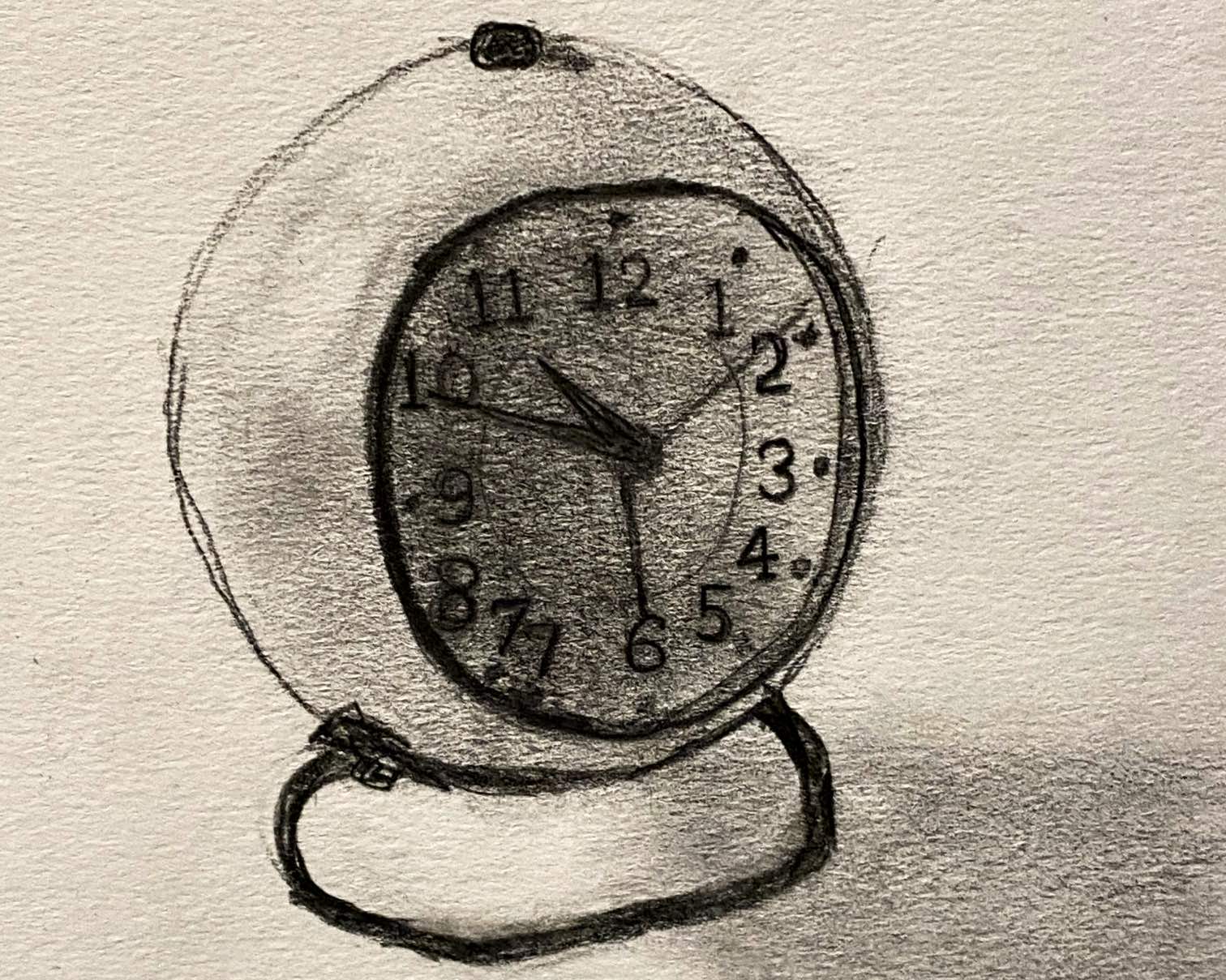
    Not all hours are equal, even though the clock says they are.

    It was Sunday. The grocery store was noisy and packed. I offered my sympathy to the cashier. “But does it at least make your shift go faster?” I asked.

    “At times,” she said. “But then there’s the last hour. That last hour is definitely sixty minutes.”

    She didn’t mean the minutes were literally longer. Everybody knows sixty minutes is the exact same quantity of time as an hour. She was expressing the paradox that those two things are not at all equal, especially when you’re anxiously counting down the minutes.

    The last hour is equal to all the other hours. It’s also much longer. How can both of those statements be true? Because there are different kinds of value.

    There are quantifiable, metrical values; four and four is eight; trees are plants. And then there are paradoxical, felt values, like the old saying, “the whole is greater than the sum of its parts.” Both are real, but we often forget the second one, which may matter even more.

    Patience can’t be bought. Love can’t be measured. An old growth forest is more valuable than the price of all its timber. A single smile can carry more weight in a life than a million dollars.

    What is something you’ve experienced that was more valuable than its quantity?

  • Disembodiment: The Quiet Epidemic of Modern Life

    Disembodiment: The Quiet Epidemic of Modern Life

    Why screen life feels hollow, and how to come back to your body

    When Prompt Engineering Isn’t Enough

    For a while, because of its ability to reason at such an impressive level, I thought AI might be one of the better inventions of the modern age. But life isn’t just reasoning and logic. Much of life makes no sense at all. Much of our reasoning, even, is illogical and based instead on feelings. AI can’t feel. Reasoning is no longer a problem for humanity. AI solves that. But disembodiment has become more a problem than ever. AI, with all of its brilliant reasoning, can’t help us when our feelings defy logic, or when we lose touch with our own bodies.

    When you need to scream into a pillow or go for a run to let off some steam, all of the ChatGPT prompt engineering in the world won’t solve your problem. Worse, it could distract you from the problem, enabling it to go unsolved and fester like an untreated wound. That is disembodiment, losing touch with the signs and feelings and intuitions of your physical body.

    Our Technological Landscape

    Most technologies haven’t done much to improve our actual well-being. Sure, there are specific tools that have made certain things easier, but how many have truly made us better off than our ancestors? And even then, are we really better off?

    Modern medical technology might help us live longer. But does it help us live better, more virtuous, more fulfilled lives? And would we even need help living longer if we spent our days outside, away from screens, moving our bodies and eating the way our ancient ancestors did?

    Maybe our technologies just solve problems that other technologies created. We use blood glucose monitors to keep diabetes in check, but diabetes itself is a disease often caused by the sedentary life style enabled by technology and the hyper-palatable-but-devoid-of-nutrition foods developed as a sort of technology themselves. Maybe life was better before all of it.

    I still believe it’s possible to use our tools wisely, especially if we cultivate virtues like temperance and prudence. With intention, we can benefit from technology without letting it hollow us out.

    But after about a year of testing and experimenting with AI, I’m starting to lose hope that it’s actually going to improve our lives in any meaningful way.

    A Hopeful View of the Future

    Still, despite my reservations, I haven’t given up hope entirely.

    In the long run, I see a positive light. If we ever reach that future where artificial general intelligence handles all of our labor, leaving us only the most human work to do, that could be beautiful. The only jobs left might be the ones centered on connection and compassion: listening, empathizing, consoling, comforting, being present, loving. The kind of work that often goes unnoticed now might become the most valuable.

    What AI Can’t Do

    But we’re not there yet. We might never get there. Maybe this whole AI movement is just another tech trend, another wave of hype.

    Even without general intelligence, the AI we have today can do some impressive things. It can act like a therapist or a friend. It can solve complex problems, teach new skills, generate art and poetry and recipes. It can write jokes. It can organize your life into a neat PDF.

    It’s convincing, even comforting at times.

    But it can’t live for you.

    That’s the hard part. That’s the part we have to do ourselves. And in this digital age, it’s exactly what we need most: embodiment.

    AI can help us plan. It can suggest habits. It can make a checklist. But it can’t walk the path. It can’t be in your body. It can’t be present in your world. That’s your work.

    Embodiment Is No Longer the Default

    In the past, embodiment was just how life worked. Everything was physical and analog. We didn’t have usernames or avatars. We were who we were; flesh and blood, personality and presence, names given by our parents, bodies shaped by our lives.

    Now, embodiment is a practice. Life has become so digitized that living in the real world requires intentional effort. We have to choose it.

    And embodiment matters. It’s not just a poetic ideal. It means fewer mental health issues, fewer physical health issues. It means clarity. It means connection to reality. It means being truly, fully alive.

    Embodiment matters and, if we are to be embodied, we must be intentional about it.

    Why Embodiment Matters in the Digital Age

    When we’re out of touch with our bodies, it affects everything. We might feel anxious or tired in ways that rest doesn’t fix. Emotions can pile up inside without a way out. It’s like we’re always buzzing, but not in a good way.

    The psychiatrist, Bessel van der Kolk, who wrote The Body Keeps the Score, talks about how stress and trauma live in the body. And how healing comes through the body too. It comes through movement, breath, and feeling.

    When we’re disconnected, we’re also more easily influenced. More easily overwhelmed. It’s harder to feel clear and grounded.

    Simple Practices to Reconnect With Your Body

    The good news is, it doesn’t take much to come back. You don’t need to escape your life or overhaul everything. You just need to take a few small, intentional steps to come back to your body:

    • Go barefoot. On grass or dirt or sand. It helps your feet remember the ground.
    • Touch cold water. A cool splash of water on your face or a quick dip in a stream can really wake up your senses.
    • Write by hand. No screens. Just pen and paper. Let it be slow.
    • Move a little. Stretch, sway, lie on the floor. No rules. Just move however feels good.
    • Use your hands. Make something—bread, a little drawing, a pot of soup. Anything.
    • Breathe and rest. Sit still. Feel your breath. Let silence be a friend, not something to avoid.

    These are ways home, back to embodiment.

    Our Bodies Matter

    I believe we’re not just minds or spirits. We’re souls deeply interconnected with bodies. That matters. Jesus Christ didn’t come as a theory or a thought. He came in flesh. He walked, touched, healed, got tired, wept, laughed, bled.

    Your body matters too. It’s part of your life. With yourself. With others. You don’t have to live floating above everything. You can land. You can be here. Come back to yourself. And if you’re feeling far away right now, that’s okay too. You’re not broken. Just a bit disembodied. And you can return, gently but steadily, to embodiment.

    This has been on my heart for a while. I hope it helps you find a part of yourself that may have been lost.

  • Drawing for Mental Health

    Drawing for Mental Health

    I read a lot. A few books, maybe ten, have revealed something so helpful that I believe they actually improved my life. One of those books is an art book–not a self-help book, not a psychology book, not a philosophy book, not a theology book, an art book. The book is Drawing on the Right Side of the Brain by Betty Edwards. I want to explain why I believe the method of drawing taught in the book is a powerful tool for mental wellness.

    In the field of Psychology, especially the Psychology of Mindfulness, researchers have identified two modes of the mind: being mode and doing mode. The mind is in doing mode when it is focused on accomplishing tasks, solving problems. It’s in being mode when it is focused on the experience of the present moment, not trying to accomplish or solve anything.

    Both modes have important functions, but in a culture hyper-focused on work, success, status, wealth, and power, the doing mode often dominates. A person can become so obsessed with identifying and solving problems that they forget to spend any time experiencing the present moment. Because of this, their mental health deteriorates, their life feels meaningless or painful. Keeping the mind constantly in doing mode is especially toxic when a problem cannot be immediately solved.

    When the doing mode mind encounters a problem that can’t be solved right away, it ruminates. It wants to keep thinking through possible scenarios and solutions over and over. This is very useful when there is a serious problem to solve and a person needs to find the most efficient and effective solution. But it can be detrimental if it starts identifying every little discrepancy or every little piece that’s slightly out of order as a serious problem.

    A person can become stuck in the excessive rumination of the doing mode. That certainly disrupts one’s sense of peace, but it can get even worse. It often manifests as neuroses like anxiety, obsessive-compulsion, ADHD, or even depression. It becomes a vicious cycle.

    Switching the mind into being mode can disrupt that cycle, giving the person a shift in perspective or at least a few moments of peace.

    Those moments of peace aren’t the only good thing about being mode. Being mode means experiencing the richness of the present moment. If reality is important, then experiencing the present moment is important. Living in the past is living in a memory, which is not the most realistic representation of an experience–memories become distorted and skewed. Living in the future is living in a prediction, which is not the most realistic representation either because the mind often makes unrealistic predictions.

    The most realistic experience we have is the present moment. Reality happens in the present moment. It’s good to experience it sometimes. As the wise Ferris Bueller famously said, “Life moves pretty fast. If you don’t stop and look around once in a while, you could miss it.” Stopping and looking around is what the mind is doing when it’s in being mode.

    Getting the mind into being mode is one of the main goals of mindfulness training, and the evidence of its benefits for mental health keep stacking up–reductions in anxiety and depression, lower blood pressure, and improved sleep. But mindfulness training isn’t the only way to get the mind into being mode.

    The whole idea of Drawing on the Right Side of the Brain is to draw exactly what you see. To do that, you have to stop and look. You have to look intently. You have to notice the lines that separate parts of what you see, the angles of those lines, the distances between the lines, their colors, the colors within their bounds, the lightness and darkness of the colors, etc. Drawing on the Right Side of the Brain is about seeing what’s in front of you not as a symbol or a word (for example, beginning drawers often draw noses as triangles or eyes as circles) but as it actually is.

    Seeing things as they actually are can be difficult. The left side of the mind interprets what we see into symbols so that the mind doesn’t have to put so much energy into understanding what is happening, and instead can use that energy in doing mode, solving problems. The exercises in Drawing on the Right Side of the Brain are designed to switch off the left side of the brain, allowing the right side to take the reigns.

    I believe that drawing this way, like practicing mindfulness, switches the mind into being mode. And the more one practices doing that, the more able they are to switch the mind into being mode on demand.

    Not every creative outlet can boast such positive mental health benefits. The massive number of artists with mental health issues is evidence of that. My own experience has been the same. I’ve been creative for almost my entire life, but I haven’t always been mentally healthy. Drawing with the right side of the brain, though, seems special. Not only does it get the mind focused on the present experience, it shows us that there are ways of being creative that can promote mental health.

    This is great news. For many of us, especially those of us who enjoy being creative, drawing is a fun way to exercise our mind’s being mode.

    The bad news is that sitting down to draw in the first place isn’t always easy. In a world so full of distractions, focusing on drawing what you see for a few minutes can be difficult. The benefits, though, are real. It means being able to experience life instead of getting lost in negative thoughts about what has happened or what might happen.

    I highly recommend giving Drawing on the Right Side of the Brain a try. Just read a couple chapters and you’ll start to understand how to do it. Then, if it’s too hard to draw for fifteen minutes a day, start with five. After a while, your ability to focus your mind on the present moment will strengthen. And the benefits of doing that, of switching the mind into being mode, are numerous. The peace of a focused, present mind is just a couple drawings away.